

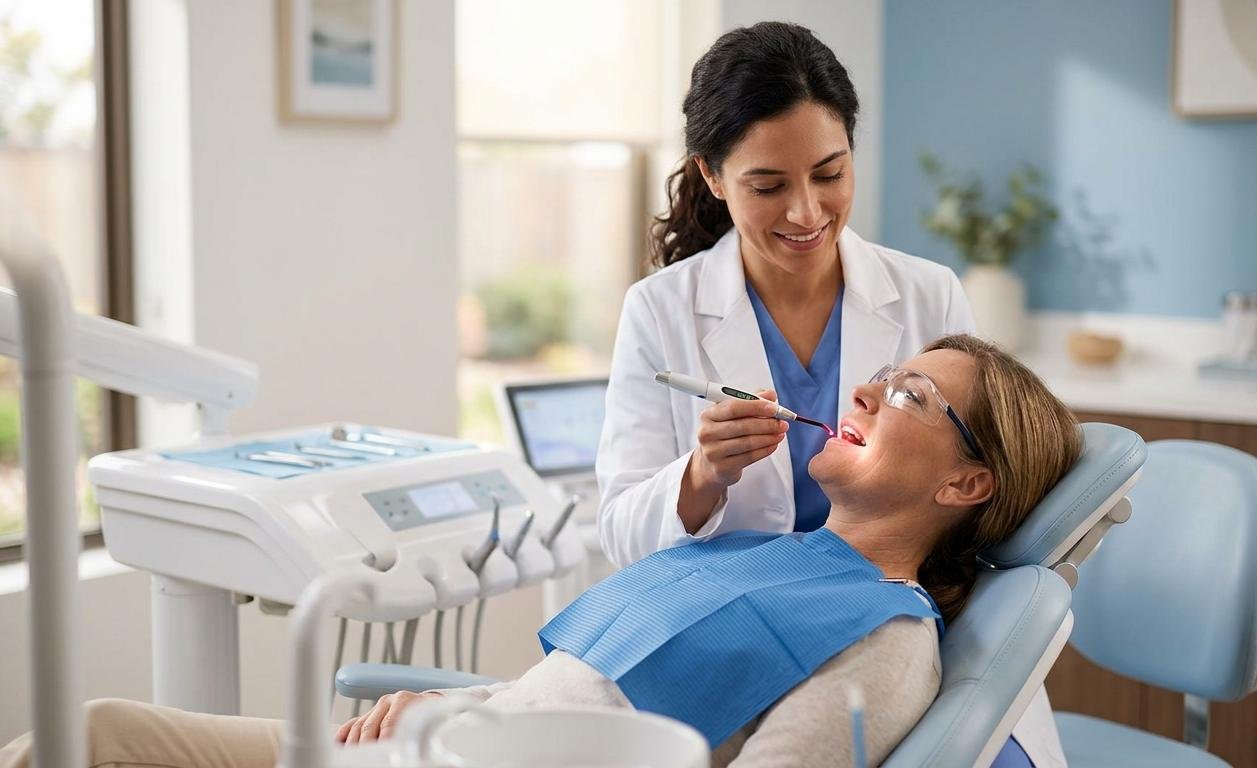
Laser Dentistry: Precision, Comfort, and Advanced Care

Think back to the last time you sat in the dental chair and heard that familiar whirring drill. For millions of people, that sound alone is enough to put off booking an appointment altogether. Now picture a different scenario: a quiet, precise beam of light (this is at the heart of laser dentistry) doing the same job with less bleeding, less noise, and often less need for anesthesia. Dental laser treatment is more established than most patients realize.
Dental lasers received FDA approval back in 1990, yet many people still walk into their dentist’s office without realizing that this technology might be available to them. If you’ve ever wondered what makes laser dentistry different, or whether it could address your specific dental concerns, it’s natural to feel both curious and a bit cautious. Today, laser tools are used across a wide range of procedures, from treating gum disease to releasing tongue ties in infants. This article explores what laser dentistry actually is, how it works, what kinds of procedures it covers, and (perhaps most importantly) helps you consider whether it could be a fit for your needs.
What Is Laser Dentistry
Laser dentistry uses a focused beam of light energy to remove, reshape, or treat tissue inside the mouth. Unlike a scalpel or a mechanical drill, a dental laser delivers this energy in precise, controlled pulses that target only the intended tissue while leaving surrounding areas largely undisturbed. Both soft tissue lasers and hard tissue lasers are used in modern dental laser treatment, depending on the procedure and the part of the mouth involved.
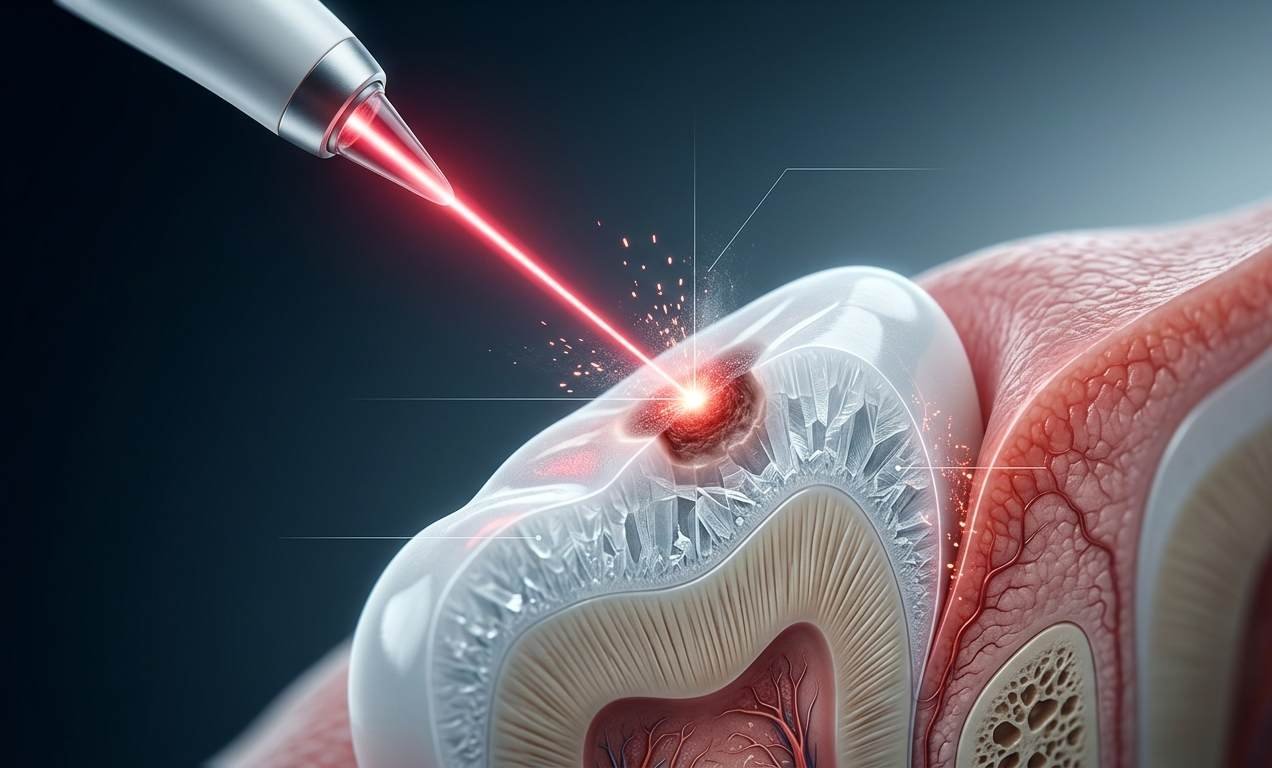
The technology earned FDA clearance in 1990, and clinical adoption picked up considerably after 2010 as the equipment became more affordable and training programs became widely available. It is worth clearing up a common misconception: the bright light lamps used during teeth whitening procedures are not surgical lasers. Whitening lamps activate a bleaching gel; dental lasers physically alter tissue. These are fundamentally different tools.
How Dental Lasers Actually Work
Every dental laser works by emitting light at a specific wavelength. When that wavelength reaches its target tissue, the energy is absorbed by water molecules, hemoglobin in the blood, or hydroxyapatite in tooth enamel, depending on the laser type. That absorption generates heat, which vaporizes or precisely cuts the targeted cells.
Two Main Types of Dental Lasers
Not all dental lasers are the same. Dentists choose between hard tissue lasers and soft tissue lasers based on what they need to treat. Understanding whether a soft tissue laser or a hard tissue laser is appropriate is an important part of planning effective laser dentistry. The table below summarizes the key differences.
| Laser Type | Wavelength Range | Tissue Target | Common Uses |
| Hard tissue (Erbium: Er:YAG, Er,Cr:YSGG) | 2,780 to 2,940 nm | Enamel, dentin, bone | Gum contouring, frenectomy, periodontal therapy, and lesion biopsy |
| Soft tissue (Diode, Nd:YAG, CO2) | 810 to 10,600 nm | Gums, oral mucosa, connective tissue | Gum contouring, frenectomy, periodontal therapy, lesion biopsy |
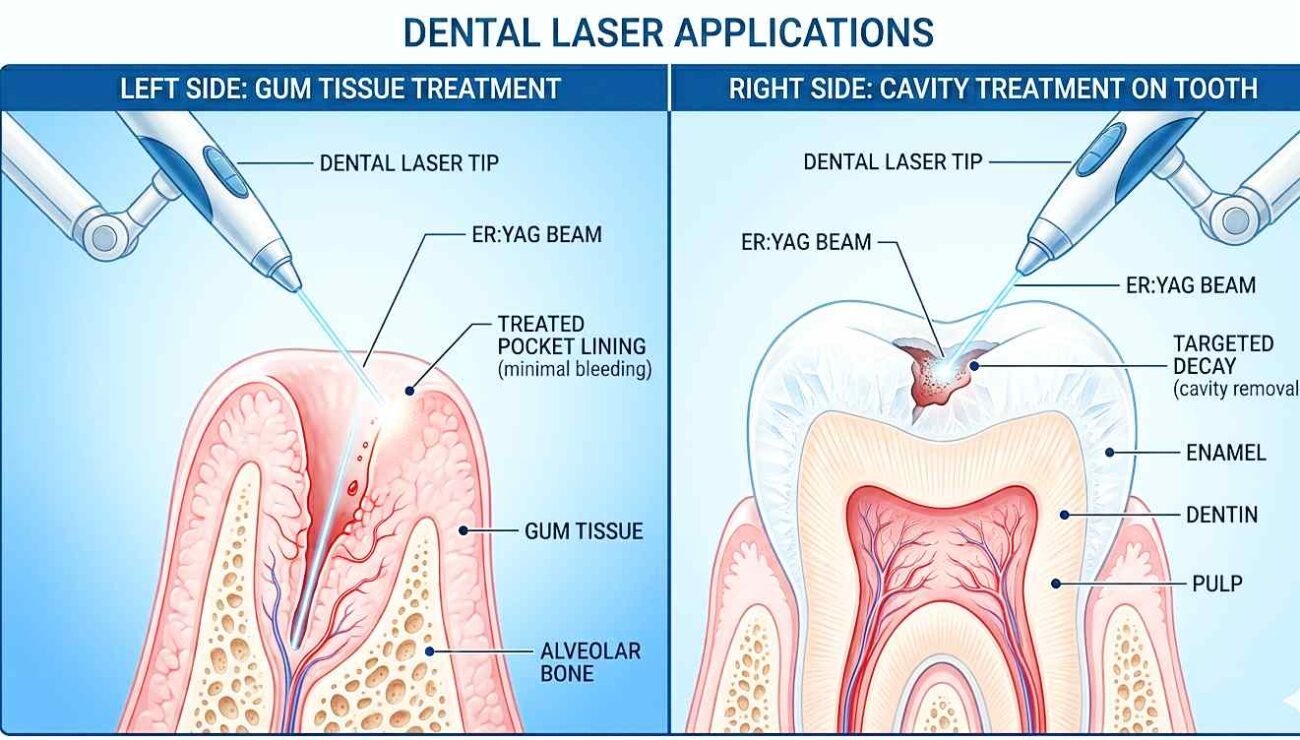
Hard tissue lasers belong to the Erbium family and are specifically tuned to be absorbed by the hydroxyapatite in enamel and bone. This makes them effective for preparing cavities and reshaping bony structures without the vibration of a traditional handpiece.
Soft tissue lasers, including diode and carbon dioxide models, target water and hemoglobin, making them ideal for gum work. Because they seal blood vessels as they cut, post-procedure bleeding is minimal, and healing times for soft tissue are often shorter than with conventional surgery.
Common Procedures Done with Lasers
Dental laser treatment covers a broader range of applications than most patients expect. Laser dentistry can be used for both painless dental procedures and more complex treatments. Here are the procedures most commonly performed with dental laser tools in general and specialist dental practices today.
Cavity detection and preparation. Hard tissue lasers can identify early decay by measuring how laser light reflects off tooth structure, and they can prepare the cavity for filling with less drilling. Some patients require little or no anesthesia for small cavities treated this way.
Gum disease treatment. Soft tissue lasers target infected gum pockets, removing diseased tissue and killing bacteria without cutting healthy gum away. Laser dentistry offers a less invasive, often painless dental procedure for treating periodontal disease. This is one of the most well-supported uses of dental laser treatment, according to the Academy of Laser Dentistry.
Frenectomy. A frenectomy releases the small bands of tissue (frenula) that connect the lip or tongue to the gum or floor of the mouth. In infants with tongue tie, a soft tissue laser can complete this in seconds, typically without sutures. If you want to understand how this differs from surgical options, our overview of wisdom teeth eruption and removal covers related soft tissue considerations in detail.
Cold sore and canker sore treatment. Applying low-level laser energy to an active cold sore can shorten the healing time and reduce pain, sometimes stopping an outbreak in its early stages.
Crown lengthening and gummy smile correction. When a tooth needs a crown but not enough tooth structure is exposed above the gum line, a soft tissue laser can recontour the gum line precisely. For patients considering restorations, our guide on dental bridge vs implant options explains how crown lengthening fits into the broader treatment plan.
Teeth whitening activation. In some in-office whitening systems, a laser accelerates the bleaching reaction, though the clinical benefit over conventional light activation is still debated.
Biopsy of oral lesions. Suspicious patches or growths in the mouth can be removed with a laser for laboratory analysis with minimal bleeding and no need for sutures in many cases.
Benefits Over Traditional Methods
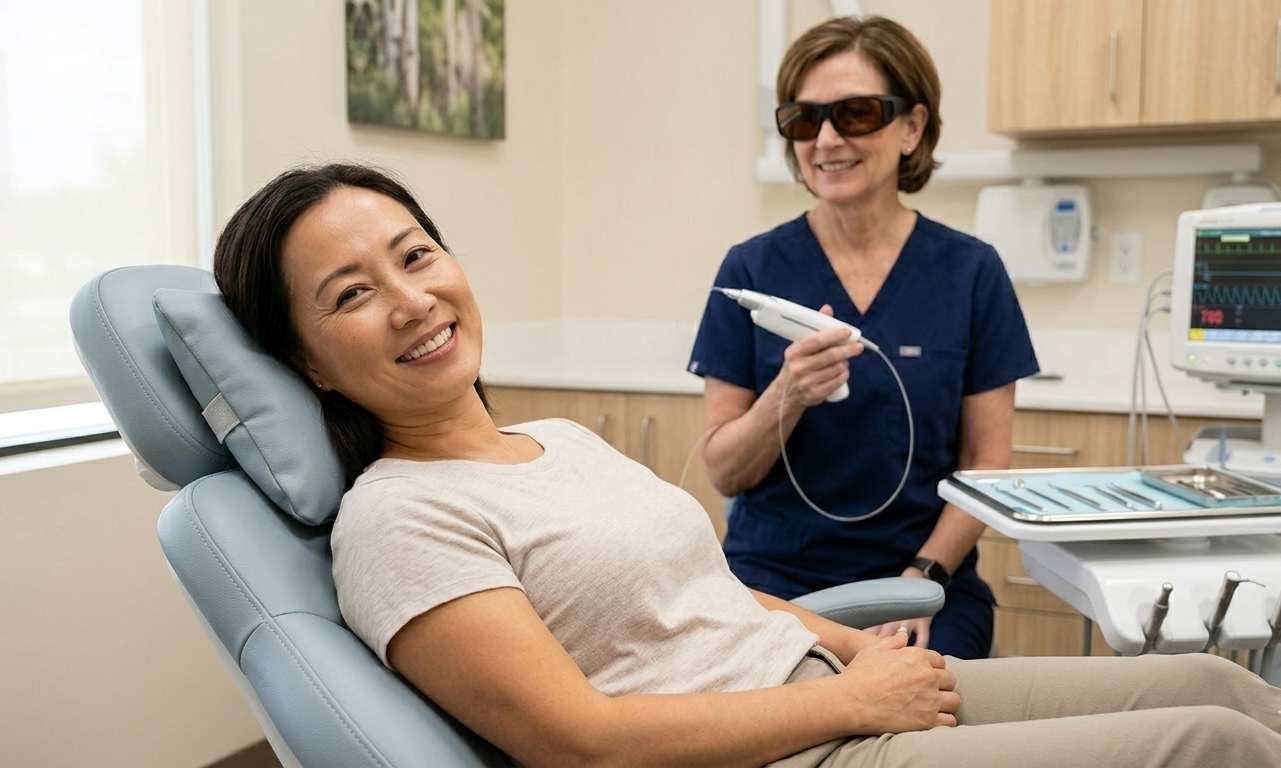
The advantages of painless dental procedures with lasers are not just marketing language. They reflect documented clinical outcomes, particularly for soft tissue laser treatments and other dental laser procedures.
Less anesthesia is needed for many laser procedures. A 2021 review published in the journal Photobiomodulation, Photomedicine, and Laser Surgery found that patients undergoing soft tissue procedures with lasers reported significantly lower pain scores than those treated with conventional instruments, reducing or eliminating the need for local anesthetic injections in several procedure types.
Reduced bleeding is another consistent benefit. Because the laser cauterizes as it cuts, surgical sites stay cleaner, which gives the dentist a clearer view and reduces post-operative swelling for the patient.
The risk of bacterial contamination is lower as well. The intense energy of the laser sterilizes the treatment area as it works, which is particularly valuable during periodontal therapy, where bacteria are the underlying problem.
For patients with dental anxiety or drill phobia, the absence of noise and vibration makes a meaningful psychological difference. Faster healing for soft tissue procedures is well-documented, with many patients returning to normal eating within one to two days rather than the five to seven days typical after conventional gum surgery.
Limitations and What Lasers Cannot Do
Laser dentistry is not a complete replacement for traditional dental tools, and understanding its limits helps you set realistic expectations about what dental laser treatment can—and cannot—achieve.
Hard tissue lasers cannot remove existing metal fillings (amalgam). The metal reflects laser energy rather than absorbing it, making conventional drills the only practical option for replacing old amalgam restorations. Similarly, teeth that are already covered by crowns or inlays may not be suitable candidates for laser cavity work in the surrounding area.
Some procedures still require a traditional handpiece for final shaping, even if a laser handled the bulk of the work. Complex extractions and implant placement also fall outside the scope of laser tools and require conventional surgical instruments.
Cost is a practical consideration. Laser equipment is expensive, and some practices pass a portion of that cost to patients as a procedure surcharge. This does not mean laser treatment is always more expensive, but it is worth asking upfront.
Safety and Side Effects
Laser dentistry has an excellent safety record when performed by trained operators, but a few precautions are non-negotiable. Whether using a soft tissue laser or a hard tissue laser, protective eyewear must be worn by both the patient and all staff in the room during any dental laser procedure. The specific eyewear is matched to the laser’s wavelength, so clinic-provided glasses are not interchangeable with ordinary sunglasses.
Common side effects are mild. You may experience brief tissue tenderness or slight swelling at the treatment site for one to two days after a soft tissue procedure. Serious complications are rare when the operator is properly trained.
The American Dental Association recommends that patients look for dentists who hold credentials from the Academy of Laser Dentistry, the primary professional body that sets competency standards for laser use in clinical practice. Asking your dentist about their training and the specific laser system they use is a reasonable and appropriate question before any procedure.
Expert Insight
“Patients with significant gum disease or those who have historically avoided treatment because of drill anxiety are often the best candidates for laser-based therapy. The reduced bleeding and faster soft tissue healing we see with diode lasers in periodontal cases consistently lead to better patient compliance and better long-term outcomes than conventional surgery alone,” says Dr. Maria Elena Voss, Periodontist and Academy of Laser Dentistry Diplomate at the Chicago Center for Periodontal Health.
Cost and Insurance
Costs for laser-based dental procedures vary by practice, geographic location, and procedure type. In general, laser treatment runs anywhere from comparable to slightly higher than the equivalent conventional procedure, typically in the range of 10 to 20 percent more in practices that charge a laser fee.
Here is the key fact on insurance: most dental plans reimburse based on the procedure code, not on the instrument used. That means if your plan covers a frenectomy or periodontal scaling, it will likely reimburse the same amount regardless of whether a laser or a scalpel was used. The FDA’s dental device safety resources can help you understand how cleared dental laser devices are classified if you want to research a specific system your dentist uses.
Before booking a laser procedure, ask the dental office for an itemized treatment estimate that separates the procedure fee from any laser surcharge, and verify your coverage with your insurer directly.
Frequently Asked Questions
Does laser dentistry hurt?
Most patients report less discomfort with laser dentistry compared to traditional drills, particularly during soft tissue laser procedures. Many soft tissue procedures require only a topical anesthetic or none at all. Hard tissue laser treatment on teeth may still require a local injection for deeper decay, though the amount needed is often smaller. In general, dental laser treatment is associated with more painless dental procedures and a more comfortable patient experience.
Is laser dentistry safe for children?
Yes, with appropriate precautions. Soft tissue lasers are routinely used for frenectomies in infants and young children. Hard tissue lasers can be used for cavity treatment in older children. The dentist will always assess the child’s specific situation, tooth development stage, and cooperation level before recommending laser treatment.
Will my insurance cover laser treatment?
Most plans reimburse based on procedure code rather than the method used, so coverage depends on whether the underlying procedure is covered in your plan. Contact your insurer with the specific procedure code your dentist plans to use and ask directly about coverage.
How do I find a laser-certified dentist?
The Academy of Laser Dentistry maintains a searchable directory of credentialed practitioners on its website at laserdentistry.org. You can also ask your current dentist whether they hold laser dentistry credentials and which laser systems they use in their practice.
Can lasers replace fillings entirely?
Not entirely. For small to moderate cavities, a hard tissue laser can prepare the site, and the cavity can then be filled with composite resin. However, the laser does not place the filling material itself, and very large cavities or those requiring significant tooth structure removal may still need conventional drilling for efficient preparation.
Medical Disclaimer: This article is for informational purposes only and does not replace professional medical or dental advice, diagnosis, or treatment. Always consult a qualified healthcare provider with questions about your individual condition. Do not delay seeking medical attention because of something you read here.
References
National Institute of Dental and Craniofacial Research. Dental Treatments.nidcr.nih.gov
Academy of Laser Dentistry. Standards of Care and Scope of Practice.laserdentistry.org
American Dental Association. Laser Dentistry.ada.org
U.S. Food and Drug Administration. Dental Devices: Lasers.fda.gov
Grzech-Lesniak K, et al. “Laser Therapy in Periodontal Treatment: A Systematic Review.” Photobiomodulation, Photomedicine, and Laser Surgery, 2021.
Parker S. “Verifiable CPD Paper: The Use of Lasers in Conservative Dentistry.” British Dental Journal, 2007.