


Decidual Cast: Causes, Symptoms, And What To Do

Passing a large piece of tissue during your period can be deeply alarming. If you noticed a thick, triangular mass, your concern is completely valid. A decidual cast is a rare event where the entire uterine lining sheds in one intact piece rather than breaking apart normally. While frightening, a decidual cast is usually not life-threatening. What matters is understanding what caused the decidual cast shedding. This guide explains what a decidual cast is, why it happens, and when to seek care.
What is a decidual cast?
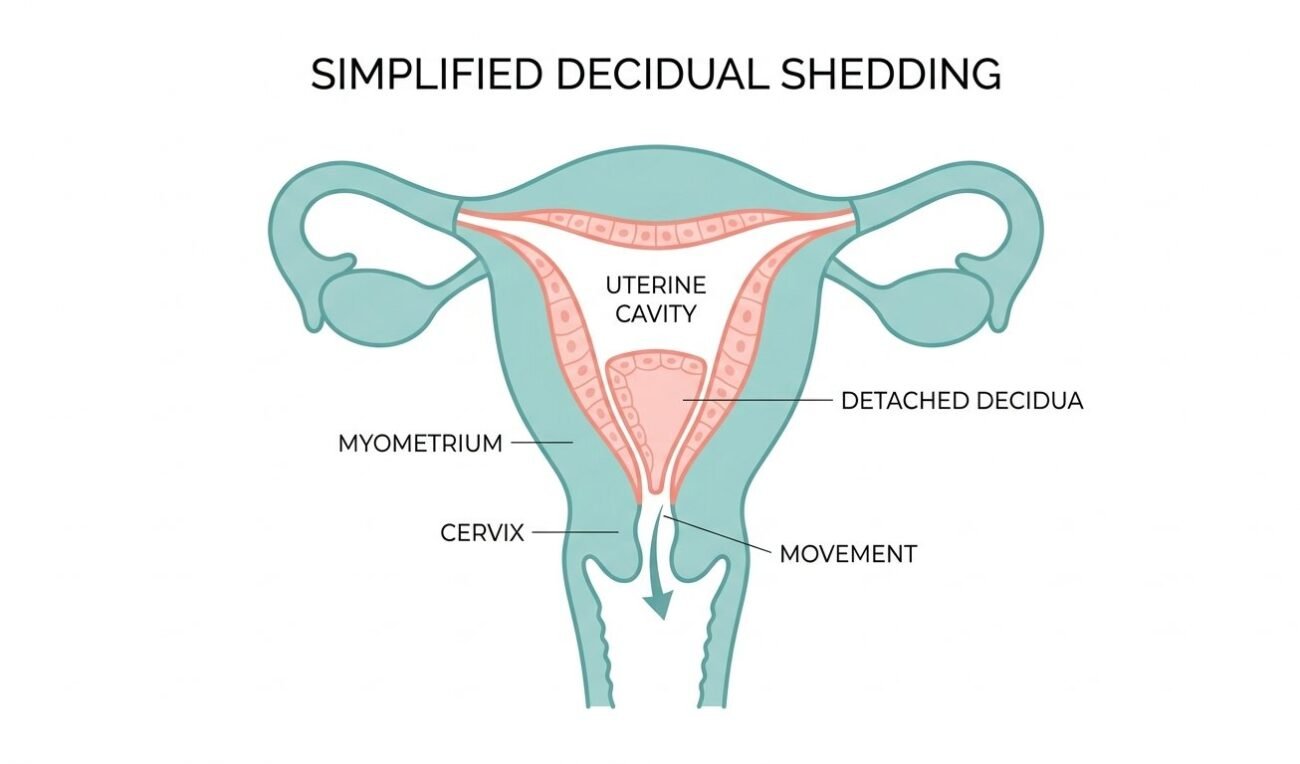
A decidual cast is the entire decidual lining shed as one large, intact piece that mirrors the shape of the uterine cavity. Normally, the lining breaks into small fragments during menstruation. In a decidual cast shedding event, hormonal factors cause it to release as a single uterine lining cast. It is startling to see, but it is a recognized medical phenomenon. The Cleveland Clinic describes it as rare but well-documented in reproductive health literature.
How a decidual cast forms
During each cycle, the decidua (thickened uterine lining) builds up for potential pregnancy. When pregnancy does not occur, it sheds in small fragments. In a decidual cast, hormonal shifts from contraception or a decidual cast pregnancy cause the lining to detach as a complete unit, sliding through the cervix in one piece.
What does a decidual cast look like?
- Triangular or pear-shaped tissue that mirrors the uterine cavity.
- Pink, red, or grayish color.
- Soft and rubbery texture.
- Typically 4 to 10 centimeters in size.
- Sometimes mistaken for passing tissue from the uterus during an early miscarriage.
The triangular shape distinguishes a decidual cast from a blood clot. Clots are irregular, while a decidual cast retains the uterine cavity outline.
Common causes of decidual cast
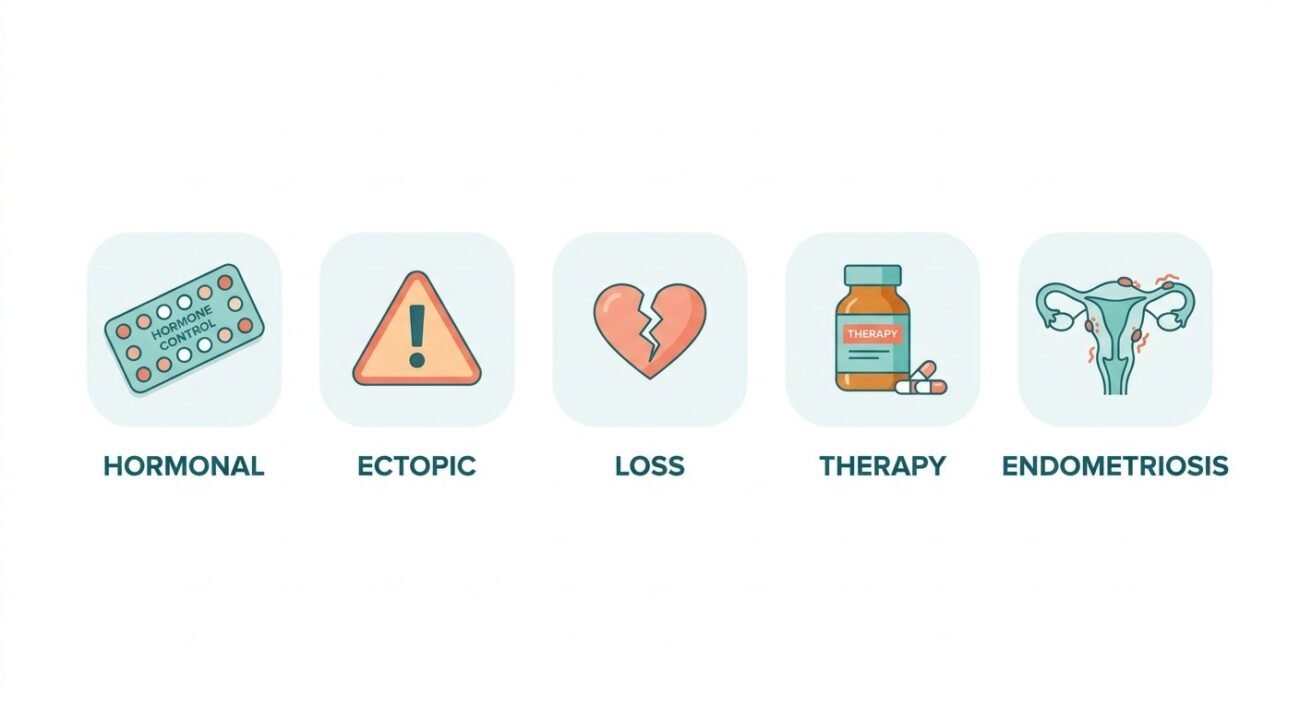
Hormonal contraception
Progestin-only methods are the most common cause. The mini pill, Depo-Provera, hormonal IUD, and implants thicken the uterine lining in ways that can trigger decidual cast shedding. If you use hormonal contraception, see our overview of hormonal birth control options on Doctiplus for context on how different methods affect your cycle.
Ectopic pregnancy
This is a medical emergency. When a pregnancy implants outside the uterus, the lining can shed as a decidual cast because the body responds to pregnancy hormones without uterine implantation. A decidual cast pregnancy involving ectopic implantation requires immediate care. If you are pregnant and are passing tissue from the uterus, go to the emergency department. For warning signs, see our article on ectopic pregnancy signs.
Early pregnancy loss
A miscarriage in the very early weeks can produce tissue that resembles a decidual cast. Distinguishing between the two requires a pregnancy test and often an ultrasound. If there is any possibility of pregnancy, contact your healthcare provider promptly.
Hormone therapy
Some hormone replacement therapy regimens, particularly those involving progesterone, can trigger decidual cast shedding. If you are on hormone therapy and pass a cast, report it to your prescribing provider.
Endometriosis
Rarely, endometriosis is associated with unusual uterine lining cast events. The relationship is not fully understood, but some women with endometriosis report passing tissue that resembles a decidual cast.
Symptoms that accompany a decidual cast
- Severe lower abdominal cramping, often worse than typical period pain.
- Heavy bleeding before, during, or after passing the tissue. See our guide to
- Heavy menstrual bleeding is defined as when the flow volume is abnormal.
- Pain radiating to the lower back.
- Nausea or lightheadedness.
- A sense of pressure or fullness in the pelvis before the cast passes.
Is a decidual cast dangerous?
The decidual cast itself is not dangerous. It is shed tissue, not a tumor. The concern is the underlying cause. If linked to hormonal contraception, it is typically a one-time event. If linked to an ectopic pregnancy, it is a medical emergency. A decidual cast in a woman not on contraception and with no known pregnancy always warrants evaluation.
When to see a doctor immediately
Seek emergency or same-day care if you experience any of the following alongside passing tissue from the uterus:
- Heavy bleeding, soaking more than one pad per hour for two or more hours.
- Severe pelvic pain that does not respond to over-the-counter pain relievers.
- Any signs of pregnancy combined with the passing of large amounts of tissue.
- Lightheadedness, fainting, or rapid heartbeat.
- Shoulder tip pain, which can be a sign of ectopic pregnancy.
- Fever or chills accompany the bleeding.
For guidance on when routine gynecological concerns become urgent, see our article on when to see a gynecologist on Doctiplus.
How a decidual cast is diagnosed
- Pelvic examination to assess the cervix and uterus.
- Pregnancy test (urine and blood beta-hCG) to rule out pregnancy and ectopic pregnancy.
- Transvaginal ultrasound to visualize the uterus and rule out ectopic implantation.
- Histopathology of the tissue that you collected.
- Hormone level testing if the decidual cast recurs.
Treatment options for decidual cast
Treatment depends on the underlying cause. The table below summarizes the approach by scenario.

| Cause | Typical approach | Urgency |
| Hormonal contraception | Watch and monitor, switch method if recurrent | Routine follow-up |
| Ectopic pregnancy | Methotrexate or surgery | Emergency |
| Early pregnancy loss | Medical or surgical management | Same-day care |
| Hormone therapy | Adjust dose with prescribing provider | Routine |
| Unknown cause | Full workup: imaging, labs, exam | Within days |
Watchful waiting
When linked to hormonal contraception, and the woman feels well after, no immediate treatment is needed. Monitor for recurrence.
Stopping or changing hormonal contraception
If decidual cast shedding recurs, your provider may suggest switching contraceptive methods. The American College of Obstetricians and Gynecologists recommends discussing all options with your gynecologist before making changes.
Treatment of the underlying cause
Ectopic pregnancy requires methotrexate or surgery. Early pregnancy loss may need medical or surgical management. Treatment targets the cause, not the cast itself.
Pain and symptom management
NSAIDs like ibuprofen help with cramping. A heating pad and rest during and after the event support recovery.

Recurrence and long-term outlook
Most women experience a decidual cast only once. Recurrence is more common in those continuing the same contraceptive method. Long-term fertility is typically unaffected. Your gynecologist can provide reassurance based on your specific situation.
Frequently asked questions
Is a decidual cast the same as a miscarriage?
No. A decidual cast is the shed uterine lining, not a pregnancy. However, the two can look similar, and early pregnancy loss can sometimes produce tissue that resembles a decidual cast. A pregnancy test and ultrasound are the only reliable ways to distinguish between them.
Can a decidual cast happen without birth control?
Yes, though it is less common. A decidual cast can occur due to hormonal fluctuations, ectopic pregnancy, or unknown causes. If you are not on hormonal contraception and pass a uterine lining cast, see your healthcare provider for evaluation.
How long does the pain from a decidual cast last?
Most women report that severe cramping lasts a few hours before and during the passage of the cast. After the tissue passes, pain typically reduces significantly within 12 to 24 hours. If pain persists beyond 48 hours, contact your provider.
Should I save the tissue for my doctor to examine?
Yes, if possible. Place the tissue in a clean container and bring it to your appointment. Histopathology can confirm that the tissue is a decidual cast and rule out pregnancy-related tissue.
Will my period be normal after passing a decidual cast?
Most women return to their normal cycle within one to two months. The next period may be lighter or slightly irregular as the uterine lining rebuilds. Persistent changes beyond two cycles warrant a follow-up visit.
Can I get pregnant after a decidual cast?
Yes. A decidual cast does not damage the uterus or affect long-term fertility. Once the lining regenerates, the uterus functions normally. If you have concerns about conception timing, discuss them with your gynecologist.
Final thoughts
Passing a decidual cast is frightening, and your concern is warranted. Understanding what a decidual cast is and knowing the causes helps you respond appropriately. Most cases are linked to hormonal contraception and resolve without lasting effects. The critical exception is ectopic pregnancy, a medical emergency. If you have passed tissue, save it if possible, take a pregnancy test, and contact your provider. A decidual cast is rare, usually a one-time event, and your fertility is overwhelmingly likely to be fine
The information in this article is for educational purposes only and does not replace professional medical advice, diagnosis, or treatment. Always consult a qualified healthcare provider for any concerns about your health or before starting any new treatment. Doctiplus does not endorse specific products, brands, or providers mentioned for illustrative purposes.
References
- American College of Obstetricians and Gynecologists, Abnormal Uterine Bleeding Patient FAQ, accessed 2026.
- Mayo Clinic, menorrhagia and abnormal uterine bleeding, accessed 2026.
- Cleveland Clinic, decidual cast overview and patient information, accessed 2026.
- Journal of Obstetrics and Gynaecology Research, decidual cast case reports and clinical review.
- NHS, heavy periods and unusual bleeding information, accessed 2026.
- Office on Women’s Health, menstrual irregularities patient resource, accessed 2026.