

Back Ache Lower Right: What Is Causing It And How To Find Relief

Backache, lower right, is one of the most common pain complaints that brings people to a doctor, and one of the most misunderstood. A back ache lower right side can come from something as simple as a strained muscle after a heavy lift, or from something requiring rapid attention like appendicitis or a kidney infection. The location alone does not tell the whole story. Accompanying symptoms do. This guide covers every likely cause, the warning signs that separate mild from serious, and practical steps to find relief.
Why back ache lower right is different from general back pain
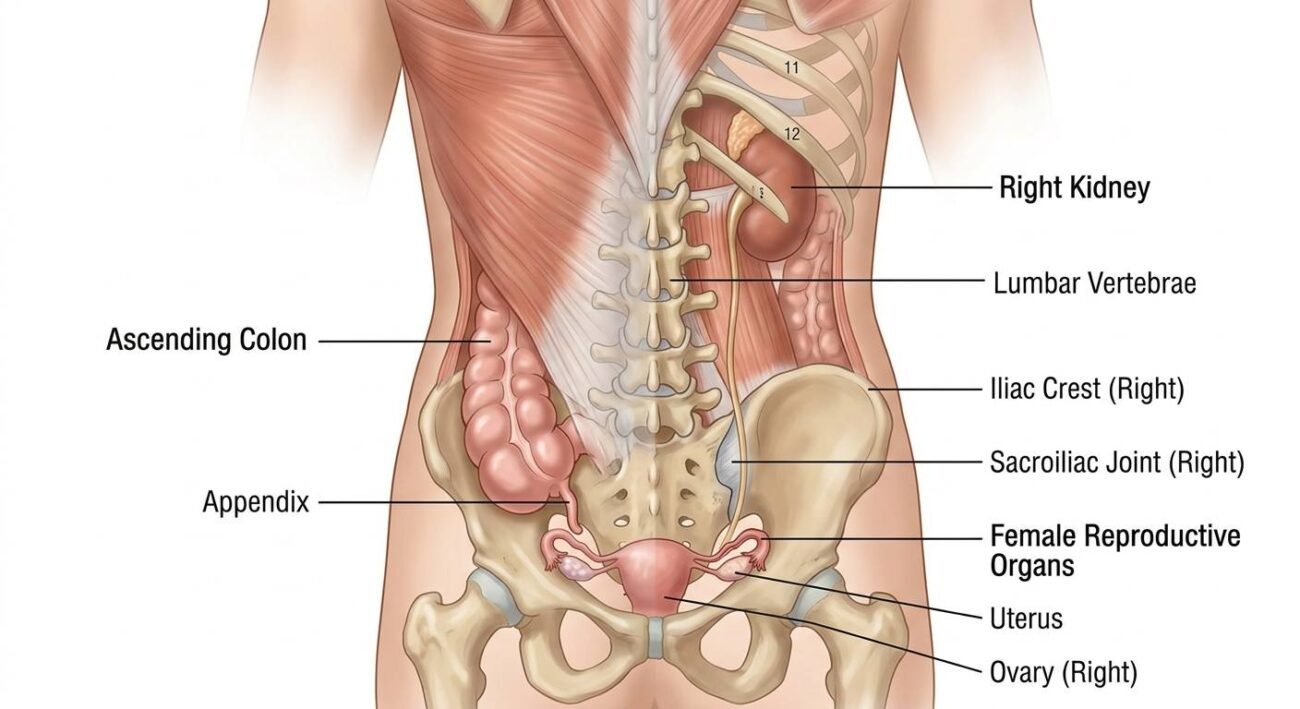
General lower back pain affects both sides of the lumbar spine and is almost always musculoskeletal. Backache, lower right, is more specific, and that specificity matters. The right side of the lower back sits adjacent to the right kidney, the appendix, the ascending colon, the right sacroiliac joint, and, in women, the right ovary and fallopian tube.
Any of these structures can refer pain to the lower right back. Identifying the true source requires looking beyond where it hurts and paying close attention to when the pain appears, what makes it better or worse, and what other symptoms come with it.
Most common causes of back ache lower right
Muscle strain or sprain
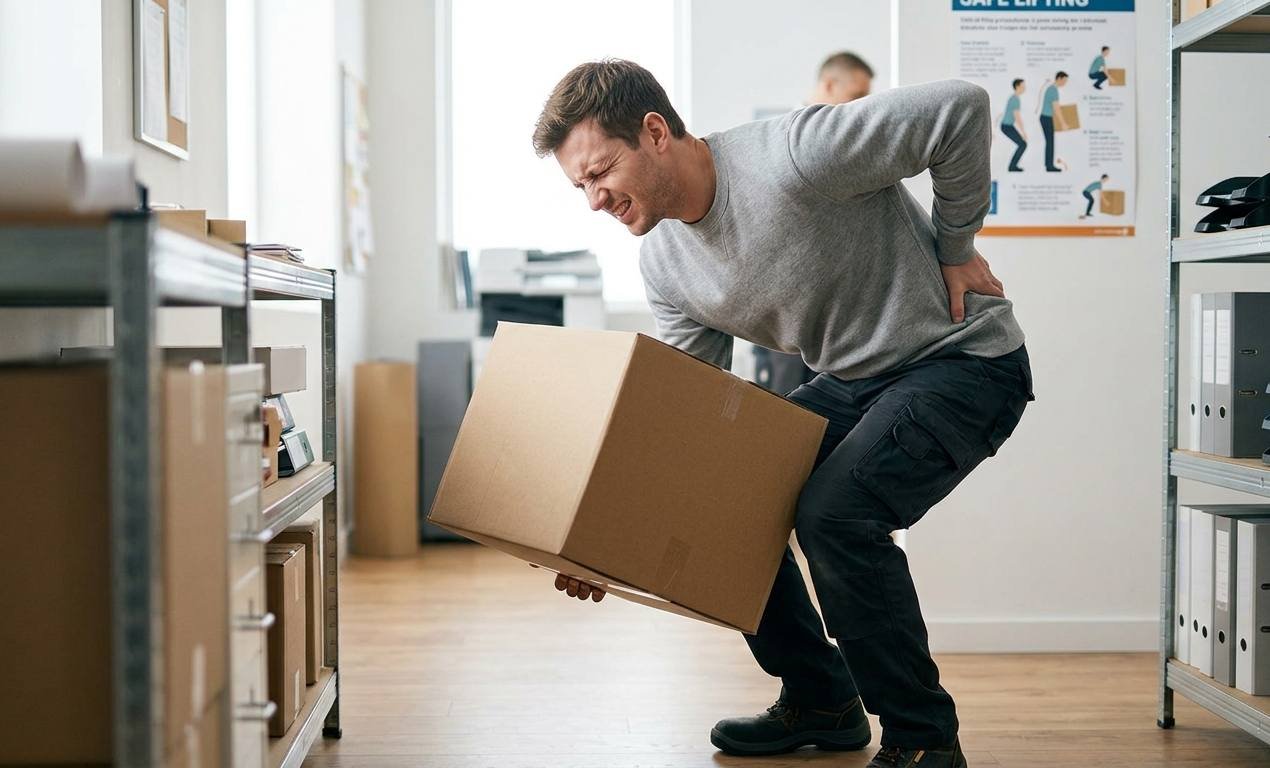
Muscle strain is the most frequent cause of back ache lower right by a significant margin. Lifting something heavy and a twisted spine, a sudden awkward movement, or hours of sitting in poor posture is able to strain the lumbar muscles or thoracolumbar fascia on the right side. The pain is typically dull and achy, worsens with movement and eases with rest, and is tender to the touch directly over the affected area.
According to the NHS, most acute muscle-related back pain improves significantly within four to six weeks with conservative management. If the pain appeared after physical exertion and you have no other symptoms, a muscle strain is the most likely explanation.
Herniated or bulging disc
The lumbar discs cushion the vertebrae. When one bulges or ruptures, it can press on the spinal nerve root on the right side, producing localised lower right back pain and radiating pain, tingling, or numbness down the right leg. Disc-related pain commonly feels sharper than muscle pain, worsens with sitting or bending forward, and may ease when lying flat. A cough or sneeze that sends a shock down the leg is a strong indicator of nerve root compression.
Kidney issues (right kidney)
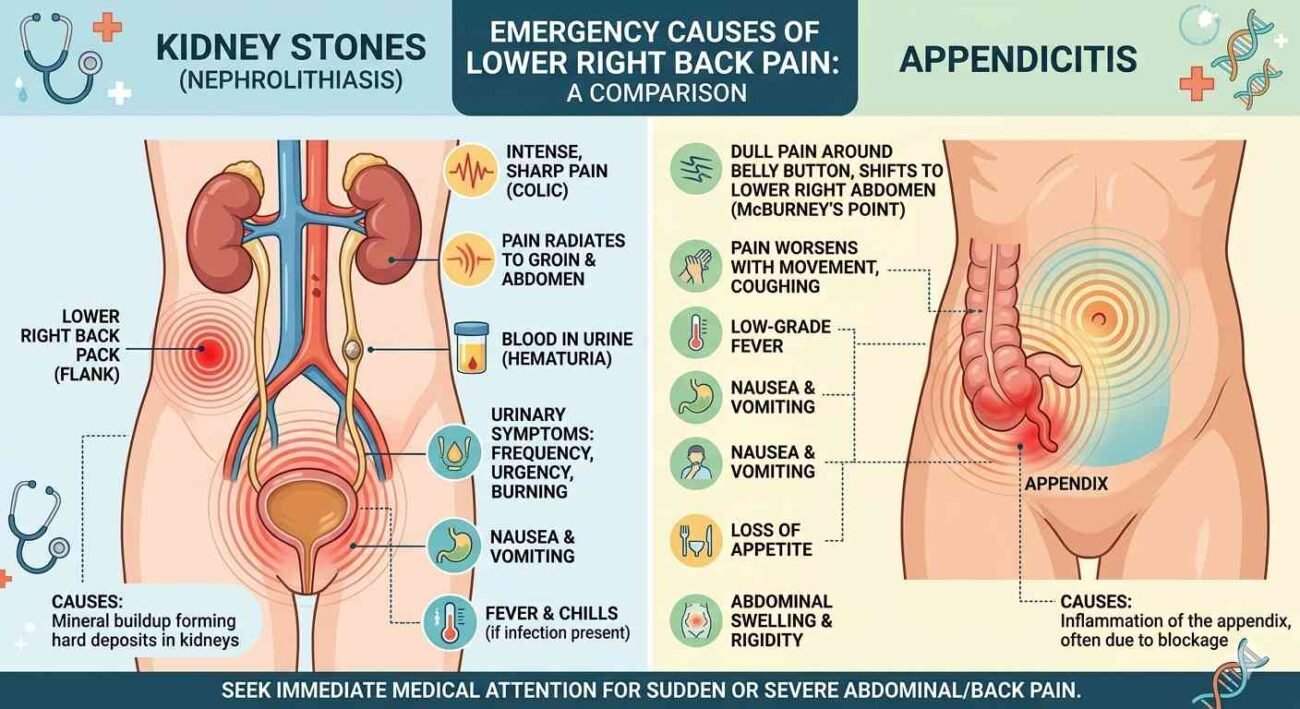
The right kidney sits just beneath the ribcage, but kidney pain commonly radiates into the lower right flank and back. A kidney stone causes sharp, colicky pain that arrives in waves. A kidney infection (pyelonephritis) produces a deeper ache with fever, chills, nausea, and burning during urination. Kidney pain does not change with body position or movement, which helps distinguish it from muscle pain. Blood in the urine alongside lower right back pain warrants a same-day medical assessment.
Appendicitis
The appendix sits in the lower right abdomen and can refer pain to the lower right back as inflammation develops. Appendicitis classically begins as a vague central pain that migrates to the lower right abdomen and back over 12 to 24 hours, accompanied by fever, nausea, and vomiting. According to the Mayo Clinic, a ruptured appendix can occur within 24 to 72 hours of onset, causing life-threatening peritonitis. If right-sided abdominal tenderness, fever, and nausea accompany the pain, go to an emergency department without delay.
Sacroiliac joint dysfunction
Inflammation or displacement of the right sacroiliac joint produces a distinctive pain that commonly extends into the right buttock and the back of the right thigh. It can mimic a herniated disc but tends to worsen with prolonged standing, stair climbing, and rolling over in bed, rather than with sitting and bending.
Gynecological causes (women)
In women, lower right back pain can originate from the right ovary or fallopian tube. An ovarian cyst, endometriosis, or pelvic inflammatory disease can all produce a continuous ache that worsens in the days before or during menstruation. If this pain follows a monthly cycle pattern, a gynaecological cause deserves investigation.
Symptoms that signal an emergency
Some causes of back ache lower right require immediate emergency care. Go to an emergency department right away if you experience:
| Emergency symptom | Likely cause | Action |
| Sharp lower right pain with fever and vomiting | Appendicitis or severe kidney infection | Emergency department immediately |
| Blood in urine with back ache lower right | Kidney stone or kidney infection | Emergency or same-day urgent care |
| Inability to stand, walk, or bear weight | Severe disc herniation or fracture | Emergency department |
| Loss of bladder or bowel control | Cauda equina syndrome (spinal emergency) | Emergency department immediately |
| Lower right pain after a fall or collision | Possible fracture or internal injury | Emergency department |
Cauda equina syndrome, where compression of the lowest spinal nerve roots causes bladder or bowel dysfunction, is a surgical emergency. The Cleveland Clinic notes that permanent neurological damage can result if decompression surgery is delayed. Do not wait to see if symptoms resolve.
Home remedies for muscle-related back ache lower right
If your back ache lower right is muscle-related, with no fever, urinary symptoms, or abdominal pain, these approaches are safe and effective for the first week:
Ice first, then heat: For the first 48 hours, apply an ice pack wrapped in a cloth to the lower right back for 15 to 20 minutes every two to three hours. After 48 hours, switch to a heat pad or warm bath to relax the muscle and increase blood flow.
Keep moving gently: Complete bed rest slows recovery. Short walks, gentle stretching, and light movement maintain blood flow and prevent surrounding muscles from tightening further around the injured area.
Targeted stretches: Gentle knee-to-chest stretches, pelvic tilts, and a figure-four piriformis stretch address the muscles most commonly involved in lower right back pain. Hold each for 20 to 30 seconds and repeat two to three times daily.
Over-the-counter pain relief: Ibuprofen or naproxen reduce inflammation and provides meaningful relief. Paracetamol can help with pain but has no anti-inflammatory effect.
Sleep posture: Sleeping on your side with a pillow between your knees keeps the lumbar spine in neutral alignment and reduces pressure on the lower right back. Avoid sleeping on your stomach, which increases lumbar extension.
When to see a doctor about back ache lower right
Not every episode requires a doctor visit, but some do. Arrange a non-urgent appointment if:
- The back ache lower right has continued for more than one week without meaningful improvement.
- Pain wakes you from sleep or is significantly worse in the morning.
- You have had multiple recurring episodes in the same area over recent months.
- The pain is accompanied by unexplained weight loss, fatigue, or night sweats.
- You are over 50, have a history of cancer, or take long-term corticosteroids.
Your doctor may order an X-ray, MRI, urine analysis, or blood tests depending on the suspected cause. For back ache lower right persisting beyond 12 weeks, a referral to a physiotherapist or pain specialist is usually appropriate. For related reading on pain symptoms and when they become urgent, see our articles on pain in left arm and cardiac warning signs and ingrown hair turned into hard lump under skin.
Preventing back ache lower right from returning

Once the pain has resolved, a few consistent habits significantly reduce the chance of recurrence.
Strengthen the core: Exercises like dead bugs, bird dogs, and bridges build the abdominal and pelvic stability that reduces mechanical load on the lower right back.
Improve your workstation setup: A chair at the right height, a monitor at eye level, and feet flat on the floor reduce the cumulative postural strain that drives chronic lower right back pain in desk workers.
Lift with correct technique: Keep the load close to your body, bend at the hips and knees rather than the waist, and never twist while carrying weight. Most acute muscle strains that produce back ache lower right happen in a single moment of poor mechanics.
Maintain a healthy weight: Excess weight around the abdomen shifts the centre of gravity forward and increases the load on the lumbar spine and sacroiliac joints. Even modest weight reduction reduces lower right back pain in people who are overweight.
For more on managing ongoing body symptoms, see our guide on how long nicotine stays in your system and other metabolic health questions.
Frequently asked questions
What organ causes back ache lower right?
Several organs can cause back ache lower right. The right kidney is the most common organ source, producing pain from kidney stones or infections. The appendix refers pain to the lower right area as it becomes inflamed. In women, the right ovary and fallopian tube can produce lower right back pain. The ascending colon runs up the right side of the abdomen and can cause referred back pain when affected by gas, inflammation, or bowel conditions.
Is back ache lower right serious?
Most cases are not serious and resolve within weeks with home care. It becomes serious when accompanied by fever, blood in the urine, nausea and vomiting, right-sided abdominal tenderness, or loss of bladder and bowel control. These combinations point to appendicitis, kidney infection, kidney stone, or a spinal emergency, all of which require prompt medical attention.
How do I know if my lower right back pain is a kidney problem?
Kidney pain typically sits higher in the back than muscle pain, just below the ribcage on the right side, and does not change with body position or movement. It is often accompanied by fever, chills, nausea, frequent urination, burning during urination, or blood in the urine. Muscle pain, by contrast, worsens with movement, is tender to the touch, and has no urinary or systemic symptoms.
Can back ache lower right be caused by sitting too long?
Yes. Prolonged sitting compresses the lumbar discs, tightens the hip flexors, and fatigues the postural muscles that support the lower right back. People who sit for more than six hours a day without regular breaks carry a significantly higher risk of developing muscle-related lower right back pain. Standing up, walking for two to three minutes every 45 to 60 minutes, and sustaining a neutral lumbar curve are effective preventive measures.
How long does back ache lower right take to go away?
Acute muscle-related back ache lower right typically improves significantly within two to four weeks and resolves fully within six to eight weeks with appropriate management. Disc-related pain can take eight to twelve weeks. Kidney or appendicitis pain requires treatment and does not resolve on its own. If pain has not improved after four weeks of conservative management, see a doctor for further assessment.
The information in this article is for educational purposes only and does not replace professional medical advice, diagnosis, or treatment. Always consult a qualified healthcare provider for any concerns about your health or before starting any new treatment. Doctiplus does not endorse specific products, brands, or providers mentioned for illustrative purposes.