


Pain on Top of Foot: Causes, Symptoms, and What to Do
Pain on top of foot is a very common complaint among athletes and office workers. The dorsum contains tendons, bones, and nerves that absorb stress with every step. The cause matters because treatment differs widely. This guide covers the main causes, warning signs, and what to do about them.
Understanding the anatomy of the top of your foot
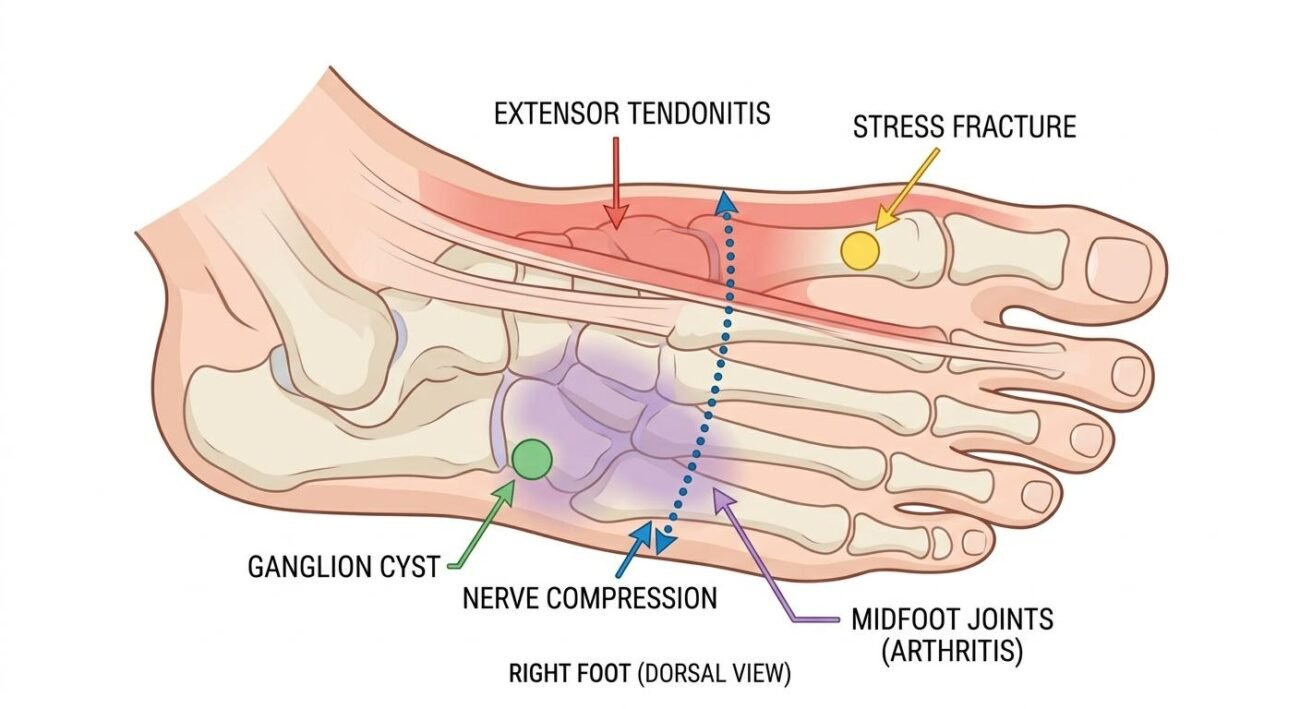
The dorsum runs from the ankle to the toes. It contains the extensor tendons that lift your toes with each step, the five metatarsal bones connecting the midfoot to toes, and several branches of the dorsal cutaneous nerve providing sensation.
This area absorbs significant force with every step, which is why it is vulnerable to overuse injuries and nerve compression.
Common causes of pain on top of foot
Extensor tendonitis
Extensor tendonitis is one of the most frequent causes of pain on top of foot, especially in runners and cyclists. The extensor tendons run along the dorsum and help lift the toes during each stride. Overuse, a sudden increase in training volume, or tight shoes pressing directly on the tendons can inflame them.
The pain is a burning or aching sensation along the upper foot that worsens during activity. Reducing activity, icing the area, and switching to wider footwear resolve most mild cases within two to four weeks.
Stress fracture
A stress fracture is a tiny crack in one of the metatarsal bones caused by repetitive force rather than a single injury. Athletes who rapidly increase training load, military recruits, and people with osteoporosis are at the highest risk.
Pain is typically sharp, focused on one specific spot on the top of the foot, and worsens with weight-bearing activity while improving significantly with rest. See our guide to stress fracture recovery on Doctiplus for more on healing timelines.
Nerve compression (dorsal cutaneous nerve)
Nerves running across the top of the foot can be compressed by tight footwear, particularly shoes with a rigid tongue or a tight lace pattern across the midfoot. Crossing your legs for long periods can also compress these nerves.
The resulting pain is often sharp, shooting, or electric in quality and may include numbness or tingling across the top of the foot. Simply loosening your laces or switching to a wider shoe often provides immediate relief.
Ganglion cyst
A ganglion cyst is a smooth, fluid-filled lump near a tendon or joint on the top of the foot. It is not cancerous and often causes no pain, but when it presses on nearby tissue, discomfort develops.
Small cysts often resolve on their own. Larger or painful cysts can be drained or surgically removed by a podiatrist. Do not attempt to burst a ganglion cyst at home.
Arthritis
Osteoarthritis affects the midfoot joints, while rheumatoid arthritis can attack multiple foot joints simultaneously. Both cause morning stiffness, aching with prolonged activity, and gradual joint swelling.
It develops gradually rather than suddenly and is more common in adults over 50. See our guide to arthritis and joint pain management on Doctiplus for more details.
Causes of pain on top of foot at a glance
Use this table as a quick reference.
| Cause | How it typically feels | First step |
| Extensor tendonitis | Burning or aching along the top | Rest, ice, wider shoes |
| Stress fracture | Sharp, localized, worse with weight | Stop activity, see a doctor |
| Nerve compression | Shooting, numb, or tingly | Loosen laces, change shoes |
| Ganglion cyst | Dull pressure from a lump | Monitor the podiatrist if growing |
| Arthritis | Stiff, achy, worse in the morning | Anti-inflammatories, physiotherapy |
Symptoms that need immediate medical attention
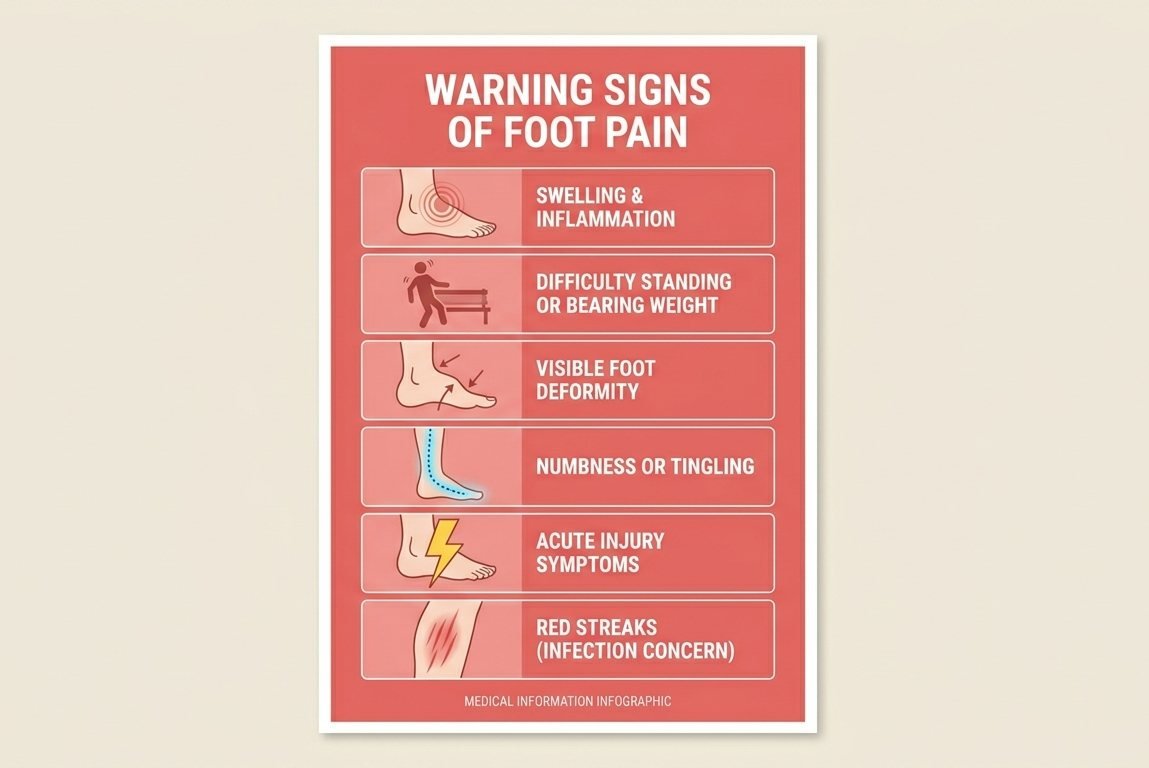
Most cases of pain on top of foot are not emergencies. However, see a doctor the same day or visit urgent care if you notice any of the following:
- Severe swelling that developed rapidly, particularly after an injury.
- Inability to bear any weight on the foot at all.
- Visible deformity or the foot looks misshapen.
- Numbness spreading up the leg from the foot.
- Intense pain following a fall, direct impact, or sudden twist.
- Skin that is red, hot, and streaking upward may indicate infection.

Home remedies and initial treatment
For pain on top of foot that is not caused by a fracture or acute nerve compression, the RICE method is the standard starting point:
- Rest: Stop the activity causing pain and avoid high-impact exercise for 48 to 72 hours.
- Ice: Apply an ice pack wrapped in a cloth for 15 to 20 minutes every 2 to 3 hours during the first 48 hours.
- Compression: A light compression bandage helps reduce swelling.
- Elevation: Raise the foot above heart level when resting to reduce fluid buildup.
Over-the-counter anti-inflammatories like ibuprofen reduce pain and swelling. Switching to wide, supportive shoes with a low heel takes pressure off the dorsum. Avoid tight-laced shoes while recovering.
For athletes, addressing training load is essential. Returning to full activity too quickly is the most common reason dorsal foot injuries recur. For sport-specific advice, see our article on foot care for runners on Doctiplus.
When to see a doctor
Book an appointment with a doctor or podiatrist if your pain on top of foot meets any of the following:
- Pain persists for more than one week despite rest and home care.
- Visible swelling or bruising that is not improving after three to five days.
- Walking becomes noticeably difficult, or your gait has changed.
- A firm lump on the top of your foot is growing or becoming more painful.
- Pain wakes you from sleep or is present at complete rest.
A podiatrist or orthopedic specialist may order X-rays, an MRI, or an ultrasound, depending on the suspected cause. The American Orthopaedic Foot and Ankle Society recommends early professional evaluation for any foot pain that affects daily activity.

Prevention tips
- Wear properly fitted shoes with adequate width in the toe box and forefoot.
- Warm up before exercise and stretch the foot and ankle afterward.
- Increase workout intensity gradually, no more than 10 percent per week.
- Replace athletic shoes every 400 to 500 miles or when midsole support is noticeably worn.
- Rest at the first sign of dorsal foot pain rather than pushing through discomfort.
- Strengthen foot muscles with toe curls and single-leg balance drills.
Frequently asked questions
Can tight shoes cause pain on top of foot?
Yes. Shoes that are too narrow or lace tightly across the midfoot compress the extensor tendons and dorsal nerves. This is one of the most correctable causes. Switching to a wider shoe with a softer upper often resolves symptoms within days. Always try changing your footwear before assuming you need medical treatment.
How do I know if I have a stress fracture or tendonitis?
A stress fracture causes sharp pain at a specific bony point that worsens with any weight-bearing and eases completely with rest. Tendonitis produces a more diffuse burning sensation along the tendon path. A doctor can confirm the diagnosis with an X-ray or MRI, as early stress fractures often do not appear on X-rays alone.
How long does pain on top of foot take to heal?
Mild extensor tendonitis typically resolves in 2 to 4 weeks with rest and proper footwear. A stress fracture requires 6 to 8 weeks of reduced weight-bearing. Nerve compression usually improves within days once the compressing shoe is changed. Arthritis and cysts require longer management strategies tailored by a specialist.
Is it safe to keep walking with pain on top of foot?
For mild cases of tendonitis or nerve compression, gentle walking is usually fine. For sharp, worsening, or injury-related pain, continuing to walk risks further damage. If weight-bearing causes significant pain or your gait is altered, rest the foot and seek medical advice before resuming normal activity.
When should I go to the emergency room for foot pain?
Go to the emergency room if you cannot bear any weight on the foot, if there is visible deformity, if the foot looks misshapen after an injury, or if you have numbness spreading up the leg. These symptoms suggest a significant fracture or nerve injury that needs same-day imaging and treatment.
Final thoughts
Pain on top of foot is a common but treatable problem. Most cases trace back to extensor tendonitis, nerve compression from tight footwear, or stress fractures from overuse. Starting with rest, the RICE method, and a wider shoe resolves a large proportion of cases within a few weeks. If your pain on top of foot persists beyond one week, comes with swelling that is not improving, or follows an injury, see a doctor for a proper assessment. Early evaluation prevents minor injuries from becoming chronic problems.
This article is for informational purposes only and is not a substitute for professional medical advice, diagnosis, or treatment.
References
- Mayo Clinic, foot pain causes and when to see a doctor, accessed 2026.
- American Orthopaedic Foot and Ankle Society, foot and ankle conditions patient resources, accessed 2026.
- American Academy of Orthopaedic Surgeons, extensor tendonitis and metatarsal stress fractures, accessed 2026.
- Cleveland Clinic, foot pain overview and home treatment, accessed 2026.
- NHS, foot pain causes and self-care, accessed 2026.