


2 Boiled Eggs Calories: Full Nutrition Breakdown
Two eggs, one pot, ten minutes. 2 boiled eggs calories come to approximately 156 kcal for two large eggs, with 12.6 grams of protein and 10.6 grams of fat. That makes them one of the most calorie-efficient high-protein breakfasts you can make. Knowing your exact 2 boiled eggs calories is the starting point for anyone building a smarter diet around whole foods. If you are tracking 2 boiled eggs calories for weight loss, fitness, or intermittent fasting, this guide gives you the exact numbers by egg size, the full hard-boiled eggs nutrition profile, how boiling compares to other cooking methods, and what current research says about eating two eggs a day.
Quick answer: 2 boiled eggs calories
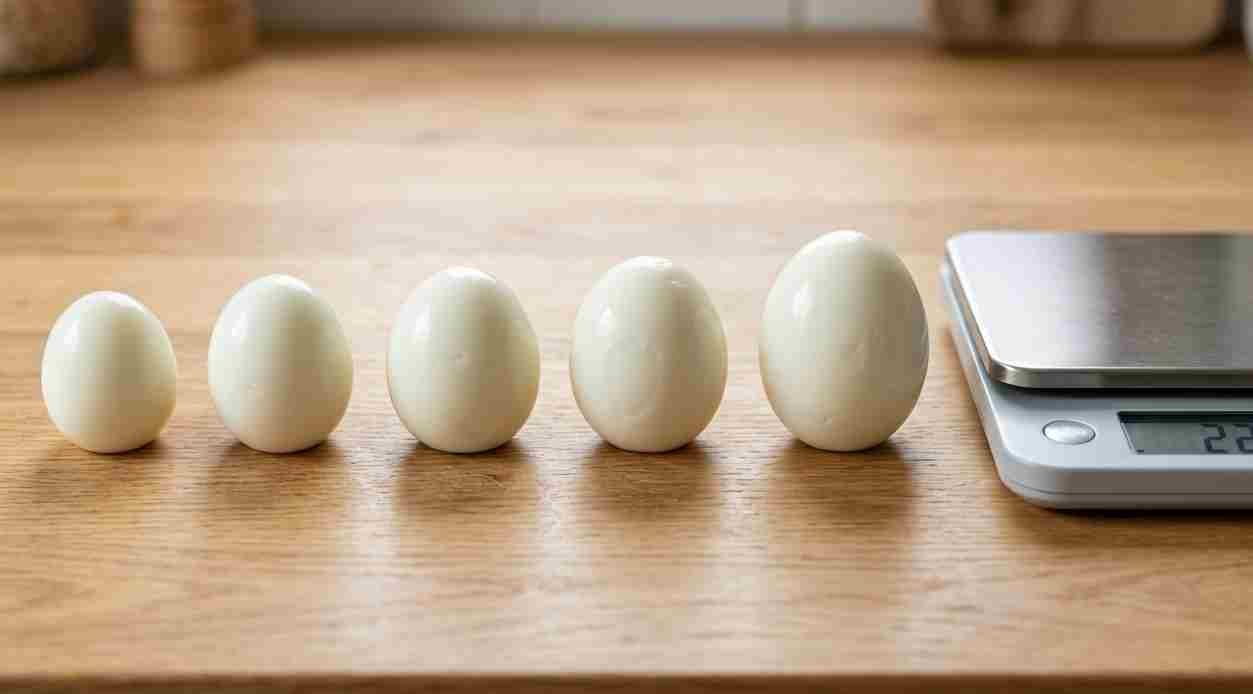
Two large boiled eggs (approximately 100 grams total) contain 156 calories, 12.6 grams of protein, and 10.6 grams of fat, based on USDA FoodData Central hard-boiled egg data. The 2 boiled eggs’ calorie figure scales with egg size. Use the table below to find the number that applies to your eggs.
2 boiled eggs calories by egg size
| Small (38 g each) | 108 kcal | 9 g | 7 g |
| Medium (44 g each) | 126 kcal | 10 g | 8.4 g |
| Large (50 g each) | 156 kcal | 12.6 g | 10.6 g |
| Extra large (56 g each) | 176 kcal | 14 g | 12 g |
| Jumbo (63 g each) | 200 kcal | 15.8 g | 13.4 g |
Most supermarket cartons in the US and India are sized large or extra large. If your carton does not specify, 156 kcal is your working baseline for 2 boiled eggs. Tracking 2 boiled eggs’ calories by size rather than guessing is the most accurate approach for meal planning.
Full hard-boiled eggs nutrition profile
Macronutrients (2 large boiled eggs)
- Calories: 156 kcal
- Protein: 12.6 g (complete protein with all essential amino acids)
- Fat: 10.6 g (3.3 g saturated, 4.1 g monounsaturated, 1.4 g polyunsaturated)
- Carbohydrates: 1.1 g
- Egg cholesterol: 372 mg
- Sodium: 124 mg
The near-zero carbohydrate content makes 2 boiled eggs calories an excellent fit for low-carb, ketogenic, and intermittent fasting plans. The egg protein content of 12.6 grams covers roughly 25 percent of a sedentary 70 kg adult’s daily protein target.
Key vitamins and minerals
Two large boiled eggs contribute meaningfully to several micronutrients that most people fall short on:
- Choline: approximately 294 mg (over 50 percent of the daily adequate intake)
- Selenium: approximately 31.7 mcg (around 58 percent of daily needs)
- Vitamin B12: approximately 1.1 mcg (around 46 percent of daily needs)
- Riboflavin: approximately 0.5 mg (around 38 percent of daily needs)
- Vitamin D: approximately 82 IU (one of the few natural food sources)
- Lutein and zeaxanthin, concentrated in the yolk, support eye health
- Iron: approximately 1.8 mg
The choline figure stands out. Most adults do not meet daily choline needs through diet alone, and choline is directly involved in brain function, liver health, and fetal neural development during pregnancy.
How many calories do 2 boiled eggs compare to other cooking methods
Boiling and poaching produce the lowest 2 boiled egg calories because no fat is added during cooking. Here is how hard-boiled eggs’ nutrition compares across preparations for two large eggs:
| Boiled or poached | 156 kcal | None | Lowest calorie option |
| Scrambled (dry pan) | 160 kcal | None | Nearly identical to boiled |
| Scrambled (butter and milk) | 220–260 kcal | Butter and milk | Varies by quantity |
| Fried (1 tsp oil) | 190–210 kcal | 1 tsp oil | Oil type affects total |
| Omelette (1 tsp oil) | 195–215 kcal | 1 tsp oil | Filling adds more |
For boiled eggs for weight loss, boiling keeps 2 boiled eggs calories at their absolute minimum. Comparing 2 boiled eggs calories across cooking methods makes the advantage clear: no other preparation delivers the same hard-boiled eggs nutrition at a lower calorie cost. For more high-protein breakfast ideas at similar calorie levels, see our best high-protein breakfast ideas guide.
Health benefits of 2 boiled eggs daily
High satiety and weight management
Eggs rank consistently high on the satiety index relative to their calorie count. Research published in the Journal of the American College of Cardiology found that participants who ate an egg-based breakfast consumed significantly fewer calories at subsequent meals. The combination of protein and fat in 2 boiled eggs produces sustained fullness that helps manage total daily intake, making boiled eggs for weight loss a well-supported dietary strategy. Keeping 2 boiled eggs calories in your morning routine is one of the simplest ways to reduce overall calorie intake without feeling deprived.
Brain support through choline
Two boiled eggs supply over 50 percent of the daily adequate intake for choline. According to the Harvard T.H. Chan School of Public Health, choline is essential for producing acetylcholine, a neurotransmitter involved in memory, mood, and muscle control. It also supports liver function and is critical for fetal brain development during pregnancy, making 2 boiled eggs calories a particularly smart choice for pregnant women.
Eye health from lutein and zeaxanthin
Egg yolks are among the richest dietary sources of lutein and zeaxanthin, two carotenoids that concentrate in the retina and lens of the eye. Higher dietary intake of these compounds is associated with reduced risk of age-related macular degeneration and cataracts. Boiling preserves these antioxidants more effectively than high-heat cooking methods like frying.
Muscle preservation
The egg protein content of 12.6 grams in two boiled eggs is a complete protein containing all nine essential amino acids, including leucine, the primary trigger for muscle protein synthesis. This makes 2 boiled eggs calories especially valuable for adults over 50, and for anyone in a calorie deficit who wants to protect lean muscle mass. See our daily protein requirements article for guidance on how eggs fit into your overall target.
Vitamin D contribution
Eggs are one of the very few natural food sources of vitamin D, a nutrient that an estimated 1 billion people worldwide are deficient in, according to the Mayo Clinic. Two boiled eggs provide approximately 82 IU of vitamin D. That is a modest proportion of the 600 to 800 IU recommended daily intake, but it is a meaningful whole-food contribution, particularly for people with limited sun exposure.
Are 2 eggs a day safe for egg cholesterol?

Two large boiled eggs contain 372 mg of egg cholesterol. The 2020 Dietary Guidelines Advisory Committee removed the previous 300 mg per day numerical limit on dietary cholesterol, reflecting evidence that dietary cholesterol has a smaller effect on blood LDL than saturated fat intake.
Large-scale analyses published in American Heart Association journals and the British Medical Journal found that for most healthy adults, eating one to two eggs per day does not significantly increase cardiovascular risk. The nutrients accompanying egg cholesterol, particularly choline, unsaturated fats, and antioxidants, partially offset any theoretical raising effect on blood lipids.
Important exceptions: People with type 2 diabetes, familial hypercholesterolemia, or existing cardiovascular disease should discuss their individual daily egg intake with a healthcare provider. For a broader look at dietary fat and heart health, see our cholesterol and heart health guide.
How to eat 2 boiled eggs for maximum benefit

The 156 kcal in 2 boiled eggs calories pairs well with nearly any meal or snack:
- With avocado toast: 2 boiled eggs sliced over one slice of wholegrain toast and half an avocado totals approximately 350 kcal with 18 grams of protein
- Over a salad: 2 boiled eggs halved over a large mixed salad with olive oil dressing makes a filling 400 kcal lunch.
- In a stir fry: 2 boiled eggs added to vegetables and 100 grams of brown rice totals approximately 450 kcal.
- As a snack: 2 boiled eggs at 156 kcal and 12.6 grams of egg protein content outperform most packaged snacks on satiety per calorie
- In egg salad: mash 2 boiled eggs with 2 tablespoons of Greek yogurt instead of mayonnaise to save approximately 80 kcal while keeping the egg protein content intact
For more on nutrient-dense foods to pair with eggs, see our choline-rich foods guide.
Frequently asked questions
How many calories are in 2 medium boiled eggs?
Two medium boiled eggs (44 grams each) contain approximately 126 kcal, 10 grams of protein, and 8.4 grams of fat, based on USDA FoodData Central data. The 2 boiled eggs’ calorie figure drops by around 30 kcal compared with large eggs. Weigh your eggs or check the size on the carton for the most accurate tracking figure.
Are boiled eggs better than fried eggs for weight loss?
Yes, for calorie control. 2 boiled eggs calories stay at 156 kcal because no fat is added in cooking. Fried eggs in one teaspoon of oil add 40 to 50 extra calories per serving, and restaurant preparations often use considerably more. The hard-boiled eggs’ nutrition profile is essentially identical between boiled and fried, so boiling is the clear winner for boiled eggs for weight loss.
Can I eat 2 boiled eggs every day?
For most healthy adults, yes. The American Heart Association, British Medical Journal meta-analyses, and the 2020 Dietary Guidelines Advisory Committee all support daily egg consumption for healthy individuals without lipid disorders. People with type 2 diabetes, familial hypercholesterolemia, or existing cardiovascular disease should discuss their appropriate daily egg intake with a healthcare provider.
Are 2 boiled eggs enough protein for a meal?
The egg protein content of 12.6 grams is a solid contribution but sits below the 20 to 30 gram threshold identified as optimal for stimulating muscle protein synthesis per meal. Two boiled eggs work best as part of a broader meal that includes other protein sources. As a snack or one component of a mixed breakfast, 12.6 grams of protein is more than sufficient for general dietary needs.
How long should you boil 2 eggs?
Lower eggs gently into already-boiling water. For hard-boiled: cook 10 to 12 minutes, then transfer immediately to an ice bath for 5 minutes to stop cooking and ease peeling. For soft-boiled (runny yolk): 6 to 7 minutes. For medium (jammy yolk): 8 to 9 minutes. Cooking time does not meaningfully affect the calories of 2 boiled eggs or the hard-boiled eggs’ nutrition profile.
Do boiled eggs help reduce belly fat?
No food targets fat in a specific location. However, the high satiety of 2 boiled eggs relative to their calorie count supports overall calorie control, which, over time, contributes to fat loss across the body. The egg protein content also preserves muscle mass during a calorie deficit, which maintains metabolic rate. The evidence for boiled eggs for weight loss is strong at the level of total calorie management
Final thoughts
2 boiled eggs calories sit at 156 kcal for two large eggs, and that number is worth knowing precisely. 2 boiled eggs calories make this one of the most nutritionally dense foods available at that calorie level. The hard-boiled eggs’ nutrition profile covers complete protein, choline, vitamin D, selenium, and eye-protective antioxidants in a preparation that takes ten minutes. The egg cholesterol question is largely settled for healthy adults: current evidence supports the daily intake of one to two eggs without significant cardiovascular risk for most people. Keep preparation simple, pair with vegetables or wholegrain carbohydrates, and let the egg protein content do the work.
The information in this article is for educational purposes only and does not replace professional medical advice, diagnosis, or treatment. Always consult a qualified healthcare provider for any concerns about your health or before starting any new treatment. Doctiplus does not endorse specific products, brands, or providers mentioned for illustrative purposes.
References
- USDA FoodData Central, eggs, hard-boiled, nutritional data entry.
- American Heart Association, dietary cholesterol and cardiovascular risk statement.
- Harvard T.H. Chan School of Public Health, The Nutrition Source, eggs and heart disease overview.
- Mayo Clinic, vitamin D deficiency prevalence and dietary sources.
- Journal of the American College of Cardiology, egg consumption and cardiovascular outcomes meta-analysis.
- British Medical Journal, egg consumption and risk of cardiovascular disease: systematic review and meta-analysis.