


Myomectomy Recovery Guide: What to Do and What to Avoid for a Smooth Healing Journey

Recovering from myomectomy surgery is a deeply personal journey, and the weeks after your procedure can feel overwhelming without a clear roadmap. Whether your surgeon removed one small fibroid or several large ones, your body needs time, proper nourishment, and careful management to heal well.
This guide covers everything you need to know about myomectomy recovery: a realistic week-by-week timeline, specific dos and don’ts, nutrition strategies, emotional health support, and the warning signs that should prompt an immediate call to your doctor. If you are searching for trustworthy post-myomectomy care advice grounded in clinical evidence, you are in the right place.
Understanding your recovery before it begins, or as soon as possible after surgery, is one of the most powerful things you can do for your healing outcome.
What Is a Myomectomy
A myomectomy is a surgical procedure to remove uterine fibroids, which are non-cancerous growths of the uterus that often appear during a woman’s childbearing years. Unlike a hysterectomy, a myomectomy removes only the fibroids while preserving the uterus, making it the preferred option for women who wish to maintain fertility or simply keep their uterus intact.
According to the Uterine fibroids, up to 80% of women develop fibroids by age 50, though not all require surgical intervention. When fibroids cause heavy bleeding, pelvic pain, pressure on adjacent organs, or fertility challenges, myomectomy becomes an important treatment option.
Types of Myomectomy and How Recovery Differs
The surgical approach your doctor recommends depends on the number, size, and location of your fibroids. Each method carries a different recovery profile.
Abdominal Myomectomy
Also called open myomectomy, this approach involves a horizontal incision across the lower abdomen, similar to a caesarean section. It is used for large, numerous, or deeply embedded fibroids. Recovery is the most demanding of all four approaches, typically requiring 4 to 6 weeks off work and 6 to 8 weeks before resuming normal activity. Hospital stay is usually 2 to 3 days.
Laparoscopic Myomectomy
A minimally invasive approach using small incisions and a camera-equipped instrument. Surgeons remove fibroids through tiny ports in the abdomen. Because tissue trauma is reduced, most patients return home the same day or after one night in the hospital. Recovery time is typically 2 to 4 weeks, and post-operative pain is notably lower than with open surgery.
Hysteroscopic Myomectomy
This technique involves no abdominal incisions at all. A thin scope is passed through the vagina and cervix into the uterus to remove fibroids growing inside the uterine cavity (submucosal fibroids). Recovery is the quickest of all approaches, often as short as 1 to 2 weeks. It is an outpatient procedure with minimal downtime.
Robotic-Assisted Myomectomy
A variation of laparoscopic surgery in which the surgeon controls robotic arms with enhanced precision and range of motion. It offers similar recovery times to standard laparoscopy (2 to 4 weeks) but may be preferred for complex cases due to improved dexterity. Not all surgical centres offer this option.
Recovery Timeline Week by Week
The table below provides a general guide. Always follow your surgeon’s personalised instructions, which take precedence over any general timeline.
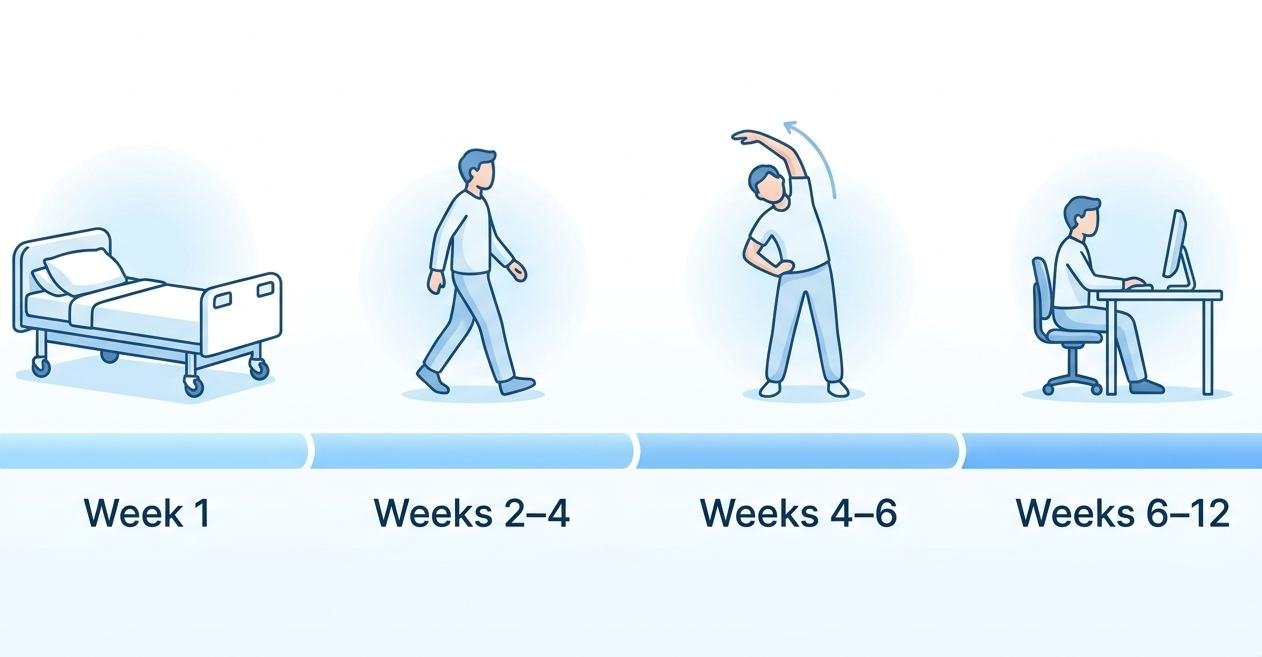
| Week 1 | Bed rest, short walks only, high pain | Rest, gentle walks, mild discomfort |
| Weeks 2-4 | Gradual mobility, no lifting > 5 lbs | Resume desk work, no lifting > 10 lbs |
| Weeks 4-6 | Light activity, short walks, extended | Light exercise permitted |
| Weeks 6-12 | Full recovery, return to work | Full recovery; return to exercise |
Week 1: Acute Healing Phase
The first week is the most physically demanding. Expect fatigue, discomfort around the incision site, light vaginal bleeding, and swelling. Pain is typically managed with prescribed medications. Short walks of 5 to 10 minutes two to three times daily help prevent blood clots and support circulation, but rest is your primary job this week. Avoid straining when using the bathroom; a stool softener is often recommended to prevent pressure on healing tissue.
Weeks 2 to 4: Gradual Return
By week two, energy levels begin returning, though fatigue after activity is normal. You can gradually increase walking duration and return to light desk-based work from home if your surgeon approves it. Vaginal discharge may continue; this is normal as the uterus sheds healing tissue. Avoid driving until you are off prescription pain medication and can brake without hesitation.
Weeks 4 to 6: Resuming Light Activity
Most laparoscopic and hysteroscopic patients reach near-normal function during this window. Abdominal myomectomy patients may still feel muscle fatigue and incision sensitivity. Light walking programmes, gentle stretching, and low-resistance movements (after physician clearance) can begin. Continue avoiding heavy lifting, vigorous exercise, and swimming.
Weeks 6 to 12: Full Recovery
The 6-week follow-up appointment is a key milestone. Your doctor will assess healing and clear you for activities such as driving long distances, resuming sexual activity, returning to the gym, and swimming. Full internal healing after abdominal myomectomy can take up to 3 months, even when external symptoms resolve, so listen to your body and avoid rushing.
What to Do During Recovery
Following evidence-based post-operative guidance significantly reduces your risk of complications and supports faster healing.
- Walk daily from day one. Even brief walks improve circulation, reduce gas pain, and lower the risk of deep vein thrombosis (DVT).
- Take all prescribed medications on schedule. Do not stop antibiotics or pain relievers early without consulting your surgeon.
- Attend all follow-up appointments. Your surgeon monitors healing, removes stitches if needed, and adjusts restrictions accordingly.
- Sleep in a supported position. Many patients find sleeping on their back with a pillow under their knees most comfortable in the first two weeks.
- Track your symptoms in a journal. Note changes in bleeding, pain levels, temperature, and energy so you can report accurately at follow-up visits.
- Wear loose, comfortable clothing around the abdomen to avoid pressure on the incision site.
- Keep the incision site clean and dry. Follow your surgeon’s wound care instructions precisely.
- Stay hydrated. Aim for 8 to 10 glasses of water daily to support tissue healing and prevent constipation.
For broader guidance on post-surgical healing strategies, read our article on How to speed up recovery from a traumatic injury.
“Patients who commit to gradual activity progression and attend every follow-up appointment consistently have fewer complications and shorter total recovery times,” says Dr. Patricia Larkin, MD, FACOG, Board-Certified OB/GYN.
What to Avoid During Recovery
Certain activities and habits significantly increase the risk of post-surgical complications, including wound dehiscence, internal bleeding, and infection.
- Avoid lifting anything heavier than 5 lbs (2.3 kg) for the first two weeks after abdominal myomectomy. Gradually increase to 10 lbs by weeks 3 to 4, only with surgeon clearance.
- Avoid strenuous exercise, including jogging, cycling, aerobics, and weight training, for at least 6 weeks after open surgery.
- Avoid sexual intercourse until your surgeon explicitly clears you, typically at the 6-week follow-up.
- Avoid using tampons or inserting anything vaginally during the healing period.
- Avoid submerging in baths, pools, hot tubs, or the sea until the incision is fully sealed, usually 4 to 6 weeks after abdominal surgery.
- Avoid straining on the toilet. Use a footstool to ease bowel movements and take a stool softener as recommended.
- Avoid NSAIDs like ibuprofen unless specifically prescribed, as they can increase bleeding risk in the early recovery period.
- Avoid alcohol while taking prescription pain medication.
- Avoid ignoring new or worsening symptoms. Fibroid surgery recovery is dynamic, and any sudden change deserves medical evaluation.
Nutrition for Faster Healing
What you eat after surgery directly influences how quickly your body rebuilds tissue, fights infection, and restores energy. A well-planned post-myomectomy diet supports all three.
| Lean proteins: chicken, fish, eggs, legumes | Processed foods high in sodium and additives |
| Leafy greens: spinach, kale, broccoli (iron-rich) | Refined sugars and sugary drinks |
| Vitamin C-rich foods: citrus, bell peppers, berries | Red and processed meats (pro-inflammatory) |
| Whole grains: oats, brown rice, quinoa | Alcohol (impairs healing and interacts with medication) |
| Healthy fats: avocado, olive oil, walnuts | Excessive caffeine (can disrupt sleep and increase anxiety) |
| Probiotic foods: yoghurt, kefir (gut health) | High-fat fried foods (slow digestion, worsen constipation) |
| Plenty of water and herbal teas | Carbonated drinks (increase gas and bloating) |

Read our in-depth article on food and long-term health: Why what you eat matters long before anything goes wrong.
Iron-rich foods deserve particular attention after myomectomy since heavy pre-surgical fibroid bleeding commonly depletes iron stores. Your surgeon may recommend a short course of iron supplementation. If you experience fatigue, breathlessness, or pallor in the weeks after surgery, ask for a blood test to rule out anaemia.
Pelvic Floor Recovery Exercise Progression
After clearance from your physician, a gentle progressive exercise programme helps restore core strength, reduce the risk of pelvic floor dysfunction, and support overall recovery. Do not begin any exercise below without explicit medical clearance.
| Stage 1 (Weeks 1-2) | Diaphragmatic breathing, ankle pumps | In bed; no core engagement |
| Stage 2 (Weeks 2-4) | Kegel exercises, short walks | Only after laparoscopic or hysteroscopic; not open surgery |
| Stage 3 (Weeks 4-6) | Gentle pelvic tilts, seated posture work | After physician clearance; stop if pain occurs |
| Stage 4 (After Week 6) | Light yoga, walking programme, low-resistance Pilates | Progressive return only; avoid high-impact until week 12 |

Learn more about how gentle physical activity supports broader recovery in our article on the connection between movement and mental well-being.
Emotional Recovery After Myomectomy
Physical healing often receives more attention than emotional recovery, yet the psychological impact of fibroid surgery can be significant. Many women report feelings of grief, anxiety, relief, vulnerability, or frustration in the weeks following myomectomy, and all of these responses are valid.
Hormonal fluctuations after uterine surgery can amplify mood swings. Some women experience weeping without an obvious cause, heightened anxiety, or difficulty sleeping, particularly in the first two to four weeks. If these feelings persist beyond four weeks, worsen significantly, or interfere with daily functioning, speak with your GP about referral to a mental health professional.
- Allow yourself to rest without guilt. Recovery is not passive; it is active healing.
- Lean on your support network. Accept practical help with meals, childcare, and household tasks.
- Set small daily goals. A short walk, a nourishing meal, or a phone call with a friend can provide meaningful structure.
- Join a fibroid or post-surgical recovery support community. Peer support reduces isolation and normalises the recovery experience.
Gut health and mood are more closely linked than many people realise. Read our article on Why your gut problems need more than generic advice.
Warning Signs That Require Immediate Medical Attention
Most myomectomy recoveries proceed without serious complications, but knowing the red flags can be life-saving. The following checklist is designed to help patients and caregivers act quickly when something is not right.

| Heavy bleeding, soaking a pad per hour | Fever above 38 degrees C (100.4 F) | Mild itching around the incision |
| Signs of blood clot: leg swelling, redness, warmth | Increasing (not decreasing) pain after day 3 | Fatigue that is slowly improving |
| Shortness of breath or chest pain | Wound separation or increased redness | Light spotting beyond week 4 |
| Loss of consciousness or extreme dizziness | Foul-smelling vaginal discharge | Constipation unresponsive to softeners |
| Sudden severe abdominal pain | Inability to pass urine or stool | Mild mood changes or anxiety |
For more guidance on recognising surgical emergencies, read our article on When immediate medical attention is the right call.
When Can You Try to Conceive After Myomectomy
One of the most common questions from patients who had myomectomy to preserve fertility is: how long do I need to wait before trying to get pregnant?
According to ACOG guidelines, the waiting period depends primarily on the depth of the uterine incision made during surgery. Your surgeon is the only person who can give you a precise recommendation based on your operative notes.
- Hysteroscopic myomectomy: Many surgeons allow conception attempts after 1 to 3 months once the uterine cavity has healed.
- Laparoscopic myomectomy (superficial fibroids): Typically 3 to 6 months.
- Abdominal or deep laparoscopic myomectomy: 6 to 12 months is common, as the uterine wall needs sufficient time to form a strong scar. Attempting pregnancy too early increases the risk of uterine rupture.
When you are cleared to try to conceive, work with your gynaecologist or a reproductive specialist to optimise your chances. A detailed ultrasound before attempting conception confirms that the uterine cavity has healed completely.
Recovery principles such as nutrition timing, activity progression, and wound care apply across many procedures. If you are supporting someone through multiple recoveries, our post-surgical recovery guide for dental procedures
And our guide to recognising complications after ACL surgery may also be helpful.
Frequently Asked Questions
How long does myomectomy recovery take?
Recovery time depends on the surgical approach. Hysteroscopic myomectomy patients often recover in 1 to 2 weeks. Laparoscopic patients typically need 2 to 4 weeks. Open abdominal myomectomy requires 6 to 8 weeks for most women to return to normal activities, with full internal healing taking up to 3 months.
What should I avoid after myomectomy?
In the first 6 weeks, avoid lifting heavy objects, strenuous exercise, sexual intercourse, swimming, and using tampons. Avoid straining during bowel movements and do not ignore new or worsening symptoms. Your surgeon’s specific instructions always take priority.
Is it normal to have vaginal bleeding after myomectomy?
Light to moderate vaginal bleeding or discharge is normal for 4 to 6 weeks after myomectomy as the uterus heals. Bleeding should gradually decrease over time. Soaking a sanitary pad every hour, passing large clots, or experiencing a sudden increase in bleeding after it had slowed are all reasons to contact your surgeon immediately.
Can I return to work after myomectomy?
This depends on your job type and which procedure you had. Desk-based workers may return to working from home after 2 to 3 weeks following laparoscopic surgery. After open abdominal myomectomy, most women need at least 4 to 6 weeks before returning to any work, and physically demanding jobs may require 8 weeks or longer off.
Will myomectomy improve my chances of pregnancy?
For many women, yes. Removing submucosal fibroids that distort the uterine cavity can significantly improve implantation rates and reduce miscarriage risk. NIH research on uterine fibroids and fertility supports the view that myomectomy can meaningfully improve reproductive outcomes in selected patients. Speak with a reproductive specialist for personalised guidance.
What foods help recovery after fibroid surgery?
Focus on iron-rich foods to replenish stores depleted by pre-surgical bleeding (leafy greens, lean red meat in moderation, legumes), high-quality protein for tissue repair (eggs, fish, chicken), and vitamin C-rich foods to enhance iron absorption. Stay well-hydrated and limit processed foods, alcohol, and excessive caffeine.
When should I be worried about pain after myomectomy?
Some pain and discomfort in the first week is expected. You should contact your surgeon if pain increases after the first three days rather than improving, if over-the-counter pain relief no longer provides adequate relief, if pain is accompanied by fever above 38 degrees C, or if you experience sudden severe abdominal pain at any point.
Conclusion
Myomectomy recovery is not simply about waiting for your body to heal. It is an active, informed process that requires you to take charge of your nutrition, activity levels, emotional health, and symptom monitoring. Women who follow evidence-based post-myomectomy care guidelines, attend follow-up appointments, and reach out promptly when something feels wrong consistently achieve the best outcomes.
Give yourself the grace to rest, the knowledge to act when needed, and the patience to let the healing process unfold at its own pace. Your uterus has just been through a major surgical procedure. Treat it with the same care and attention you would give any serious wound, because that is exactly what it is.
Medical Disclaimer
Medical Disclaimer: The information provided in this article is for educational purposes only and is not intended as medical advice. Always consult a qualified healthcare professional before making any decisions about your health, diagnosis, or treatment. Doctiplus does not endorse any specific treatments, procedures, or products mentioned in this article.
References
1. American College of Obstetricians and Gynecologists. (2023). Uterine Fibroids. ACOG Patient Education. https://www.acog.org/womens-health/faqs/uterine-fibroids
2. Mayo Clinic Staff. (2023). Myomectomy. Mayo Clinic. https://www.mayoclinic.org/tests-procedures/myomectomy/about/pac-20384710
3. National Institute of Child Health and Human Development. (2022). Uterine Fibroids. NIH. https://www.nichd.nih.gov/health/topics/uterine
4. Cleveland Clinic. (2023). Myomectomy Recovery. Cleveland Clinic. https://my.clevelandclinic.org/health/treatments/22264-myomectomy
5. NHS. (2022). Hysterectomy – Recovery. NHS UK. https://www.nhs.uk/conditions/hysterectomy/recovery/
6. Johns Hopkins Medicine. (2023). Uterine Fibroids. Johns Hopkins. https://www.hopkinsmedicine.org/health/conditions-and-diseases/uterine-fibroids