

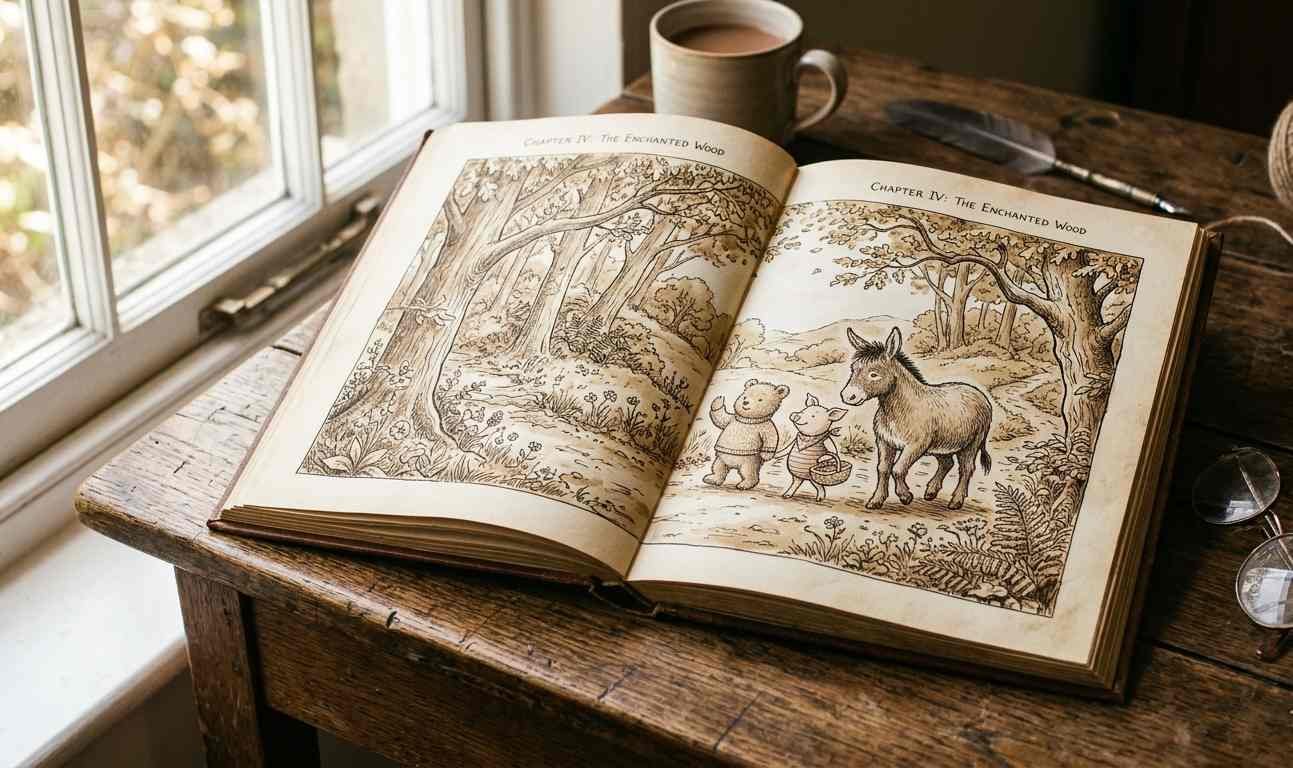
Pooh Mental Illnesses: Psychology of Winnie the Pooh Characters Explained
A widely discussed psychology theory suggests that each character in A.A. Milne’s Winnie the Pooh stories represents a unique mental health condition. Popularized by a medical journal article, this theory, known as the Pooh mental illnesses hypothesis, uses the beloved Hundred Acre Wood characters to initiate conversation about real-world mental health. While not a formal diagnosis, this analysis makes psychology accessible and understandable. Here’s how the idea started, which conditions each character is said to represent, and why the theory stays relevant today.
Origin of the Pooh Mental Illness Theory
The Pooh mental illnesses theory gained acceptance after Dr. Sarah E. Shea and colleagues published “Pathology in the Hundred Acre Wood” in the Canadian Medical Association Journal (CMAJ) in December 2000. Featured as a satirical article in the journal’s Christmas issue, the paper humorously applied DSM psychiatric criteria to Winnie the Pooh characters. Though tongue-in-cheek, the analysis drew from real psychological frameworks and has since become a viral topic in pop culture and psychology circles.
Why the Winnie the Pooh Psychology Theory Went Viral
- Familiar characters like Pooh, Piglet, and Eeyore make mental health concepts less intimidating and easier to grasp.
- Each Pooh character’s consistent personality traits in Milne’s stories make the mental illness theory feel relatable and believable.
- As mental health awareness grew in the 2010s, the Pooh psychology theory fit the public’s increasing interest in understanding mental health diagnoses.
- Social media helped the theory go viral, with infographics and lists spreading widely—often without the original setting or satirical intent.
Pooh Characters and Their Theorized Mental Health Conditions
Here is a quick reference mapping each major Winnie the Pooh character to the mental health condition proposed by the 2000 CMAJ paper. These are interpretations, not clinical diagnoses.
| Character | Theorized condition | Key behavior cited |
| Pooh | Impulse control and food fixation | Obsessive pursuit of honey |
| Piglet | Generalized anxiety disorder | Constant worry and jumpiness |
| Eeyore | Persistent depressive disorder | Chronic gloom and withdrawal |
| Tigger | ADHD | Impulsive bouncing, low caution |
| Rabbit | Obsessive-compulsive traits | Rigid garden control |
| Owl | Dyslexia interpretation | Misspellings despite confidence |
| Kanga | Overprotective parenting style | Hyper-vigilance over Roo |
| Roo | Developmental traits (contested) | Limited social caution |
| Christopher Robin | Imaginary friend behavior | Conversations with animals |
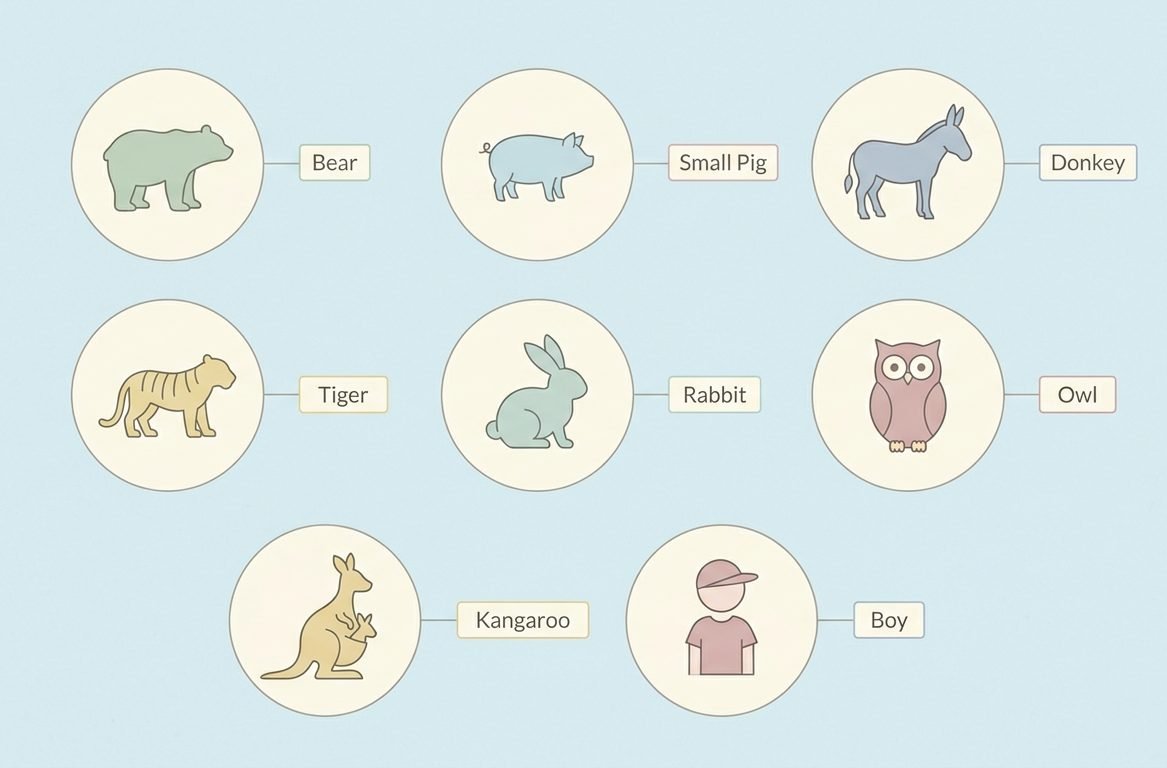
Winnie the Pooh: impulse control and obsessive eating tendencies
The paper suggested that Pooh displays attention-deficit features along with an obsessive fixation on honey. His single-minded pursuit of food, frequently at the expense of safety or awareness, was framed as impulsive behavior paired with compulsive eating tendencies.
Piglet: generalized anxiety disorder
Piglet’s chronic worry, exaggerated startle responses, and persistent self-doubt mapped closely to a generalized anxiety disorder. His tendency to imagine the worst outcome connected with readers who experience similar patterns. For more on how anxiety presents beyond fiction, see our guide to signs of generalized anxiety on Doctiplus.
Eeyore: persistent depressive disorder
Eeyore’s chronic low mood, pessimistic outlook, and social withdrawal were interpreted as persistent depressive disorder (formerly dysthymia). He rarely initiates interaction and carries a quiet resignation. In real life, these patterns deserve compassionate attention. Our article on noticing early depression covers the warning signs to watch for.
Tigger: Attention Deficit Hyperactivity Disorder
Tigger’s inexhaustible energy, impulsive bouncing, and poor risk assessment were linked to ADHD. He acts before thinking and changes focus rapidly. These traits are endearing in fiction yet reflect real challenges many adults navigate. Learn more in our guide to understanding adult ADHD.
Rabbit: obsessive compulsive personality traits
Rabbit’s rigid need for order, control over his garden, and frustration when routines are disrupted were interpreted as obsessive-compulsive personality traits. His discomfort with spontaneity shows a pattern that goes beyond a simple preference for neatness.
Owl: dyslexia interpretation
Despite presenting as the wisest Hundred Acre Wood resident, Owl consistently misspells words and misreads situations. The paper interpreted this gap between perceived competence and actual literacy as a reflection of dyslexia.
Kanga: overprotective parenting style
Kanga’s intense focus on protecting Roo from every possible danger was read as anxious parenting. Her hyper-vigilance limits Roo’s independence and mirrors patterns that professionals associate with parental anxiety.
Roo: developmental considerations
Some later interpretations suggested Roo’s limited social caution might point toward autism spectrum traits. This reading is contested and was not a central claim of the first study’s paper.
Christopher Robin: a developmental note
Christopher Robin’s conversations with animal friends were sometimes interpreted as imaginary friend behavior. This is normal in childhood and only becomes a concern if it persists into late adolescence and interferes with relationships.
What the theory gets right and where it falls short
Strengths of the framing
- The theory encourages public conversation about mental health conditions that many people find difficult to discuss openly.
- Tying conditions to beloved characters helps lessen stigma and makes the topic less intimidating for people encountering it for the first time.
- It helps non-specialists recognize broad behavioral patterns that may warrant professional attention.
Important limitations
- Fictional characters cannot be clinically diagnosed. Their behaviors were written for narrative purposes, not to meet diagnostic criteria.
- Behaviors that seem consistent in a story do not capture the full complexity of real mental health conditions, which vary widely between individuals.
- The theory can encourage self-diagnosis based on character resonance, which is unreliable and potentially harmful.
- Real conditions like ADHD, depression, and anxiety involve nuanced assessments that cannot be reduced to a single character trait.
What this teaches us about real mental health
The lasting value of the Pooh mental illnesses theory is the doorway it opens into genuine awareness. Anxiety, depression, ADHD, and OCD are among the most common conditions affecting adults, according to the National Institute of Mental Health. Recognizing a pattern in yourself is a meaningful first step, but a trained specialist can provide a proper assessment that accounts for history, context, and the full range of symptoms.

How to seek help if you recognize yourself
- Speak with your primary care provider as a first step. They can screen for common conditions and provide referrals.
- Request a referral to a licensed mental health professional, such as a psychologist, psychiatrist, or licensed counselor.
- Consider telemedicine services if in-person access is limited in your area.
- If you or someone you know is undergoing a crisis, contact the 988 Suicide and Crisis Lifeline (call or text 988 in the US) or visit your nearest emergency room. For information on choosing a provider, see our article on how to find a mental health professional.
Frequently asked questions
Is the Pooh mental illness theory officially recognized?
No. The theory comes from a tongue-in-cheek paper published in the Canadian Medical Association Journal’s Christmas edition. It was never intended as a formal diagnostic exercise and is not endorsed by any psychiatric organization as a clinical tool.
Did A.A. Milne intend his characters to represent mental health conditions?
There is no evidence that Milne wrote his characters with specific psychiatric conditions in mind. He created them as children’s stories in the 1920s, decades before many of these diagnostic categories existed in their current form.
Can fictional characters actually be diagnosed?
Not in any clinically meaningful way. Diagnosis requires a thorough evaluation of a real person’s history, symptoms, and functioning. Fictional characters do not have the depth, variability, and lived experience that a proper assessment demands.
Why is this theory so popular on social media?
The theory maps complex conditions onto universally known characters, making it easy to share and understand at a glance. Social media thrives on this kind of approachable, visual content, though the nuance of the first paper is often lost in the process.
What did the first 2000 paper conclude?
The paper concluded that each major Hundred Acre Wood character met criteria for at least one condition in the DSM framework. However, the authors acknowledged that their analysis was interpretive and satirical, not a genuine clinical exercise.
Where can I learn more about the conditions mentioned?
Reputable starting points include the National Institute of Mental Health, the American Psychiatric Association, and the Mayo Clinic’s mental health library. For any condition you suspect may apply to you, a conversation with a licensed professional is the most valuable next step.
Final thoughts
The Pooh mental illnesses theory endures because it meets people where they are, using characters they know to initiate conversations about mental health. The theory is interpretive, not diagnostic, and works best when it inspires inquisitiveness rather than self-labeling. If reading about Piglet’s anxiety or Eeyore’s low mood makes you reflect upon your own experiences, that reflection is valuable. The next step is not to identify with a character but to talk to someone qualified to help.
The information in this article is for educational purposes only and does not replace professional medical advice, diagnosis, or treatment. Always consult a qualified healthcare provider for any concerns about your health or before starting any new treatment. Doctiplus does not endorse specific products, brands, or providers mentioned for illustrative purposes.
References
- Shea SE et al, Pathology in the Hundred Acre Wood, Canadian Medical Association Journal, 2000.
- American Psychiatric Association, Diagnostic and Statistical Manual of Mental Disorders, Fifth Edition, Text Revision (DSM-5-TR).
- National Institute of Mental Health, mental health condition resources and statistics, accessed 2025.
- Mayo Clinic, mental illness overview and condition library, accessed 2025.
- World Health Organization, International Classification of Diseases, 11th Revision (ICD-11), mental health classifications.
- A.A. Milne, Winnie-the-Pooh, 1926, original version now in the US public domain since 2022.