

Protein in 2 Bananas: How Much You Actually Get
Protein in 2 bananas is approximately 2.6 grams. That is the USDA-verified figure for two medium bananas weighing around 236 grams. Two large bananas can reach 3 grams. Knowing exactly how much protein in 2 bananas you are getting is the first step to using them correctly in your diet. Bananas are not a protein food. They are a carbohydrate and micronutrient food whose banana nutrition profile supports fitness goals in ways that go well beyond their protein count. If you are tracking macros, timing pre-workout snacks, or checking whether banana protein content fits your muscle goals, this guide gives you the full picture: exact numbers, a fruit protein comparison, honest limitations, and the pairing strategies that actually raise your protein intake.
Quick answer: protein in 2 bananas
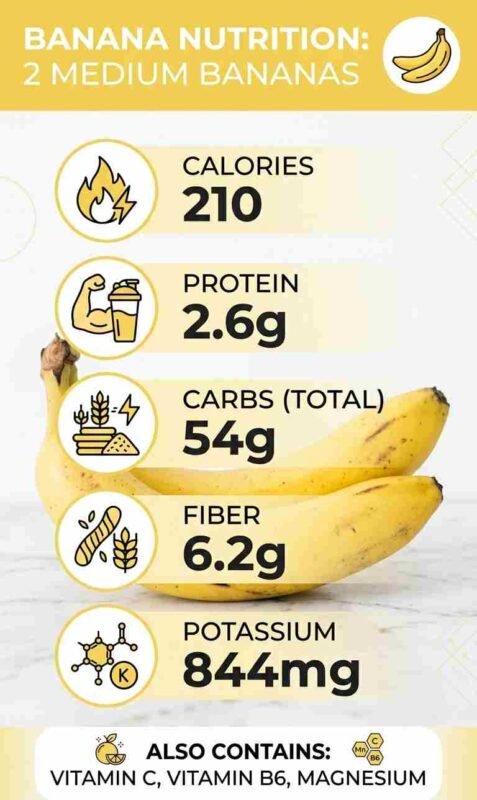
Two medium bananas (approximately 236 grams) provide 2.6 grams of protein. Two large bananas provide approximately 3 grams. The protein in 2 bananas scales with size, and ripeness makes no meaningful difference to the total.
That 2.6 grams represents roughly 4 percent of the total calories in two medium bananas. Carbohydrates account for over 90 percent of those same calories. Protein in 2 bananas is a real dietary contribution, but it cannot serve as your protein strategy on its own. Most people searching for protein in 2 bananas are looking to understand where bananas fit in a macro-tracked diet, and the honest answer is: as fuel and electrolytes, not as protein.
Full banana nutrition breakdown
The table below shows the complete banana macros for one and two medium bananas, sourced from USDA FoodData Central raw banana entries:
| Calories | 105 kcal | 210 kcal |
| Protein | 1.3 g | 2.6 g |
| Carbohydrates | 27 g | 54 g |
| Sugar | 14 g | 28 g |
| Fiber | 3.1 g | 6.2 g |
| Fat | 0.4 g | 0.8 g |
| Potassium | 422 mg | 844 mg |
| Vitamin B6 | 0.4 mg | 0.8 mg |
| Vitamin C | 10 mg | 20 mg |
| Magnesium | 32 mg | 64 mg |
The banana nutrition numbers beyond protein are striking. Two bananas deliver 844 mg of potassium (nearly 18 percent of the daily target), 0.8 mg of vitamin B6 (around 47 percent of daily needs for most adults), and meaningful magnesium and vitamin C. These micronutrients drive most of the benefits of bananas for muscle building and recovery, not the banana protein content.
Why protein in 2 bananas is not enough on its own
Protein in 2 bananas covers roughly 2 to 4 percent of daily needs for a moderately active adult. According to the Indian Council of Medical Research nutrient requirements guidelines, adults need 0.8 to 1.6 grams of protein per kilogram of body weight per day. A 70 kg adult needs 56 to 112 grams daily. Two bananas provide 2.6 grams of protein in 2 bananas, a useful contribution but not a meaningful protein source on its own.
Bananas also lack several essential amino acids in meaningful quantities, meaning the banana protein content is nutritionally incomplete. One tablespoon of peanut butter provides 3.5 grams of more complete protein. One large boiled egg provides 6.3 grams. The protein in 2 bananas does not compete with either.
The banana nutrition value lies elsewhere: fast-digesting carbohydrates, electrolytes, and B vitamins.
Banana protein compared with other fruits
Here is how protein in 2 bananas compares with a 200-gram serving of other common fruits, based on USDA FoodData Central data:
| Guava | 200 g | 4.4 g | 136 kcal |
| Avocado | 200 g | 4.0 g | 320 kcal |
| Jackfruit | 200 g | 3.2 g | 186 kcal |
| Banana | 200 g | 2.2 g | 178 kcal |
| Kiwi | 200 g | 2.1 g | 122 kcal |
| Apple | 200 g | 0.5 g | 104 kcal |
| Watermelon | 200 g | 0.9 g | 60 kcal |
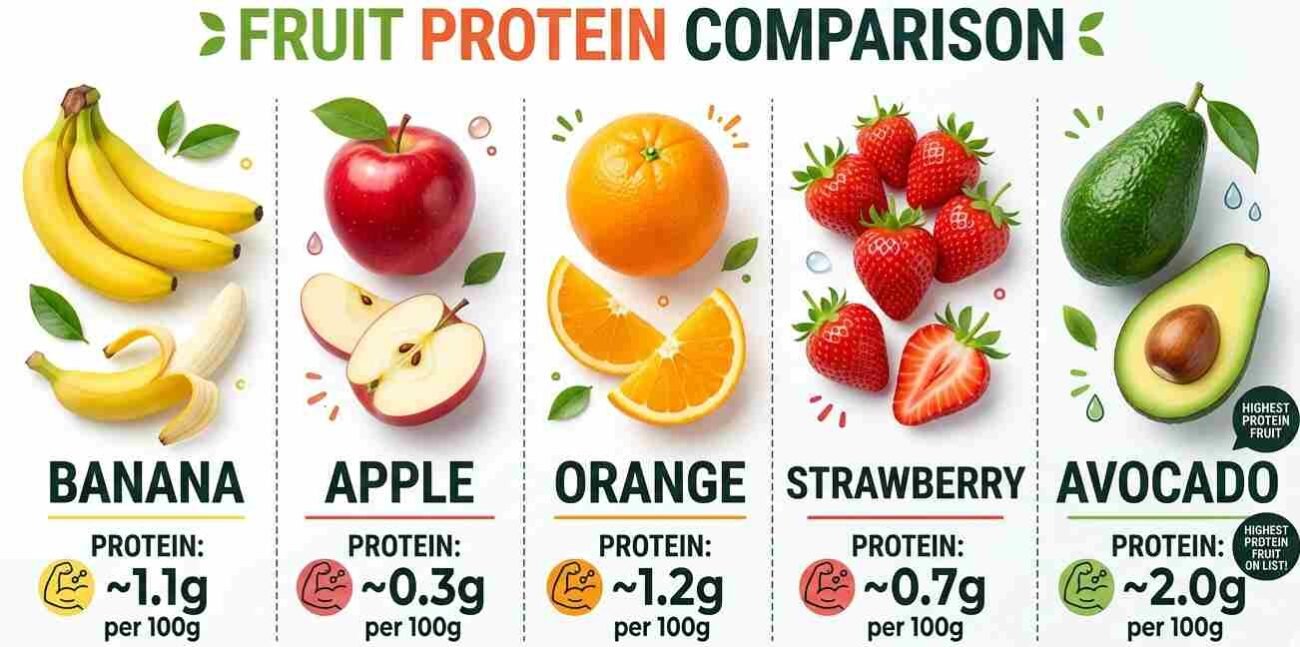
Banana protein content sits in the middle of the fruit protein comparison. Guava and avocado lead, but avocado comes with significantly more calories. For a full ranking, see our article on best high-protein fruits.
How bananas support your fitness goals
Protein in 2 bananas is not the main reason to eat them before or after training. These four contributions are.
Pre-workout fuel
Two bananas provide 54 grams of fast-digesting carbohydrates. Eaten 30 to 60 minutes before training, they top up glycogen stores without digestive discomfort. The banana macros in this context are primarily carbohydrate-driven. For timing and pairing ideas, see our pre-workout snacks guide.

Post-workout glycogen recovery
After training, two bananas replenish glycogen and deliver 844 mg of potassium to replace electrolytes lost in sweat. The American College of Sports Medicine recommends fast-acting carbohydrates within 45 minutes of exercise for glycogen resynthesis. Bananas are one of the most practical options for this window.
Muscle preservation through vitamin B6
Two bananas supply approximately 47 percent of the daily recommended intake for vitamin B6. According to the Harvard T.H. Chan School of Public Health, vitamin B6 is directly involved in protein metabolism and amino acid processing. It does not build muscle independently, but it supports the enzymatic pathways that allow your body to use dietary protein efficiently.
Cramp and recovery support
The 844 mg of potassium and 64 mg of magnesium in two bananas both support neuromuscular function. Potassium regulates muscle contractions and fluid balance. Magnesium supports nerve signalling and energy production during exercise.
Smart pairings to boost protein in 2 banana meals
Pairing two bananas with higher-protein foods is the practical solution for anyone who wants the protein in 2 bananas to actually count toward their daily target. Here are the best combinations for bananas for muscle-building goals:
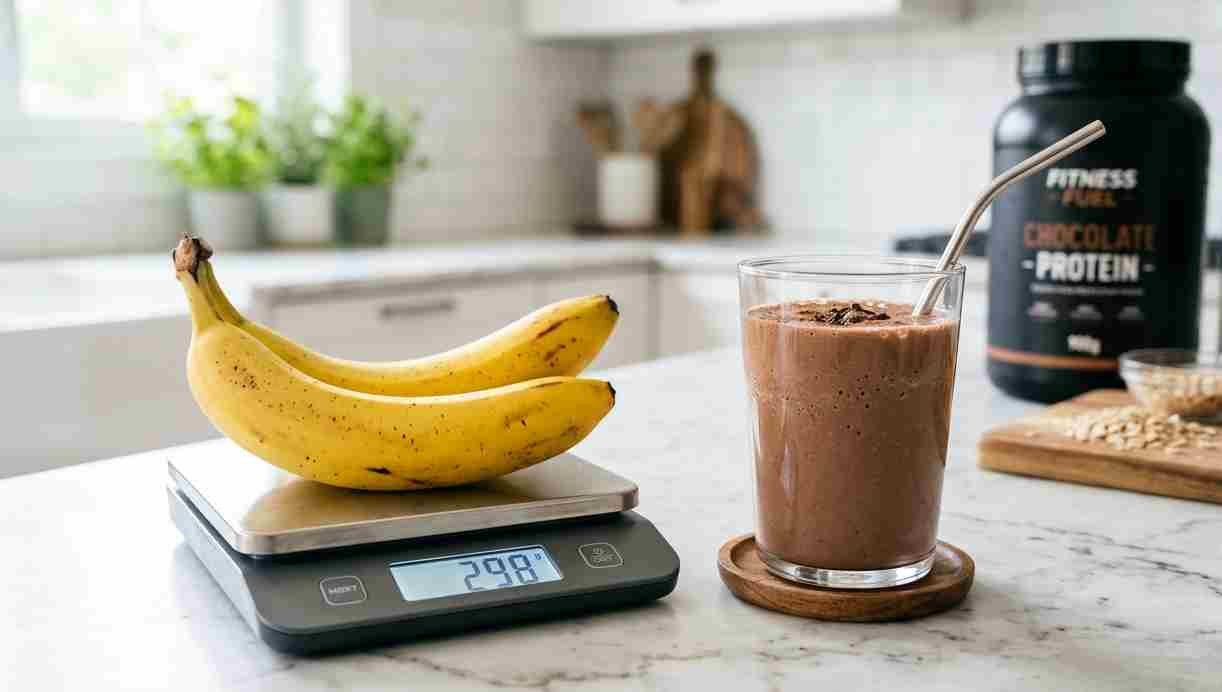
- Protein shake: 2 bananas blended with 1 scoop whey protein and 250 ml milk provides 33 to 35 grams of total protein
- Peanut butter pairing: 2 bananas with 2 tablespoons of peanut butter adds 8 grams of protein, bringing the total to 10.6 grams
- Overnight oats: 2 bananas with oats, 200 ml milk, and 2 tablespoons chia seeds provide approximately 18 grams
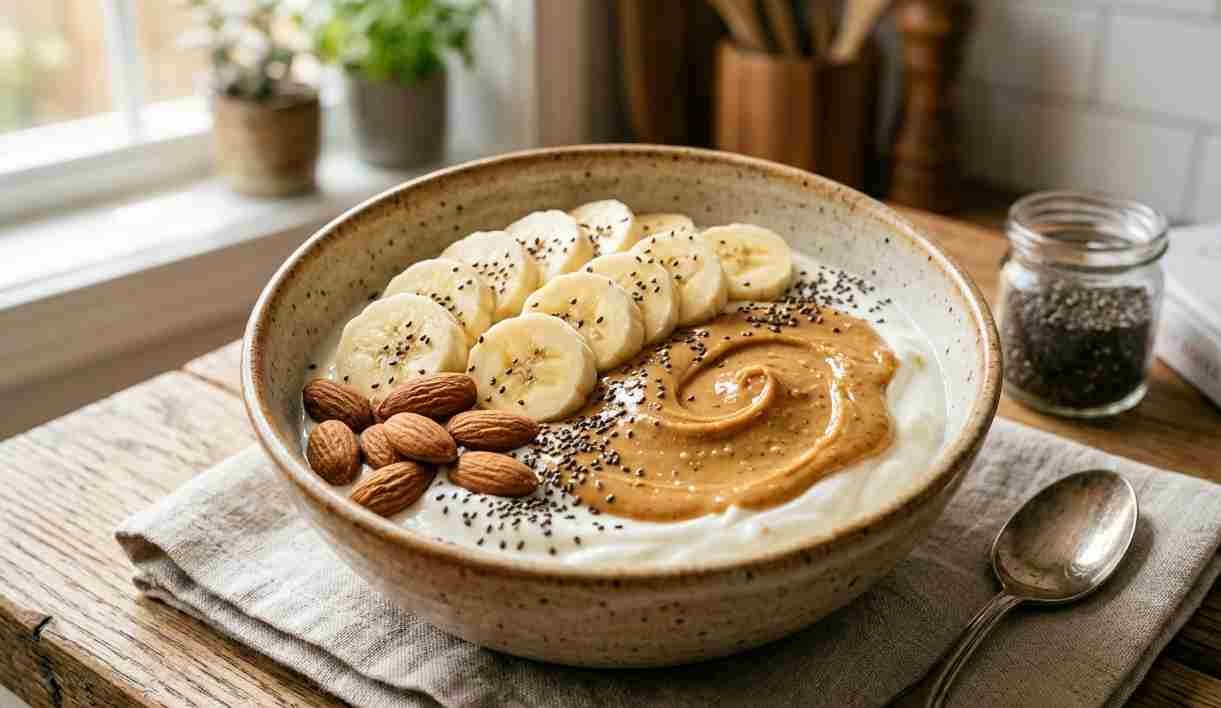
- Greek yogurt bowl: 2 bananas with 150 g Greek yogurt and a handful of almonds provides approximately 20 grams
- Protein pancakes: 2 bananas mashed with 3 egg whites and 40 g oats deliver approximately 22 grams per batch
For more ideas, see our guide on healthy banana smoothie recipes.
When the protein in 2 bananas is too much banana
Diabetics. Two medium bananas contain 28 grams of sugar and 54 grams of total carbohydrates. Their glycemic index is around 51. For people managing type 2 diabetes, the American Diabetes Association recommends spreading fruit intake throughout the day rather than consuming it in large quantities at once.
Chronic kidney disease. Two bananas deliver 844 mg of potassium. For individuals on potassium-restricted diets due to CKD or dialysis, this represents 40 percent or more of a typical daily potassium ceiling. Consult your nephrologist before eating two bananas regularly if you have CKD.
Calorie deficit phases. At 210 kcal per two bananas, they are energy-dense relative to lower-calorie fruits. Tracking banana nutrition and portion size matters when caloric space is limited.
Best timing to maximise protein in 2 banana pairings
For a full overview of daily protein needs and how fruit fits in, see our daily protein requirements guide.
- 30 to 60 minutes pre-workout: eat 2 bananas with a small protein source (boiled egg, handful of nuts) to fuel training and blunt the glycemic spike
- Within 45 minutes post-workout: combine 2 bananas with a fast protein source (whey, Greek yogurt, paneer) to hit both glycogen replenishment and muscle repair simultaneously
- At breakfast: mash oats alongside eggs for a balanced banana nutrition start to the day
Frequently asked questions
Can I build muscle by eating bananas?
Not directly. Protein in 2 bananas (2.6 grams) is far too low to drive muscle protein synthesis on its own. Bananas support muscle building indirectly through carbohydrate fuelling, glycogen recovery, and vitamin B6 for protein metabolism. Pair them with a substantial protein source such as whey, eggs, or Greek yogurt to make the meal work for banana for muscle-building goals.
How many bananas should I eat per day for fitness?
One to two bananas per day is appropriate for most active adults. Two bananas pre or post workout delivers useful banana macros for carbohydrate and electrolyte needs. More than three per day adds a significant sugar load without proportional benefit. One banana with a protein source usually delivers better macro balance than two bananas alone.
Are bananas a complete protein source?
No. A complete protein contains all nine essential amino acids in adequate amounts. Banana protein content lacks several essential amino acids in meaningful quantities. Bananas are best understood as a carbohydrate and micronutrient food, not a protein food. Protein in 2 bananas contributes to daily intake, but cannot meet protein needs on its own.
Is protein from bananas enough after a workout?
No. Post-workout recovery requires 20 to 40 grams of high-quality protein to stimulate muscle protein synthesis, according to the Journal of the International Society of Sports Nutrition. Protein in 2 bananas provides 2.6 grams. They are an excellent carbohydrate source post-workout, but must be paired with eggs, whey, paneer, or legumes to actually support muscle repair.
Do green bananas have more protein than ripe ones?
No, not meaningfully. Banana protein content remains stable across ripeness levels. What changes is the starch-to-sugar ratio. Green bananas are higher in resistant starch; ripe bananas are higher in free sugars. The difference in banana macros between green and ripe is in the carbohydrate composition, not the protein content.
Which fruit has the highest protein content?
Guava leads common fruits at approximately 2.6 grams of protein per 100 grams, followed by avocado at around 2.0 grams per 100 grams and jackfruit at approximately 1.7 grams per 100 grams. For a full fruit protein comparison, our best high protein fruits article covers 15 fruits with complete macro profiles.
Final thoughts
Protein in 2 bananas is 2.6 grams, and that figure is worth knowing precisely. Protein in 2 bananas alone will not move your muscle-building needle, but the full banana nutrition picture, including 54 grams of fast carbohydrates, 844 mg of potassium, and 47 percent of your daily B6, makes a strong case. Use banana macros for what they genuinely deliver: fuel, recovery, and electrolyte support. Pair them with a real protein source, and the protein in 2 bananas complements a serious fitness diet rather than merely sitting alongside it.
The information in this article is for educational purposes only and does not replace professional medical advice, diagnosis, or treatment. Always consult a qualified healthcare provider for any concerns about your health or before starting any new treatment. Doctiplus does not endorse specific products, brands, or providers mentioned for illustrative purposes.
References
- USDA FoodData Central, bananas raw nutrient data entry.
- Indian Council of Medical Research, nutrient requirements and recommended dietary allowances for Indians, 2020.
- National Institute of Nutrition, Hyderabad, Indian food composition tables.
- American College of Sports Medicine, nutrition and athletic performance position stand.
- Harvard T.H. Chan School of Public Health, The Nutrition Source, vitamin B6 and protein metabolism.
- Journal of the International Society of Sports Nutrition, protein timing and muscle protein synthesis review.