

Upma Calories: 1 Plate, 1 Cup, and 100g Compared
Upma calories are more reasonable than most people assume. One standard plate of sooji upma runs 330 to 395 kcal, depending on oil quantity and vegetables, which puts it firmly in range for a weight-management breakfast. The problem is not the dish itself but how it is made. If you are tracking upma calories for weight loss, fitness, or diabetes management, here are the exact numbers by serving size, the full macronutrient breakdown, how preparation drives the final count up or down, and four lighter variations worth switching to.
What is upma?
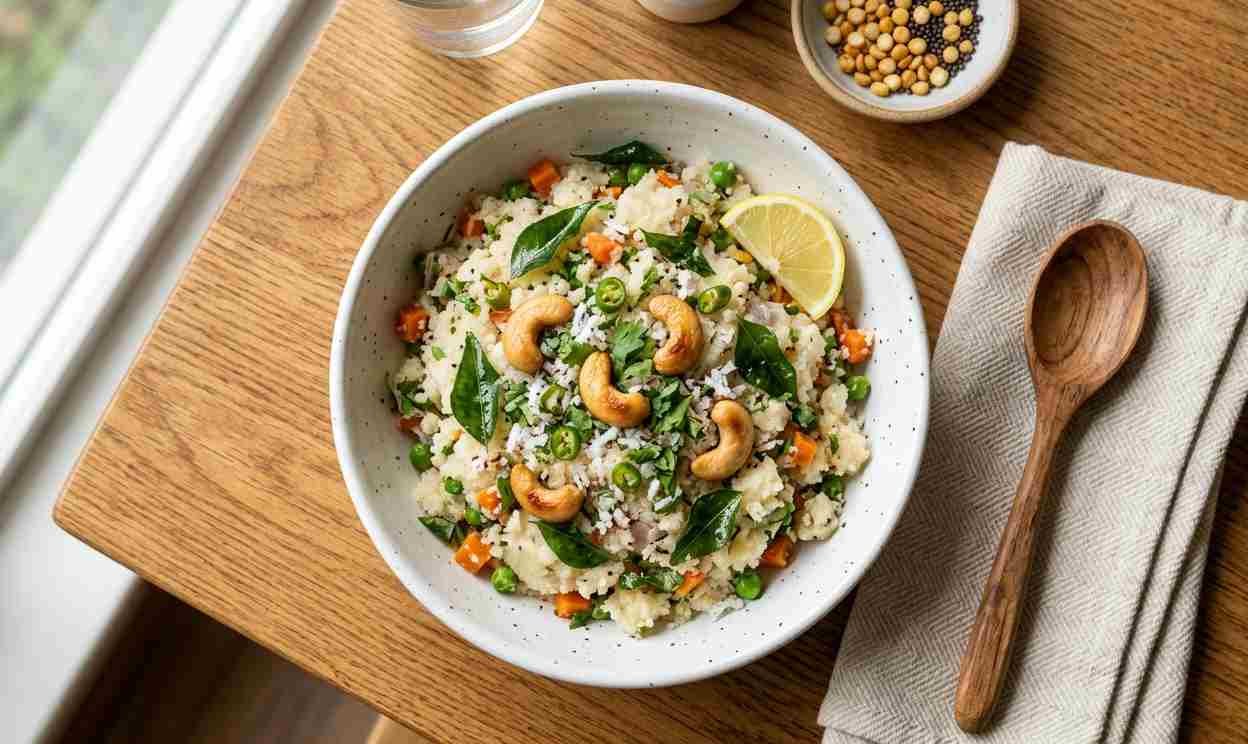
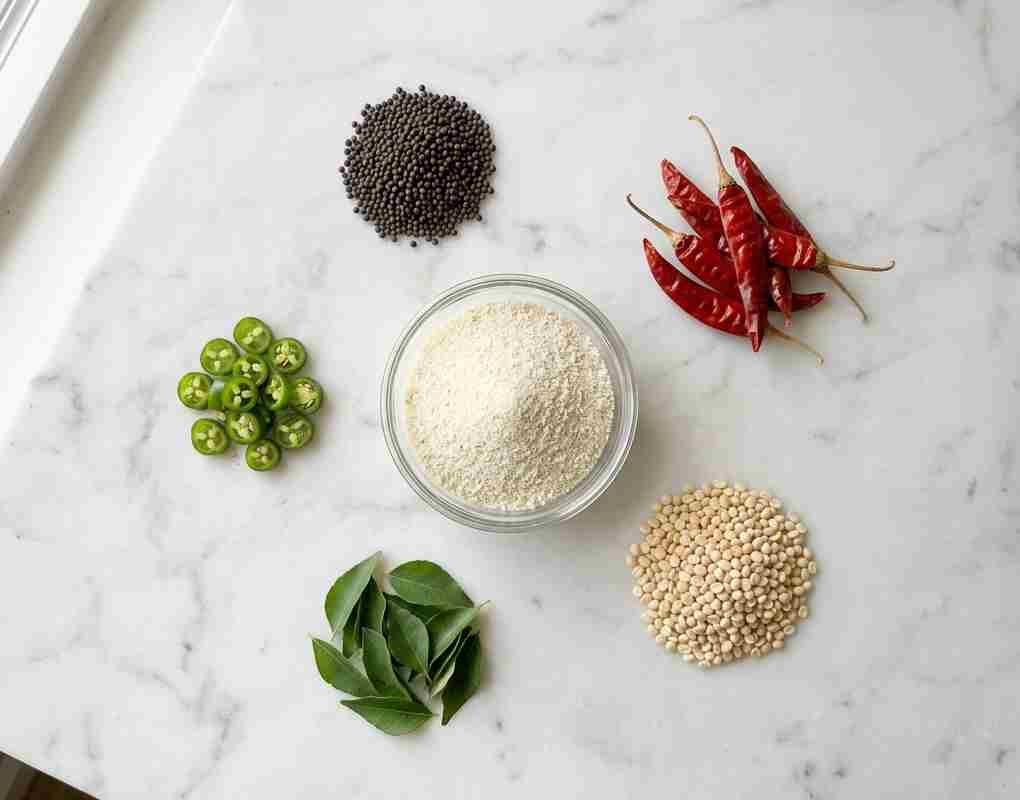
Upma is a savory South Indian breakfast made from dry-roasted semolina (sooji or rava) cooked with water into a soft, thick consistency. A standard recipe starts with a tempering of mustard seeds, urad dal, curry leaves, ginger, and green chilies in oil or ghee. Onions, vegetables, and roasted semolina follow. The calorie count in sooji upma varies based on the oil quantity, the semolina-to-water ratio, and any nuts or coconut added on top.
Upma calories at a glance
The table below gives upma calories by serving size for a standard home-cooked recipe using 1.5 teaspoons of oil, mixed vegetables, and no nuts. Values are drawn from the National Institute of Nutrition, Hyderabad, food composition tables, and cross-referenced with the Indian Council of Medical Research dietary guidelines.
| 100 grams | 132–158 kcal | 22–27 g | 3–4 g |
| 1 small cup (180 g) | 240–280 kcal | 40–48 g | 5–7 g |
| 1 standard plate (250 g) | 330–395 kcal | 55–67 g | 7–10 g |
| 1 large plate (350 g) | 460–555 kcal | 77–94 g | 10–14 g |
Each extra tablespoon of oil adds approximately 120 kcal to these upma calories figures. A handful of cashews adds another 80 to 100 kcal on top.
Full upma nutrition breakdown
Macronutrients per 100 grams
Standard rava upma calories per 100 grams, based on NIN Indian Food Composition Tables:
- Calories: 132 to 158 kcal
- Carbohydrates: 22 to 27 g
- Protein: 3 to 4 g. Upma protein is modest; pair with sambar or eggs to close the gap
- Fat: 3 to 5 g, depending on the oil used
- Fiber: 1.5 to 2.5 g
- Sugar: under 1 g
Micronutrients worth noting
Semolina provides iron, B vitamins (thiamine and niacin), and manganese. Curry leaves add small amounts of vitamin A and vitamin C. Adding half a cup of mixed vegetables (carrots, peas, beans) contributes only 10 to 25 extra upma calories while meaningfully boosting beta-carotene, folate, and vitamin K.
How preparation changes upma calories
This is where rava upma calories can swing by 200 to 300 kcal from one kitchen to the next.
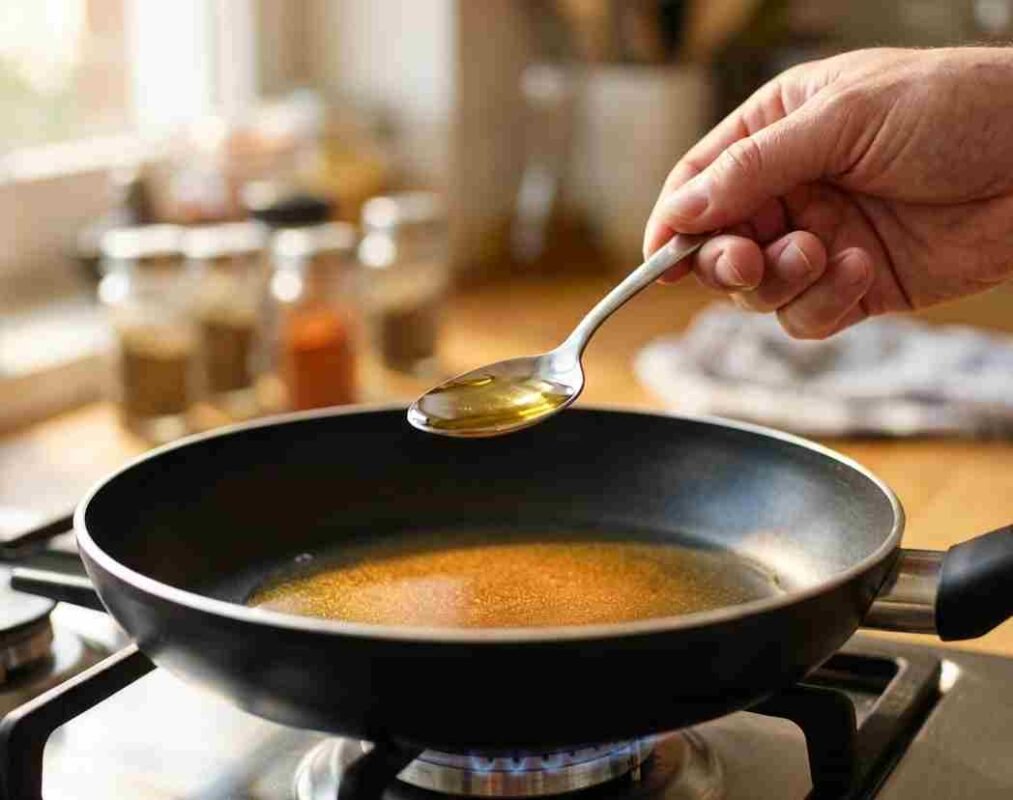
- Oil and ghee. One tablespoon of oil adds 120 kcal. Switching from two tablespoons to two teaspoons saves around 200 kcal per serving. Measure with a spoon, never pour directly.
- Nuts. A restaurant cashew garnish of 10 to 12 pieces adds 80 to 100 kcal. Limiting to 4 to 5 cashews keeps the hit under 30 kcal.
- Fresh coconut. Two tablespoons of grated coconut add roughly 70 kcal. Use it as a one-teaspoon garnish if you are watching upma calories closely.
- Vegetables. A full cup of mixed vegetables adds 30 to 50 kcal while doubling the fiber and significantly increasing satiety.
- Semolina quantity. Restaurant portions use 50 to 70 grams of dry semolina versus 30 to 40 grams at home. That gap alone accounts for 80 to 120 extra upma calories per plate.
Upma compared with other Indian breakfasts
Here is how upma calories compare with common low-calorie Indian breakfast alternatives at a standard one-plate serving:
| Upma (standard) | 250 g | 330–395 kcal | 7–10 g | 4–6 g |
| Poha | 250 g | 300–360 kcal | 5–7 g | 3–5 g |
| Idli (3 pieces) | 210 g | 180–210 kcal | 6–8 g | 2–3 g |
| Dosa (1 plain) | 100 g | 160–200 kcal | 4–5 g | 1–2 g |
| Paratha (1 with butter) | 100 g | 280–330 kcal | 5–6 g | 2–3 g |
| Oatmeal (plain cooked) | 250 g | 150–180 kcal | 5–6 g | 4–6 g |
Upma calories sit in the mid-range, heavier than idli or dosa, lighter than a buttered paratha. For a deeper comparison of Indian breakfast options and their glycemic impact, see our glycemic index of Indian foods guide. For a ranked weight-loss breakdown, our best Indian breakfast for weight loss article covers this in more detail.
Is upma good for weight loss?
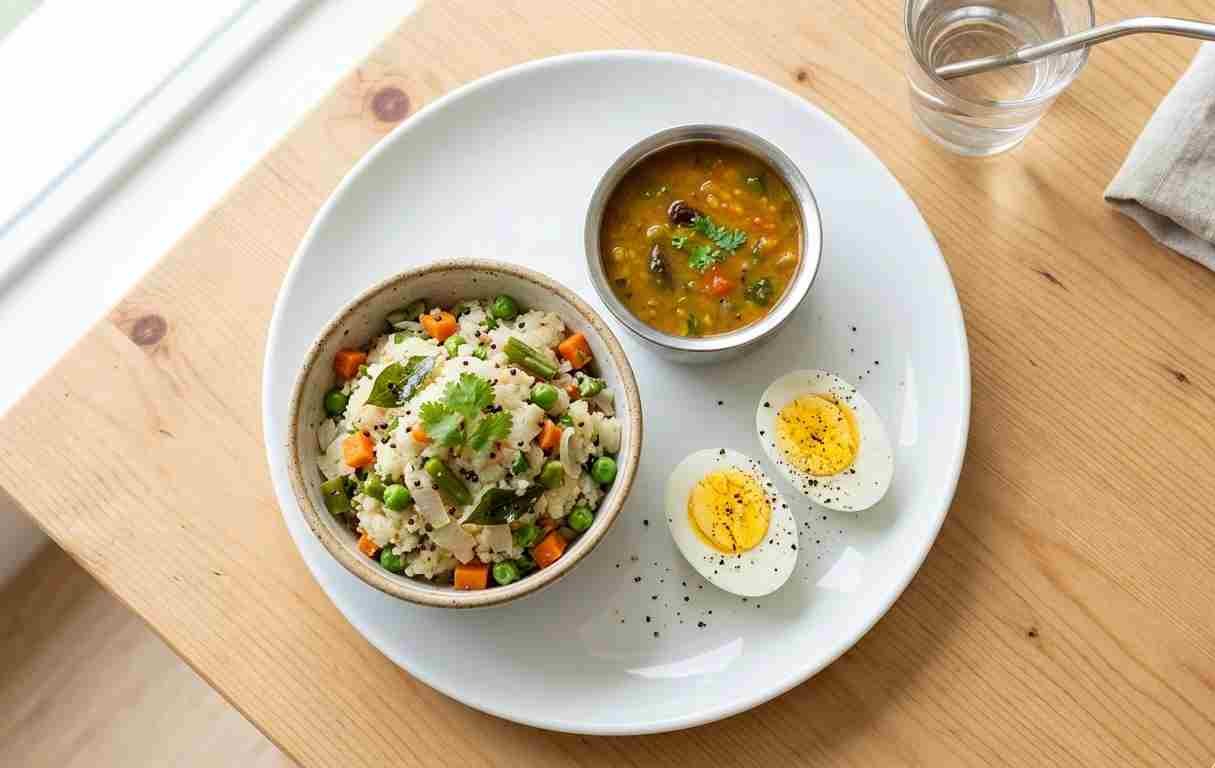
Yes, when portion and preparation are controlled. A 180-gram home-cooked serving with 1.5 teaspoons of oil and plenty of vegetables keeps upma calories at 240 to 280 kcal. This makes it a well-balanced, filling, low-calorie Indian breakfast that fits most calorie targets. Pair it with sambar or a boiled egg, and the entire meal stays under 400 kcal.
The trap is restaurant upma. Two to three tablespoons of oil plus generous cashews push upma calories past 600 kcal on a single plate. For more ideas on keeping Indian breakfasts protein-rich and calorie-controlled, see our diabetic-friendly Indian recipes guide.
Healthier upma variations
Oats upma
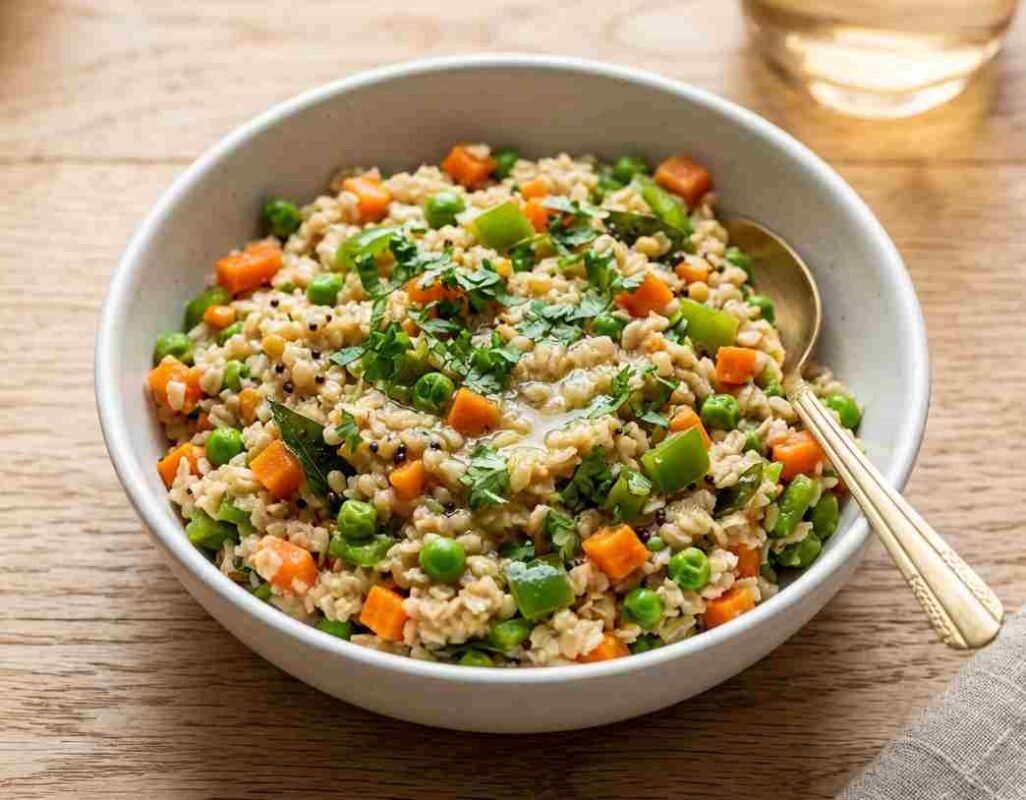
Replacing semolina with rolled oats drops upma calories per 180-gram serving to 200 to 240 kcal and triples fiber from 2 grams to around 6 grams. According to the Harvard T.H. Chan School of Public Health, higher dietary fiber intake is consistently linked with better weight management and improved blood sugar control. The method is identical: roast the oats in a dry pan before adding.
Ragi upma
Finger millet has a lower glycemic index than refined semolina (around 68 versus 75) and significantly more calcium per 100 grams. Ragi upma is a strong option for women and older adults with higher calcium needs, and its rava upma calories profile is comparable to the semolina version.
Vegetable-loaded upma
Add 1 full cup of mixed vegetables to your standard recipe. The extra 30 to 50 upma calories are offset by 4 to 6 grams of additional fiber and a substantial increase in vitamins and satiety-supporting volume.
Quinoa upma
The highest upma protein variation. One cup of cooked quinoa provides 8 grams of protein, more than double a semolina serving of the same size, and contains all nine essential amino acids. Total upma calories remain similar at 220 to 260 kcal per cup, making it the best option for muscle-building goals.
Frequently asked questions
How many calories are in one cup of upma?
One small cup of sooji upma (approximately 180 grams) contains 240 to 280 upma calories with moderate oil and vegetables. Add ghee and cashews, and that climbs to 340 to 360 kcal. Weighing your portion gives a more accurate count than estimating by eye.
Is upma better than poha for weight loss?
They are close. Poha at 250 grams runs 300 to 360 kcal versus upma calories of 330 to 395 kcal at the same weight. Poha edges ahead on pure calorie count, but upma offers more protein per serving and adapts more easily to high-fiber variations like oats upma or ragi upma.
Can I eat upma every day?
Yes, if you rotate the base and control the portion. Alternating between sooji upma, oats upma, and ragi upma at 180-gram portions aligns with ICMR recommendations for variety in grain sources and keeps your daily upma calories in a reasonable range.
Does upma cause weight gain?
Only if your total daily intake exceeds expenditure. A 180-gram home-cooked serving of upma with 240 to 280 calories is a sensible breakfast. A 350-gram restaurant plate at 550 to 650 kcal is a different story, particularly if the rest of the day’s meals are not adjusted.
Which upma has the lowest calories?
Oats upma, at 200 to 240 kcal per 180 grams, has the lowest upma calories of common variations and the highest fiber. Ragi upma is close behind with a better glycemic index. Among semolina versions, minimal oil, no nuts, and maximum vegetables bring upma calories down to 240 to 265 kcal per cup.
Is upma good for diabetics?
In moderate portions with the right adjustments, yes. Switching to ragi or oats, adding non-starchy vegetables, and limiting the serving to one cup cooked brings the glycemic load down to a manageable level. Monitor individual blood sugar response and consult your healthcare provider for personalised guidance.
Final thoughts
Upma calories are not the problem. How upma is made and how much of it you eat are. A 180-gram home-cooked portion with controlled oil and plenty of vegetables keeps upma calories at 240 to 280 kcal. This is a practical, satisfying low-calorie Indian breakfast that holds up well against most alternatives. Track your rava upma calories, choose a lighter variation like oats or ragi when you want to cut further, and pair with a protein side. That combination makes upma one of the most reliable weight-management breakfasts in the Indian kitchen.
The information in this article is for educational purposes only and does not replace professional medical advice, diagnosis, or treatment. Always consult a qualified healthcare provider for any concerns about your health or before starting any new treatment. Doctiplus does not endorse specific products, brands, or providers mentioned for illustrative purposes.
References
- National Institute of Nutrition, Hyderabad, Indian food composition tables, 2017 edition.
- Indian Council of Medical Research, nutrient requirements and recommended dietary allowances for Indians, 2020.
- Indian Food Composition Tables, published by the National Institute of Nutrition, Government of India.
- Harvard T.H. Chan School of Public Health, The Nutrition Source, dietary fiber and health outcomes.
- American Diabetes Association, standards of medical care in diabetes, glycemic index and glycemic load guidance.
- Journal of Food Science and Technology, semolina and rava nutritional composition studies.