


Bumps on Back of Tongue: Causes, Concerns, and When to Seek Care

You catch a glimpse of the back of your tongue and notice bumps you do not remember seeing before. In most cases, bumps on back of the tongue are completely normal structures you simply never noticed. The back of the tongue is naturally textured with large taste buds that can appear bumpy in certain lighting. This guide explains what is normal, what causes bumps on back of tongue, and when to see a doctor.
What are the normal structures at the back of the tongue?
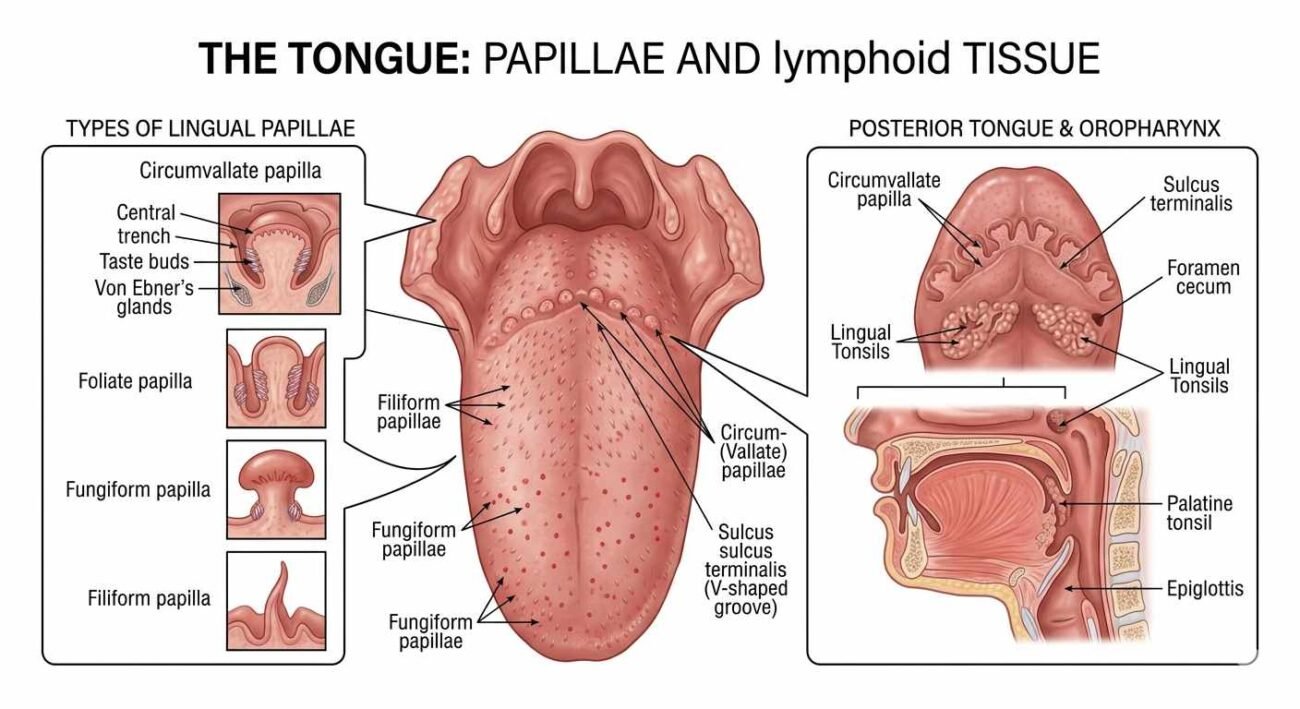
The back of the tongue contains circumvallate papillae: a row of 8 to 12 large, dome-shaped taste buds arranged in a V-shape pointing toward the throat. They can be 1 to 2 millimeters wide. Many people notice them for the first time and immediately worry, but they are completely normal.
Behind the papillae sits the lingual tonsil, a patch of immune tissue with a naturally bumpy surface. Both structures are normal and present in every healthy mouth.
Common causes of bumps on back of tongue
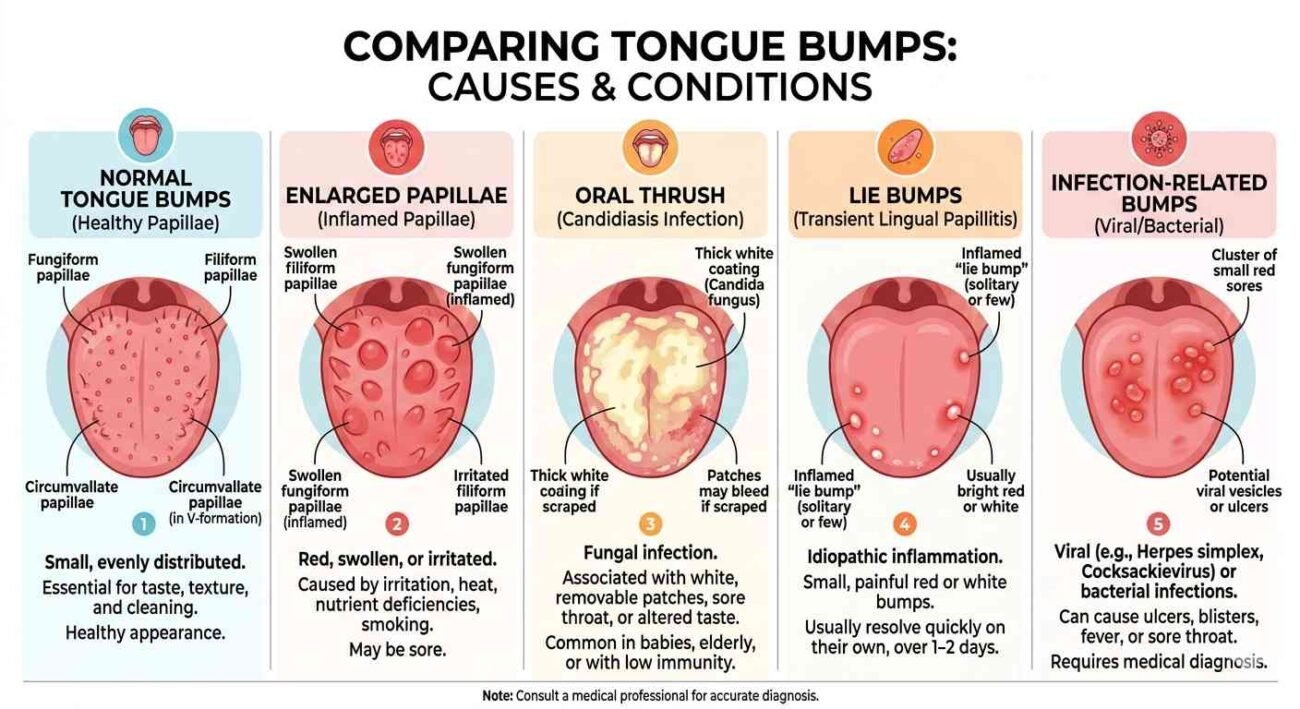
The table below summarizes the most frequent causes, how each appears, and whether home care or a doctor visit is the right first step.
| Cause | Appearance | First step |
| Circumvallate papillae | Row of 8 to 12 smooth bumps in a V | Normal, no action needed |
| Enlarged papillae | Small red or white raised bumps | Remove trigger, usually resolves in days |
| Tonsil stones | White or yellow lumps near tonsils | Salt water gargle, see guide |
| Oral thrush | Creamy white patches or raised bumps | Antifungal treatment, see a doctor |
| Strep or viral infection | Red swollen bumps with sore throat | Doctor evaluation and throat swab |
| Lie bumps (TLP) | Small painful white or red bumps | Resolves in days, home care only |
Enlarged papillae
Spicy food, acidic drinks, acid reflux, and minor trauma can temporarily inflame the taste buds. They look like small raised white or red bumps and usually resolve within a few days once the irritant is removed.
Tonsil stones (tonsilloliths)
Tonsil stones form in the pockets of the tonsils at the back of the throat, just beside the tongue base. They appear as white or yellowish lumps and commonly cause bad breath or a persistent sensation of something stuck in the throat. They are not dangerous but can be uncomfortable. For removal methods and prevention, see our full guide to how to get rid of tonsil stones on Doctiplus.
Oral thrush
Oral thrush is a fungal infection caused by an overgrowth of Candida yeast. It creates creamy white patches or raised bumps on the tongue, inner cheeks, and throat that may bleed slightly if scraped. It is more common in people who have recently taken antibiotics, use inhaled corticosteroids, or have a weakened immune system.
The Mayo Clinic confirms that oral thrush requires antifungal treatment, usually a medicated mouthwash or lozenge prescribed by a doctor. See our article on oral thrush treatment options for more details.
Strep throat or viral infection
Bacterial and viral throat infections cause red, swollen bumps at the back of the tongue alongside sore throat, fever, and swollen lymph nodes. Strep throat may also produce a white coating on the tonsils. A doctor can confirm with a rapid throat swab.
Viral infections resolve within 7 to 10 days. Bacterial infections require antibiotics. Do not share utensils while symptomatic.
Transient lingual papillitis (lie bumps)
Lie bumps are small, painful white or red bumps that appear suddenly and disappear within 1 to 3 days. Stress, certain foods, and minor irritation are common triggers. They are harmless and resolve without treatment.
When bumps could indicate something more serious
Most bumps on back of tongue are benign. However, persistent bumps deserve evaluation if they show any of the following oral cancer warning signs:
- A sore or lump that does not heal within 2 to 3 weeks.
- Unexplained bleeding from the tongue or mouth.
- Persistent pain or numbness in the tongue that does not resolve.
- A lump that is visibly growing in size week over week.
- Difficulty chewing, swallowing, or moving the tongue.
The NHS emphasizes that early diagnosis of oral cancer significantly improves outcomes. Any bump matching the above criteria warrants a prompt dental or medical evaluation. See our article on oral cancer early warning signs for a complete overview.
Home care for mild cases

For bumps on back of tongue caused by irritation or inflammation, these steps support recovery:
- Gargle with warm salt water (half a teaspoon of salt in a cup of water) 2 to 3 times daily.
- Stay well hydrated. Dry mouth worsens tongue irritation.
- Avoid tobacco, alcohol, and highly spicy or acidic foods until symptoms resolve.
- Maintain good oral hygiene, including brushing twice daily and cleaning the tongue.
- Use a soft-bristled toothbrush and avoid scrubbing the inflamed area directly.
For more on keeping the tongue and mouth healthy long-term, see our guide to oral hygiene best practices on Doctiplus.

When to see a doctor or dentist
Schedule a professional evaluation if any of the following apply to your bumps on back of tongue:
- Bumps are painful and have not improved after 2 weeks.
- A bump is visibly increasing in size.
- Bumps are accompanied by difficulty swallowing or breathing.
- You notice unexplained weight loss alongside oral symptoms.
- There is persistent bleeding from the bump or surrounding tissue.
- You suspect oral thrush and have not yet started treatment.
A dentist or ENT specialist can visually examine the area and, if needed, take a biopsy or swab to rule out infection or malignancy. Do not postpone evaluation if a bump is persistently changing or painful.
Frequently asked questions
Are bumps at the very back of the tongue normal?
Yes, in most cases. The circumvallate papillae are 8 to 12 large dome-shaped taste buds arranged in a V-shape at the back of the tongue. They are present in everyone and are completely normal. Many people notice them for the first time and worry unnecessarily. If the bumps are in a symmetrical row and have been there as long as you can remember, they are almost certainly normal anatomy.
Can acid reflux cause bumps on back of tongue?
Yes. Stomach acid that reaches the back of the throat can inflame the taste buds and lingual tonsil, causing bumps on back of tongue that feel sore or irritated. Managing acid reflux with dietary changes and medication often reduces tongue symptoms within a week or two. If reflux is a recurring problem, discuss it with your doctor.
What do tonsil stones look like on the tongue?
Tonsil stones appear as white or yellowish lumps in the pockets of the tonsils, which sit just behind and beside the base of the tongue. They are not on the tongue surface itself but may be visible when you open your mouth wide. They typically cause bad breath and a feeling of something stuck in the throat more than tongue pain.
How do I know if my tongue bumps are caused by an infection?
Infection-related bumps are usually accompanied by other symptoms: sore throat, fever, difficulty swallowing, or swollen lymph nodes in the neck. Bumps from oral thrush have a creamy white appearance and may bleed when scraped. Bumps from simple irritation or lie bumps appear without these additional symptoms and resolve quickly on their own.
When should I be worried about bumps on back of tongue?
Be concerned if a bump does not heal within 2 to 3 weeks, grows larger over time, bleeds without injury, causes persistent pain or numbness, or makes swallowing difficult. These are the signs that warrant a dental or medical evaluation to rule out oral cancer. A single bump that has been present for years and never changes is almost never a cause for concern.
Final thoughts
Bumps on back of tongue are far more often normal anatomy or minor irritation than anything serious. The circumvallate papillae, tonsil stones, and lie bumps account for most cases. Salt water gargles, good oral hygiene, and avoiding irritants resolve most mild cases within days. If bumps on back of tongue persist beyond two weeks, grow, bleed, or cause difficulty swallowing, see a dentist promptly.
This article is for informational purposes only and is not a substitute for professional medical advice, diagnosis, or treatment.
References
- Mayo Clinic, oral thrush causes, symptoms, and treatment, accessed 2026.
- NHS, mouth and tongue conditions overview, accessed 2026.
- American Dental Association, tongue anatomy and oral health, accessed 2026.
- Cleveland Clinic, transient lingual papillitis and tongue bumps, accessed 2026.
- Journal of Oral Pathology and Medicine, lingual papillae classification and clinical presentation, peer-reviewed.