

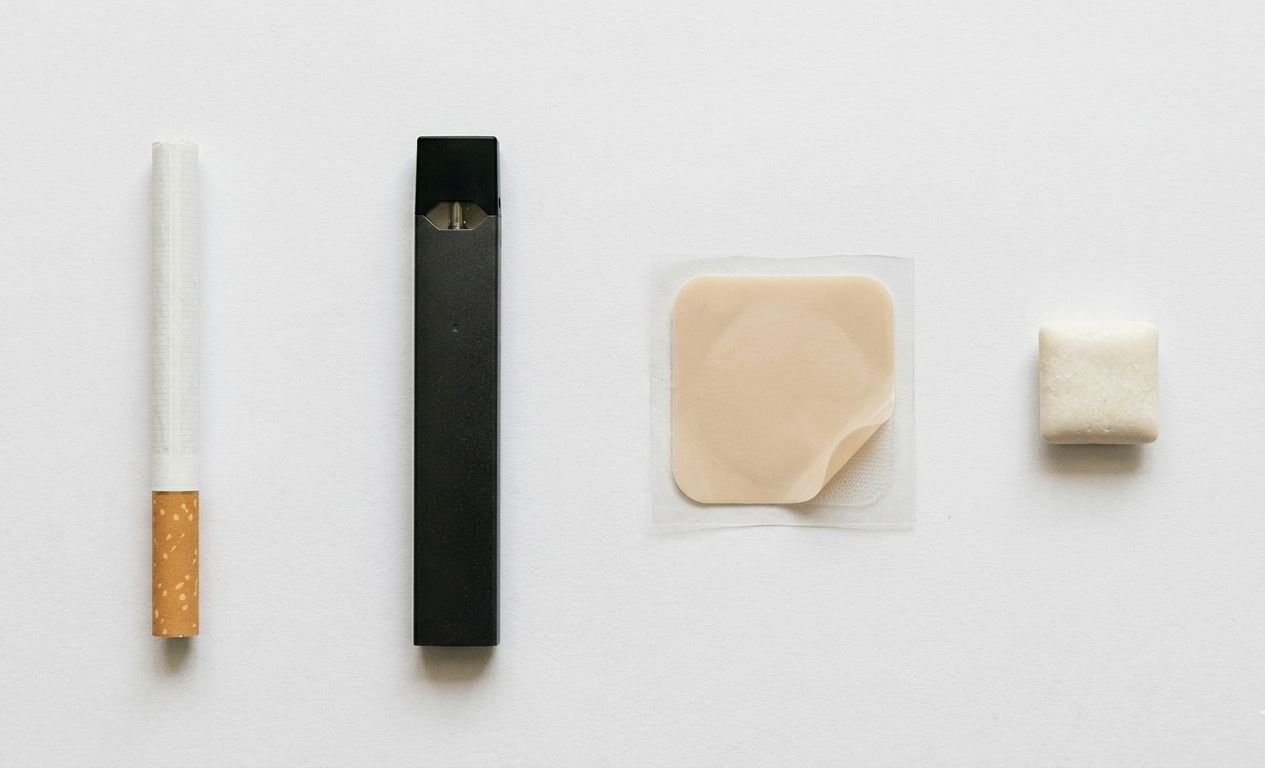
How Long Does Nicotine Stay In Your System? Blood, Urine, And Hair Explained

How long does nicotine stay in your system is one of the most searched questions by people preparing for a health screening, applying for life insurance, or trying to track how quickly their body clears tobacco. The answer is not a single number. How long does nicotine stay in your system depends entirely on which test is used, because nicotine itself clears within hours, while the compound your body converts it into can linger for weeks or months in your hair.
How the body processes nicotine
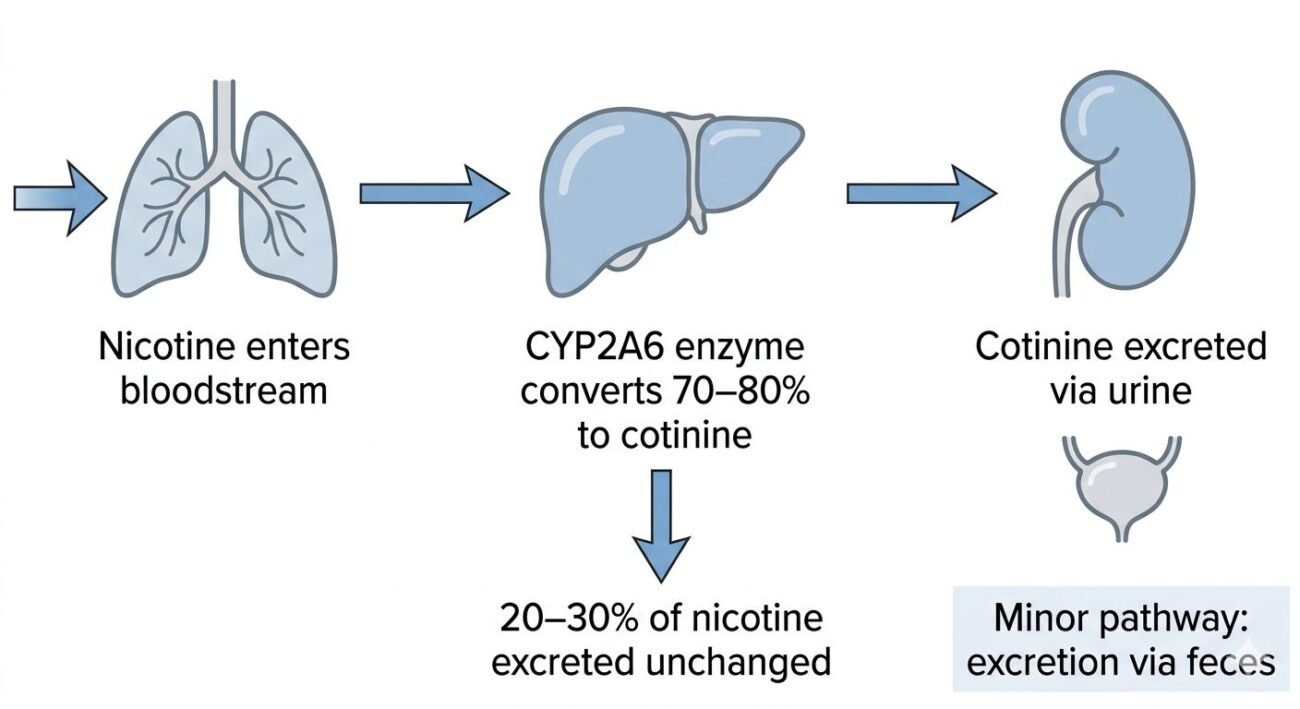
When nicotine enters the bloodstream through smoking, vaping, chewing tobacco, or a nicotine patch, the liver immediately begins breaking it down. It converts roughly 70 to 80 percent of nicotine into a metabolite called cotinine. This is the compound that most nicotine tests measure, not nicotine itself.
Nicotine has a half-life of just one to two hours, meaning it halves in concentration every hour or two. Cotinine, by contrast, has a half-life of around 16 to 19 hours. That gap is why understanding how long does nicotine stay in your system requires knowing which marker is being tested. Someone who smoked last night may already be clear of nicotine, but will still test positive for cotinine for days. According to the National Institute on Drug Abuse, cotinine is the gold standard marker because of its extended detection window.
How long does nicotine stay in your system by test type
Detection windows differ considerably depending on the method used. Here is a full comparison:
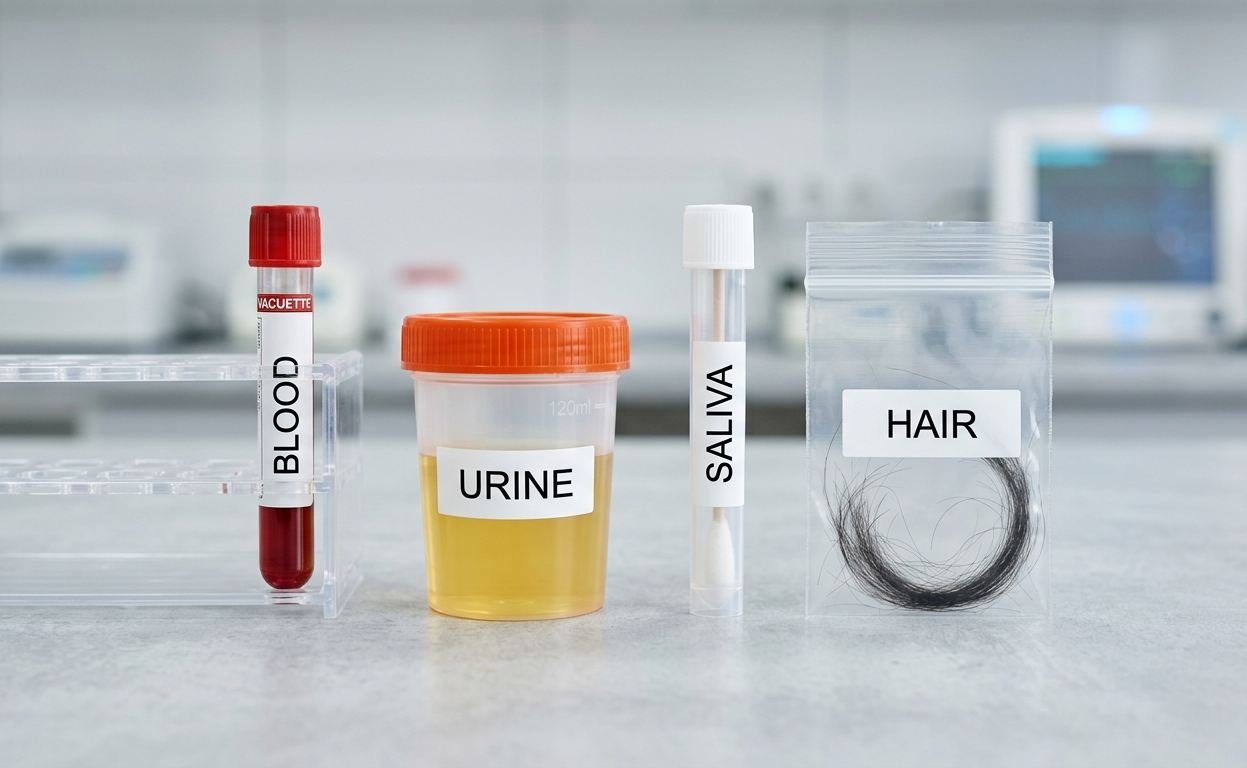
| Test type | Nicotine detection | Cotinine detection | Typical use |
| Blood | 1 to 3 days | Up to 10 days | Medical and clinical settings |
| Urine | 2 to 4 days | 3 to 4 days (light users); up to 15 days (heavy users) | Insurance and workplace screening |
| Saliva | 1 to 4 days | 1 to 4 days | Insurance assessments |
| Hair follicle | Up to 90 days | Up to 90 days or longer | Long-term use detection |
Blood test
A blood test is the most accurate method for detecting recent use. Nicotine itself clears from the blood within 1 to 3 days. Cotinine remains detectable for up to 10 days after the last exposure. Blood tests are less commonly used for routine nicotine screening due to their penetrative nature, but they appear in clinical and surgical assessment contexts.
Urine test
The urine test is the most common method used by insurers and employers. Cotinine is highly concentrated in urine, making it easy to detect at low levels. Light or occasional users typically clear detectable cotinine within 3 to 4 days. Heavy or daily smokers may test positive for up to 15 days after their last cigarette. The Mayo Clinic notes that a cutoff of 200 nanograms per millilitre is the standard threshold used to distinguish tobacco users from non-smokers in urine testing.
Saliva test
Saliva tests detect cotinine for 1 to 4 days after last exposure. They are non-invasive, quick to administer, and commonly used in insurance health assessments. A swab is placed under the tongue or inside the cheek. Results are generally available within minutes for rapid-testing kits, making saliva the preferred method when turnaround speed matters.
Hair follicle test
Hair follicle testing offers the longest detection window for how long nicotine stays in your system: up to 90 days, sometimes longer. Trace amounts of cotinine are deposited into the hair shaft as it grows, at a rate of roughly half an inch per month. A standard sample uses 1.5 inches of hair taken close to the scalp, representing approximately 90 days of history. This test reflects habitual use rather than recent exposure.
Factors that affect how long nicotine stays in your system
Not everyone processes nicotine at the same speed. Several variables determine whether cotinine clears in three days or fifteen.
Age: Younger people generally metabolise cotinine faster. Liver metabolism slows with age, extending the time nicotine stays in your system for older adults.
Genetics: The CYP2A6 enzyme in the liver drives nicotine metabolism. Genetic variants of CYP2A6 create fast metabolisers, who clear cotinine quickly, and slow metabolisers, who retain it significantly longer. Research published by the National Institutes of Health found that CYP2A6 variation can alter cotinine levels by as much as threefold between individuals.
Frequency and amount of use: A daily pack smoker will have far higher cotinine levels than a weekend smoker. More nicotine means a longer clearance time regardless of other factors.
Product type: Cigarettes, cigars, chewing tobacco, vapes, and nicotine pouches all provide nicotine differently and in varying concentrations. Higher-concentration products extend how long nicotine stays in your system.
Menthol cigarettes: Menthol inhibits CYP2A6 activity, slowing nicotine metabolism. Menthol smokers consistently show higher cotinine levels than non-menthol smokers consuming the same number of cigarettes.
Hydration and kidney function: Cotinine is eliminated via urine. Good hydration aids the kidneys in processing it efficiently. Dehydration or impaired kidney function slows clearance.
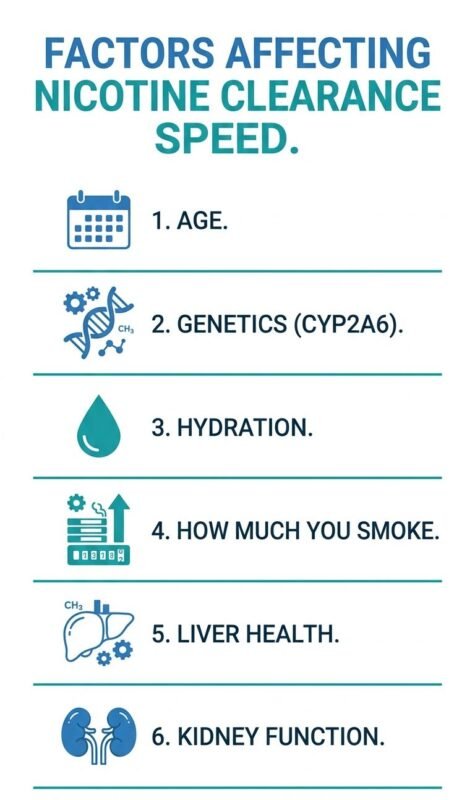
Liver health: Since nicotine is metabolised in the liver, any condition that reduces liver function, including cirrhosis or fatty liver disease, will extend how long nicotine stays in your system.
Second-hand smoke and nicotine test results
Non-smokers who are regularly exposed to second-hand smoke in enclosed spaces can accumulate measurable cotinine levels. The CDC has found detectable cotinine in non-smokers living or working alongside heavy smokers, particularly children in homes where indoor smoking occurs.
For most casual second-hand exposure, cotinine levels stay well below the 200 nanograms per millilitre threshold used to classify active smokers. However, sustained heavy exposure in a small enclosed space, such as sharing a car or a small room regularly with a chain smoker, can push levels higher. If you are a non-smoker facing a nicotine screening and live with a heavy smoker, disclose this to the testing organisation before the test.
How to speed up how long nicotine stays in your system
There is no supplement, detox drink, or herbal product that is clinically proven to accelerate nicotine clearance beyond your body’s natural metabolic rate. That said, a few evidence-consistent habits support faster processing:
- Stay well hydrated. Water keeps the kidneys flushing cotinine through the urinary tract. Aim for 6 to 8 glasses daily.
- Exercise regularly. Physical activity increases metabolic rate and blood flow, both of which support faster cotinine elimination.
- Eat antioxidant-rich foods. Vitamins C and E, found in citrus fruits, leafy greens, and nuts, support healthy liver function.
- Avoid all re-exposure. Every new dose of nicotine resets the clearance clock. This includes vaping, nicotine pouches, and passive smoke exposure.
For related reading on how substances and symptoms interact with the body over time, see our article on pain in left arm and when it signals something serious.
Nicotine replacement therapy and how long it stays in your system
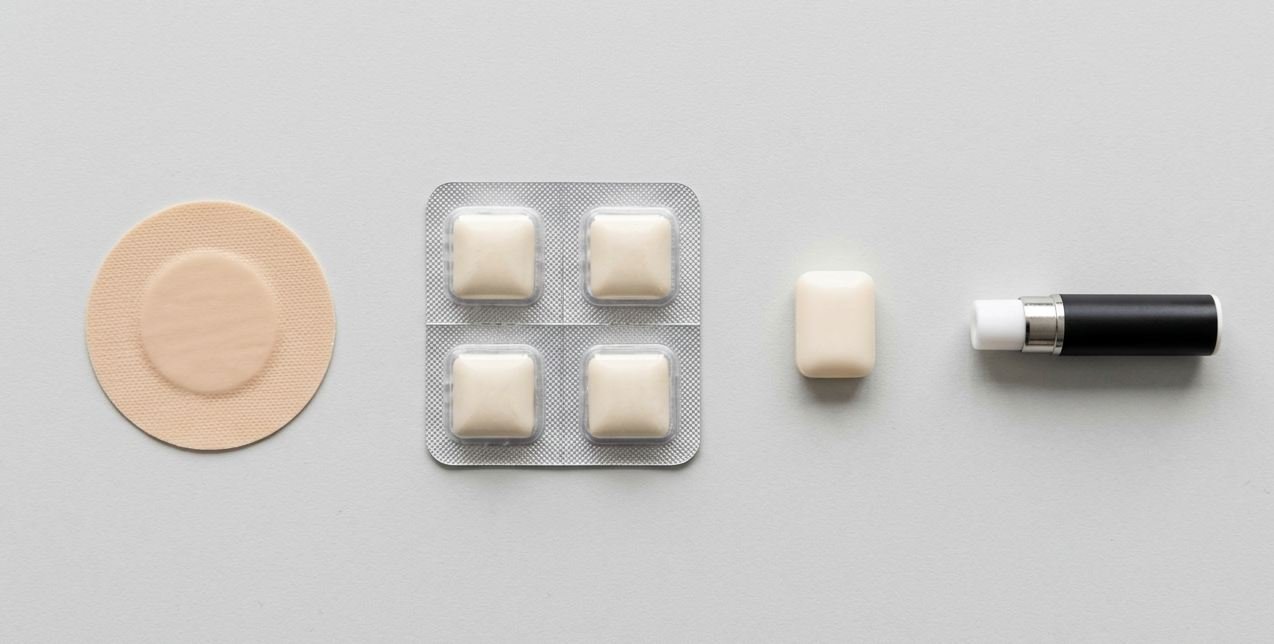
A common misconception is that using nicotine replacement therapy while quitting tobacco will result in a negative nicotine test. It will not. Patches, gums, lozenges, inhalers, and nasal sprays all introduce nicotine into the bloodstream, which the liver converts to cotinine in exactly the same way as tobacco-derived nicotine.
How long nicotine stays in your system from NRT depends on the dose and frequency of use, just as it does with cigarettes. If you are using NRT and have an upcoming screening, disclose it to the testing organisation in advance. Many insurers differentiate between tobacco users and NRT users when calculating risk, since combustion by-products rather than nicotine itself drive most tobacco-related disease. For more on managing long-term health habits, see our guide on is edamame good for you and its dietary advantages, and our article on how long does RSV last and what to expect.
Frequently asked questions
How long does nicotine stay in your system after one cigarette?
After a single cigarette, nicotine itself clears from the blood within 1 to 2 days. Cotinine from one cigarette is typically undetectable in urine within 3 to 4 days for a non-regular smoker. Hair follicle tests are unlikely to flag a one-off cigarette. The faster your metabolism and the better your hydration, the quicker the clearance. Heavy regular use before the single cigarette will slow this significantly.
How long does nicotine stay in your system if you vape?
Vaping products contain nicotine, which the body metabolises into cotinine identically to tobacco-derived nicotine. A nicotine test cannot distinguish vaping from smoking. Detection windows match those of a light to moderate smoker, depending on how frequently you vape and the nicotine concentration of the products used. Daily high-concentration vaping can produce cotinine levels comparable to a pack-a-day smoker.
Does drinking water flush nicotine out faster?
Water supports kidney function and keeps cotinine moving through the urinary tract. Good hydration is genuinely helpful and modestly speeds clearance. However, drinking excessive amounts of water provides no meaningful additional benefit beyond a healthy intake of 6 to 8 glasses per day. There is no evidence that flooding the kidneys with water dramatically shortens the cotinine detection window.
How long does nicotine stay in your system for a urine test?
For a urine test, cotinine is detectable for 3 to 4 days in light or occasional users and up to 15 days in heavy daily smokers. The standard threshold for a positive result is 200 nanograms per millilitre. Genetic differences in CYP2A6 metabolism, hydration levels, age, and kidney function all influence where within that range any individual will fall.
Can second-hand smoke make you fail a nicotine test?
In most cases, no. Casual second-hand exposure produces cotinine levels well below the 200 nanograms per millilitre threshold used to classify active smokers. However, prolonged heavy passive exposure in enclosed spaces, such as a non-smoker living with multiple chain smokers, can push cotinine into a detectable range. If you are a non-smoker concerned about this, disclose the exposure to the testing organisation before your screening.
The information in this article is for educational purposes only and does not replace professional medical advice, diagnosis, or treatment. Always consult a qualified healthcare provider for any concerns about your health or before starting any new treatment. Doctiplus does not endorse specific products, brands, or providers mentioned for illustrative purposes.
References
1. National Institute on Drug Abuse — Tobacco, nicotine, and e-cigarettes research overview
2. Mayo Clinic — Nicotine test: purpose, procedure, and results
3. National Institutes of Health — CYP2A6 genetic variation and nicotine metabolism
4. CDC — Secondhand smoke: general facts and health effects
5. Cleveland Clinic — Cotinine test: what it measures and what results mean