

Rsv Rash: Does Rsv Cause A Rash And What Does It Look Like?

RSV rash is not something most parents or adults expect when dealing with a respiratory illness. Respiratory Syncytial Virus is known for causing coughs, runny noses, and breathing difficulties, not skin symptoms. Yet a mild RSV rash does appear in some cases, particularly in young children, and it tends to arrive at exactly the moment parents are most worried: when the fever is finally starting to break. Understanding what an RSV rash looks like, why it happens, and when it signals something more serious can save a lot of unwarranted alarm.
What is RSV?
RSV stands for Respiratory Syncytial Virus. It is one of the most common respiratory viruses in the world and infects nearly all children at least once before the age of two. In healthy older children and adults, RSV causes mild cold-like symptoms that clear within one to two weeks. According to the CDC, RSV is the leading cause of bronchiolitis and pneumonia in children under one year of age in the United States.
In high-risk groups, including infants under six months, premature babies, older adults, and immunocompromised individuals, RSV can progress to serious lower respiratory tract illness requiring hospitalisation. The virus spreads easily via respiratory droplets and contact with contaminated surfaces, and it can survive on surfaces for several hours. RSV season usually peaks in autumn and winter in temperate climates.
Can RSV cause a rash?
RSV is primarily a respiratory virus, and a rash is not listed among its classic symptoms. Most people with RSV never develop any skin changes at all. However, a mild RSV rash does appear in a subset of cases, particularly in young children, and it is important to understand what is driving it.
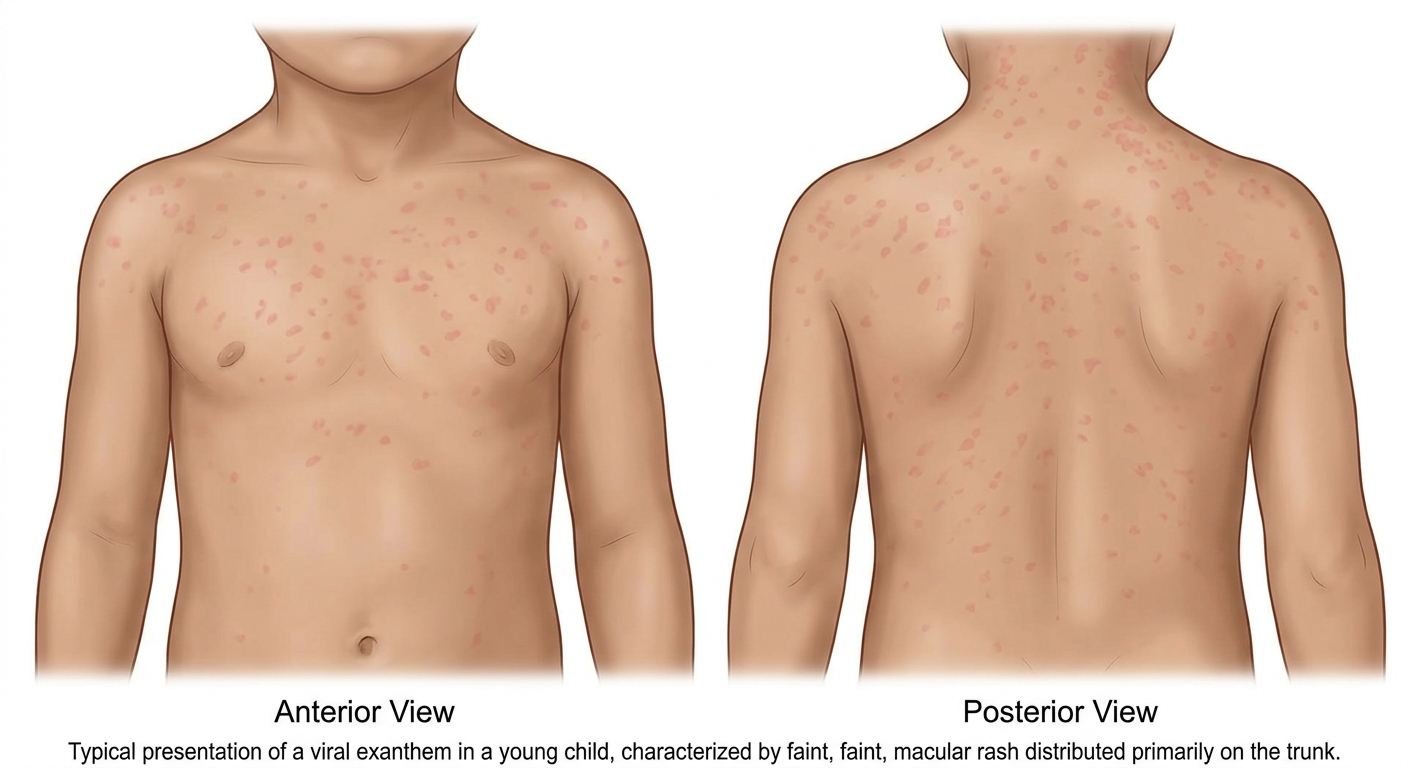
The RSV rash that some children develop is known as a viral exanthem. This is not the virus attacking the skin directly. It is the immune system’s response to the circulating virus, triggering a temporary skin reaction. Viral exanthems are common across many childhood illnesses and tend to be benign. An RSV rash of this type is generally faint, short-lived, and not a cause for concern on its own, though it can look alarming if you are not expecting it.
What does an RSV rash look like?
Appeaance
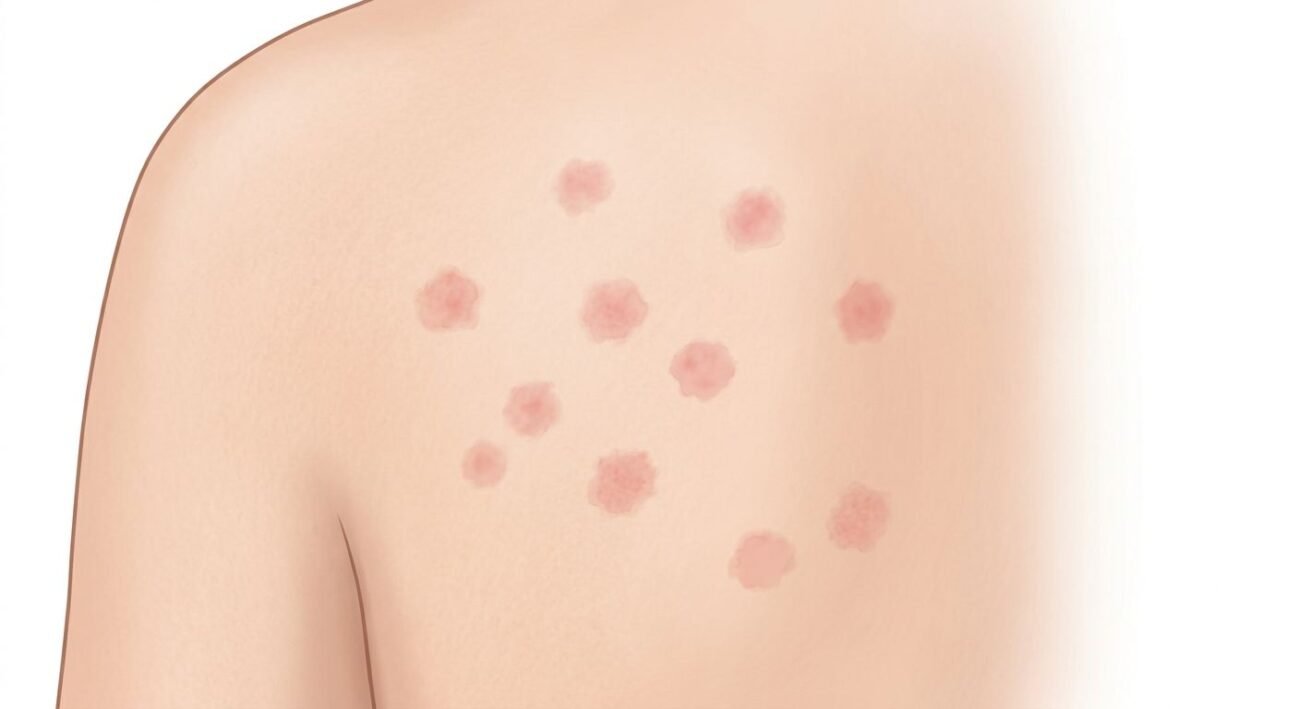
An RSV rash typically appears as small, flat or very slightly raised spots that are pink to light red in colour. The spots are usually 2 to 5 millimetres in diameter. They do not blister, do not weep fluid, and are generally not itchy. The non-itchy quality is one of the most useful features for distinguishing an RSV rash from an allergic reaction, which is almost always intensely itchy.
The RSV rash most commonly appears on the chest, back, and abdomen. It may spread lightly to the face, particularly the cheeks. It rarely involves the arms and legs. On darker skin tones, the rash can be difficult to see and may appear as a subtle change in texture rather than a visible colour difference.
When the RSV rash appears
Timing is the most important diagnostic clue for an RSV rash. It almost always appears after the fever begins to drop, not at the height of the illness. This post-fever timing is characteristic of viral exanthems: the immune system has done the heavy work of fighting the infection, and the rash is a late-stage skin reaction as viral antigens clear from the bloodstream.
An RSV rash of this type typically fades within two to four days without any treatment. If a rash appears before the fever breaks, spreads rapidly, blisters, becomes intensely itchy, or is accompanied by a high fever returning after improvement, a different diagnosis should be considered, and a doctor should assess the child promptly.
Distinguishing RSV rash from other conditions
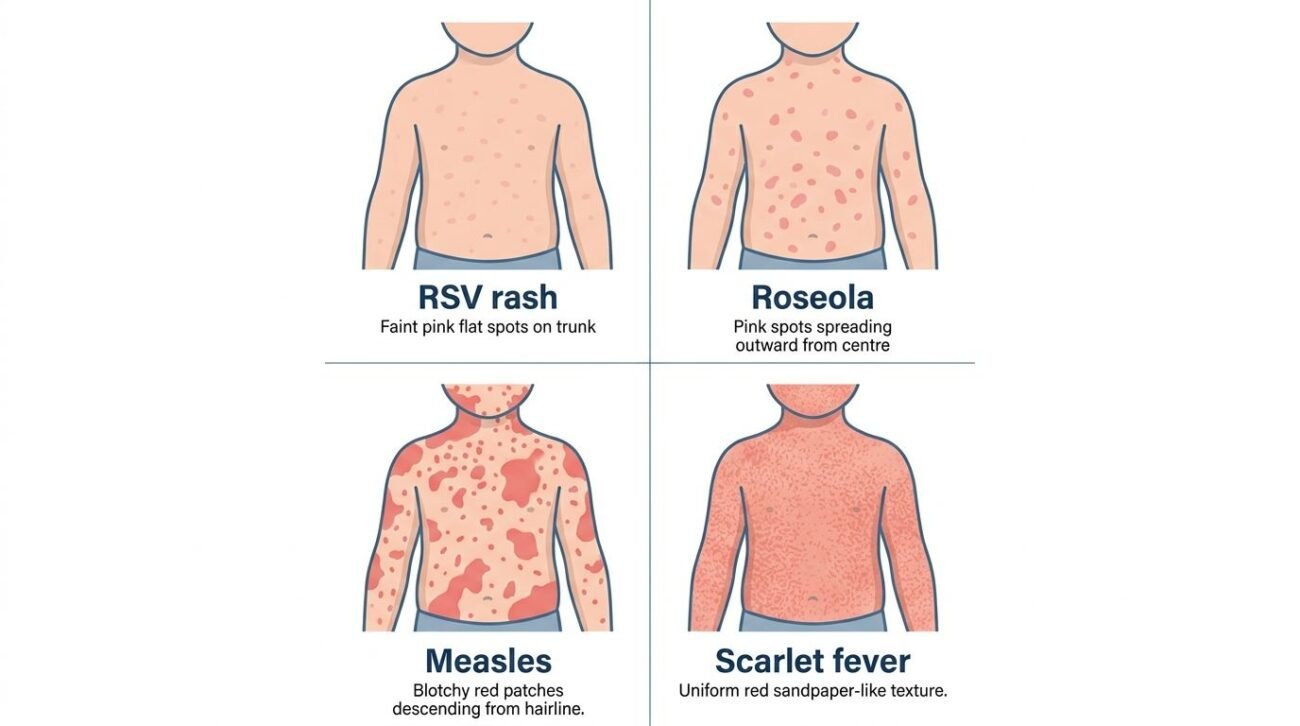
Several childhood illnesses produce a rash alongside fever or respiratory symptoms. The key differences are:
| Condition | RSV rash vs others | Timing | Distinguishing features |
| RSV rash | Faint pink flat spots on trunk | After fever drops | Not itchy, mild cold symptoms precede it |
| Roseola | Pink spots spreading from trunk outward | After 3 to 5 days of high fever | High fever breaks first, rash follows immediately |
| Measles | Red blotchy rash from hairline downward | Day 3 to 5 of illness | High fever, cough, red eyes, white Koplik spots in mouth |
| Scarlet fever | Red sandpaper-texture rash | Within 48 hours of sore throat | Sore throat, fever, strawberry tongue, flushed cheeks |
| Allergic reaction | Raised, itchy hives anywhere on body | Shortly after exposure to trigger | Intensely itchy, may spread rapidly, no fever pattern |
If you are uncertain whether a rash is an RSV rash or something else, the NHS recommends seeing a doctor if the rash is widespread, intensely itchy, blistering, or is accompanied by high fever, difficulty breathing, or any sign the child is deteriorating rather than improving.
Typical RSV symptoms to watch for
Whether or not an RSV rash is present, the respiratory symptoms of RSV are what parents and carers need to monitor most closely. In older children and adults, RSV typically causes:
- Runny or congested nose, often the first symptom
- Dry cough that may become more frequent over the first few days
- Low-grade fever, usually below 38.5 degrees Celsius
- Mild sore throat and general fatigue
In infants and young children, RSV can progress to the lower airways within two to three days of the first symptoms. Watch for:
- Rapid or laboured breathing, more than 60 breaths per minute in a newborn
- Nostril flaring with each breath, indicating the child is working hard to breathe.
- Wheezing or a high-pitched whistling sound during exhalation
- Poor feeding, refusing the breast or bottle, or taking significantly less than usual
- Unusual irritability or, at the other extreme, unusual sleepiness or limpness
These symptoms in any infant under three months warrant a same-day call to a doctor or emergency department, even if they seem mild at first. For related reading on respiratory and immune symptoms in children and adults, see our article on bumps on the back of tongue: causes and when to seek care.
When RSV becomes an emergency in infants
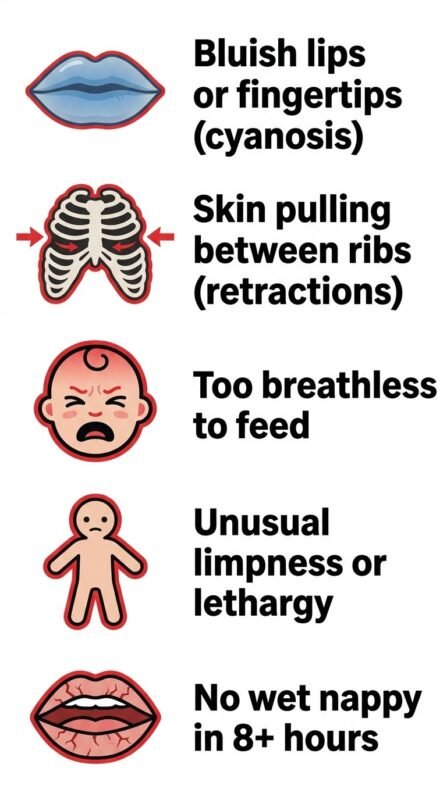
The American Academy of Pediatrics advises seeking emergency care immediately if a baby or young infant shows any of the following signs:
- Bluish or greyish colouring around the lips, fingertips, or tongue (cyanosis), which indicates dangerously low oxygen levels.
- Skin pulling in sharply between the ribs or at the base of the throat with each breath is known as intercostal or subcostal retractions.
- Breathing so fast or laboured that the infant cannot feed.
- Severe lethargy, unresponsiveness, or limpness that is out of character.
- Signs of dehydration: no wet nappy in eight or more hours, no tears when crying, dry mouth and lips.
Premature babies and infants with underlying heart or lung conditions carry the highest risk of severe RSV. If your baby was born prematurely or has a known cardiac or respiratory condition, contact your paediatrician at the first sign of RSV symptoms rather than waiting to see whether they worsen. Speed of response is very important in this group.
Treatment and home care for RSV rash and respiratory symptoms
There is no specific antiviral medication approved for RSV in otherwise healthy children and adults. Treatment continues to be supportive and focused on keeping the child comfortable while the immune system clears the virus.
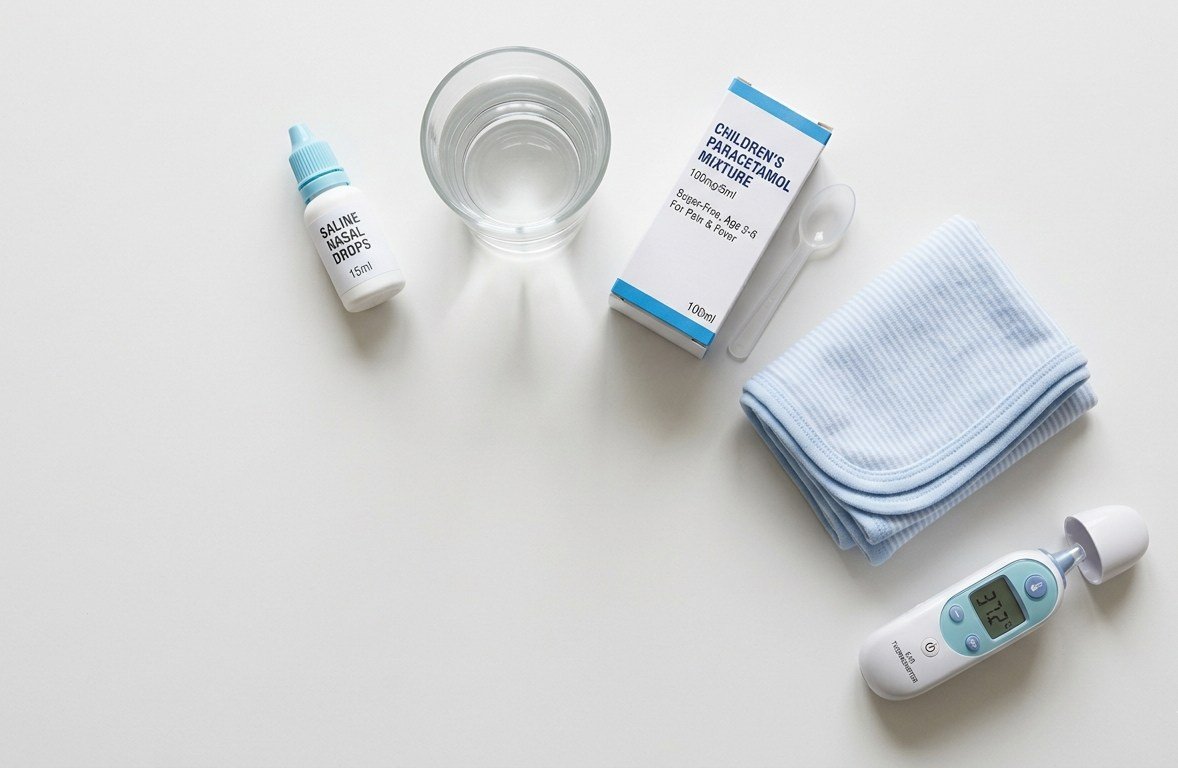
Rest: Keep the child calm and rested. Activity increases breathing demand, which may strain already stressed airways.
Fluids: Frequent small feeds or sips of water prevent dehydration and keep the airways and mucus membranes moist. In infants, offer smaller and more frequent feeds rather than full volumes.
Saline nasal drops: A few drops of saline in each nostril, followed by gentle suction in infants with a bulb syringe, clears congestion and makes breathing easier. This can have a significant impact to feeding and sleep.
Fever management: Paracetamol or ibuprofen, at age-appropriate doses, can manage fever and discomfort. Never give aspirin to children under 16.
Positioning: Keeping a baby slightly upright during sleep, such as in a bouncy chair or held upright against the body, can facilitate breathing. Do not use pillows in a cot for any infant under 12 months.
For the RSV rash specifically, no treatment is needed. It resolves on its own and does not require antihistamines, topical creams, or any other intervention.
For high-risk infants, Palivizumab (Synagis) is a monthly preventive injection given during RSV season. It does not treat RSV once contracted, but substantially lowers the chance of severe illness in eligible infants. A paediatrician will advise whether a child qualifies based on gestational age, birth weight, and preexisting medical conditions. For more on managing illness symptoms at home, see our guides onpain in left arm and when to seek emergency care, and how long does nicotine stay in your system and other body clearance questions.
Frequently asked questions
Does RSV always cause an RSV rash?
No. A rash is not a standard or expected symptom of RSV. The majority of people with RSV experience only respiratory symptoms: cough, runny nose, and fever. A mild rash occurs in a minority of cases, mostly in young children, as a viral exanthem driven by the immune response. Its absence does not mean RSV is ruled out, and its presence does not make the infection more severe.
What does an RSV rash look like compared to other childhood rashes?
An RSV rash presents as faint, flat, pink to light-red spots on the trunk and occasionally the face. It is not itchy and tends to appear after the fever starts to drop. Roseola has a similar post-fever timing but the spots are more vivid and spread outward from the trunk. Measles starts at the hairline and descends. Scarlet fever has a distinctive sandpaper texture. Allergic reactions are almost always very itchy.
How long does an RSV rash last?
An RSV rash linked to a viral exanthem typically fades within two to four days without any treatment. It lightens gradually and leaves no scarring or discolouration. If the rash persists beyond five to seven days, spreads to cover large areas, becomes itchy or blistered, or is accompanied by a returning fever, consult a doctor to rule out a separate condition.
Is an RSV rash contagious?
The rash itself is not contagious. The RSV virus is highly contagious via respiratory droplets and contact with contaminated surfaces. A person with RSV remains contagious for three to eight days from the start of symptoms, and up to four weeks in immunocompromised individuals, regardless of whether an RSV rash is visible. Standard hygiene measures, repeated handwashing, and avoiding close contact with high-risk individuals apply throughout.
Can adults get an RSV rash?
It is uncommon but possible. Adults with RSV very rarely develop a visible rash. When it does occur in adults, it follows the same pattern: faint pink spots on the trunk appearing as the illness resolves. Adults are far more likely to experience RSV as a straightforward upper respiratory infection with no skin involvement. If an adult develops an unexplained rash alongside respiratory illness, a doctor should evaluate it to rule out other causes.
The information in this article is for educational purposes only and does not replace professional medical advice, diagnosis, or treatment. Always consult a qualified healthcare provider for any concerns about your health or before starting any new treatment. Doctiplus does not endorse specific products, brands, or providers mentioned for illustrative purposes.
References
1. CDC — RSV: respiratory syncytial virus overview and prevention
2. NHS — Respiratory syncytial virus (RSV): symptoms, causes, and treatment
3. American Academy of Pediatrics — RSV: when it is more than merely a cold
4. Mayo Clinic — Respiratory syncytial virus: symptoms and causes
5. Cleveland Clinic — Viral exanthem: causes, symptoms, and treatment