

Low SGOT in Blood Test: What It Means and When to Investigate

Seeing a flagged value on your liver enzyme test results can be unsettling. If your report shows a low SGOT in blood test results, the reassuring news is that low SGOT is almost always less concerning than high SGOT. In most cases, low AST levels point to a vitamin B6 deficiency, a medication effect, or normal pregnancy variation. This guide explains what low aspartate aminotransferase means, the common causes, and when to follow up with your doctor.
What is SGOT?
SGOT stands for Serum Glutamic Oxaloacetic Transaminase, also called AST (Aspartate Aminotransferase). It is found in the liver, heart, muscles, and red blood cells. When these tissues are damaged, SGOT leaks into the bloodstream, and liver enzyme test results show elevated levels. It is measured as part of a liver function panel. For a broader understanding of what each value means, see our liver function test guide on Doctiplus.
Normal SGOT range
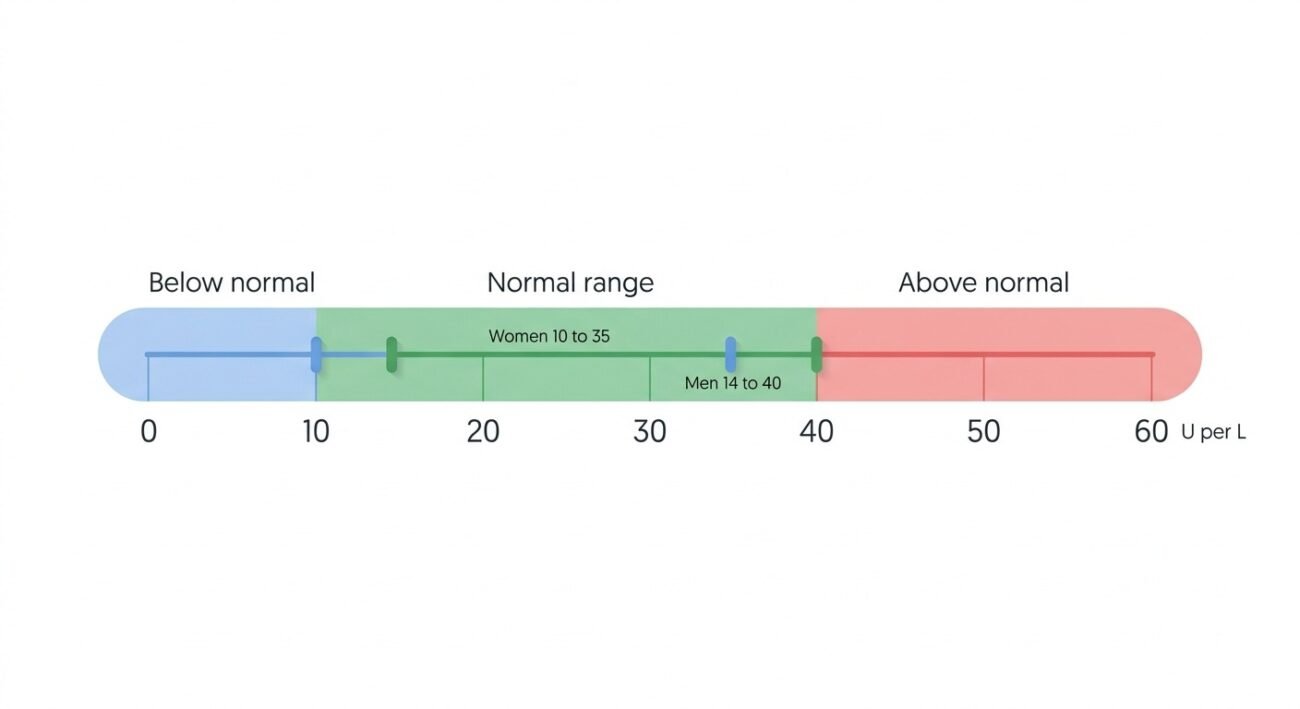
- Adult men: roughly 14 to 40 U per L.
- Adult women: roughly 10 to 35 U per L.
- Children: slightly higher reference range, varies by age.
- Ranges vary by lab and testing method. Always check the reference range printed on your specific report.
These are general guides. Your lab may use a different scale, so the reference range on your own report is the most reliable benchmark for interpreting a low SGOT in a blood test result.
What is considered low SGOT?
Most laboratories flag SGOT values below 10 U per L as SGOT below normal. Some labs use a cutoff of 8 U per L. A value just below the lower limit of your lab’s range is often a normal variation and not a cause for alarm. The key is to compare your result to the specific reference range on your report, not to a general number from the internet.
Is low SGOT dangerous?
In most cases, no. A low SGOT in blood test results does not signal serious disease the way elevated SGOT does. Low AST levels usually indicate a benign AST low cause, such as a vitamin deficiency or pregnancy change. Persistently low values alongside other abnormal results do deserve attention from your doctor.
Common causes of low SGOT in a blood test
Vitamin B6 deficiency
SGOT requires pyridoxal phosphate (the active form of vitamin B6) as a cofactor to function. When B6 levels drop, SGOT activity drops with them, producing low AST levels on your report. This is one of the most common and most correctable AST low cause findings. Read more in our article on vitamin B6 sources and deficiency.
Pregnancy
Hormonal changes and increased blood volume during pregnancy dilute liver enzyme concentrations, pushing SGOT below normal. This is expected and not a sign of liver problems.
Chronic kidney disease and dialysis
Long-term dialysis patients frequently show low AST levels. Vitamin B6 depletion and reduced muscle mass likely contribute.
Medications
Certain blood pressure medications, oral contraceptives, and isoniazid (used for tuberculosis treatment) can lower SGOT levels. If your low SGOT in a blood test coincides with starting a new medication, mention this to your prescribing doctor.
Heavy long-term alcohol use
This is counterintuitive because alcohol typically raises liver enzymes. However, chronic use depletes vitamin B6, producing artificially low AST levels despite liver stress. This is why liver enzyme test results need context, not isolation.
Laboratory variation
Different testing methods produce slightly different values. A result flagged as SGOT below normal at one lab may be normal at another. A repeat test in 2 to 4 weeks often resolves the question.
Symptoms that may accompany low SGOT
Low SGOT itself does not produce symptoms. When symptoms are present, they relate to the underlying cause:
- Vitamin B6 deficiency: numbness, tingling in hands and feet, cracked lips, fatigue.
- Pregnancy: typical pregnancy symptoms (not caused by low SGOT itself).
- Kidney disease: fatigue, swelling, changes in urination.
- Medication effects vary by the specific drug.
If you feel well and a mildly low SGOT is your only finding, a serious underlying problem is very unlikely.
How doctors evaluate low SGOT
- Review your full medication and supplement list.
- Repeat the liver function test in 2 to 4 weeks to confirm the finding. See our article on
- When to repeat blood tests for guidance on timing.
- Check vitamin B6 status with pyridoxal phosphate level.
- Other liver enzymes (ALT, ALP, GGT, bilirubin) for context.
- Assess kidney function and pregnancy status, if clinically relevant.
The Cleveland Clinic states that a single low AST value without other abnormalities rarely requires extensive workup.
What you can do if your SGOT is low
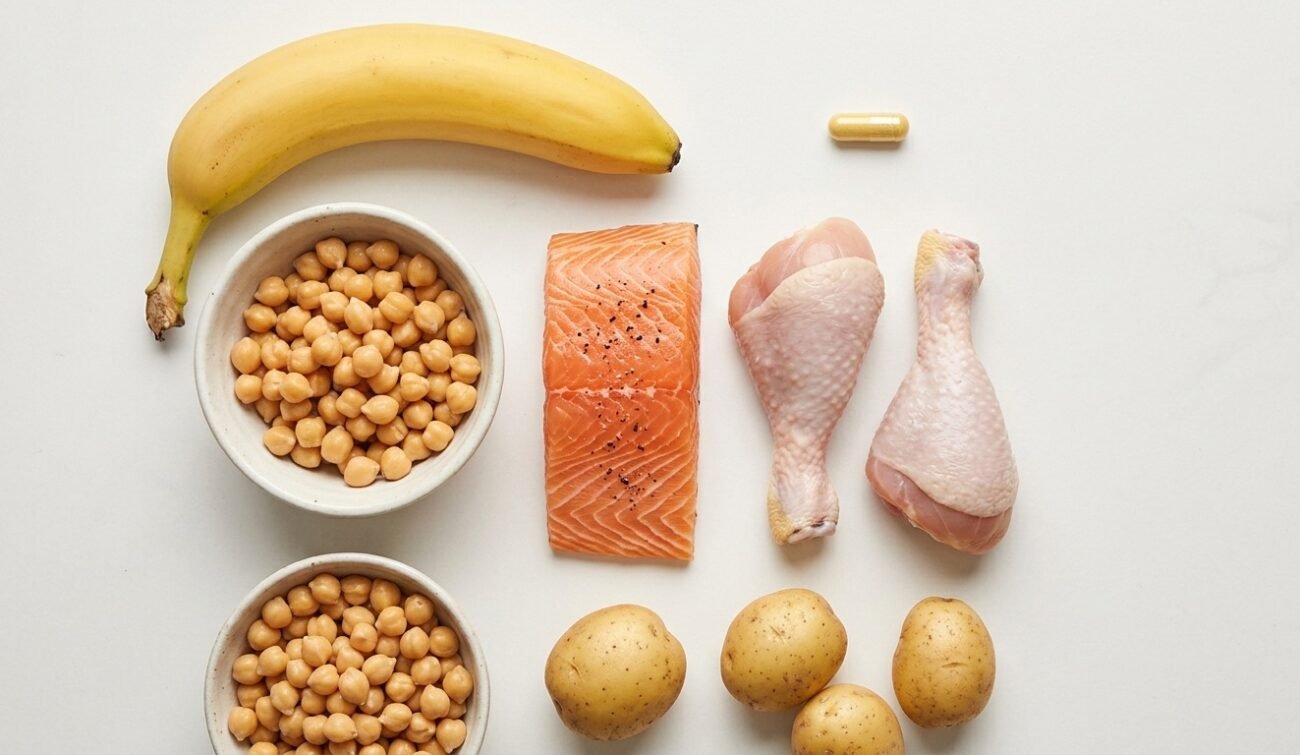
- Eat vitamin B6-rich foods: bananas, chickpeas, salmon, chicken, and potatoes.
- Discuss any new medications with your doctor to check if they affect liver enzyme test results.
- Limit alcohol consumption, which depletes B6 and stresses the liver.
- Maintain a balanced diet with adequate protein.
- Repeat the test if your doctor recommends it, typically in 2 to 4 weeks.

When to see a doctor
While low SGOT in blood test results is usually benign, see your doctor if:
- Low SGOT appears alongside symptoms like numbness, persistent fatigue, or jaundice.
- Other liver enzymes (ALT, ALP, GGT, and bilirubin) are also abnormal.
- Low SGOT occurs during pregnancy with other concerning symptoms.
- The value remains persistently low on a repeat test.
- You are on long-term medications that may be affecting the result.
How low SGOT differs from high SGOT
The table below helps you put your liver enzyme test results in perspective. Understanding where your SGOT falls and what each direction signals is the first step toward knowing what to do next.
| Aspect | Low SGOT | High SGOT |
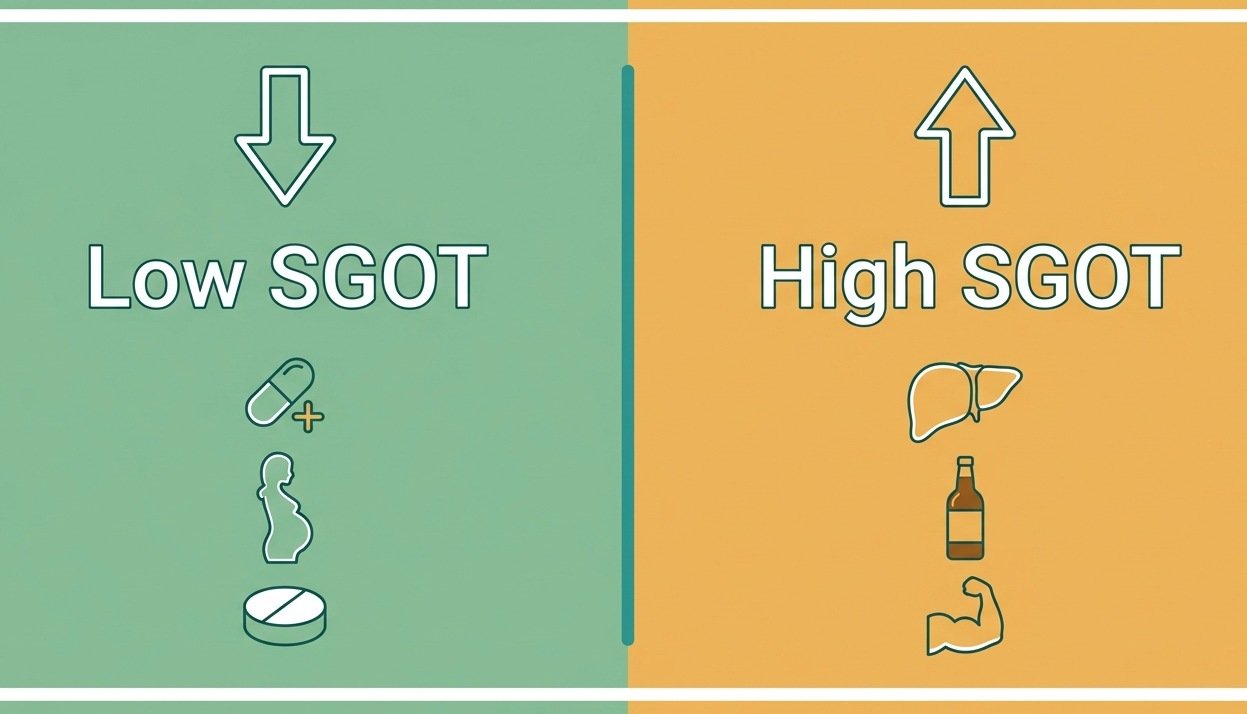
| Typical value | Below 10 U per L | Above 40 U per L |
| Common causes | B6 deficiency, pregnancy, medications | Liver disease, alcohol, hepatitis, muscle injury |
| Urgency | Low concern usually | Moderate to high concern |
| Symptoms | Often none | Fatigue, jaundice, abdominal pain possible |
| First step | Review B6, medications, repeat test | Detailed liver workup |
Many readers wonder about SGOT versus SGPT (also called ALT). Both are liver enzymes, but SGPT is more liver-specific, while SGOT is also found in the heart and muscles. For a detailed comparison, see our article on SGPT levels explained on Doctiplus.
Frequently asked questions
Is low SGOT a sign of liver disease?
No. Low SGOT is not associated with liver disease. Liver conditions like hepatitis, cirrhosis, and fatty liver disease cause elevated SGOT, not low values. A low SGOT in blood test results is far more likely to reflect a B6 deficiency or medication effect than a liver problem.
Can vitamin B6 deficiency cause low SGOT?
Yes. SGOT requires vitamin B6 as a cofactor. When B6 levels are low, SGOT activity decreases, producing low AST levels on your lab report. This is one of the most common and easily correctable causes. Foods rich in B6 include bananas, chickpeas, salmon, and chicken.
Should I worry if my SGOT is 8 U per L?
An SGOT of 8 U per L is slightly below normal for most labs but is not dangerous on its own. Compare it to the reference range on your specific report. If all other values are normal, your doctor may simply recommend a repeat test in a few weeks.
Does pregnancy lower SGOT levels?
Yes. Increased blood volume and hormonal shifts during pregnancy commonly push SGOT below normal. This is expected and not a sign of liver dysfunction. Your OB-GYN can confirm whether your liver enzyme test results are within the expected range for your trimester.
What is the difference between SGOT and SGPT?
SGOT (AST) is found in the liver, heart, and muscles. SGPT (ALT) is more specific to the liver. When both are elevated, the ratio helps doctors identify whether the issue is liver-related, heart-related, or muscle-related. Low values in either enzyme are generally less clinically significant.
Can supplements increase SGOT to normal?
If the AST low cause is vitamin B6 deficiency, correcting B6 through diet or supplementation often brings SGOT back to the normal range within weeks. Do not self-supplement without confirming the deficiency with a blood test. Your doctor can guide the right dose.
Final thoughts
A low SGOT in blood test results is understandably worrying, but it denotes in most cases a benign cause. Vitamin B6 deficiency, pregnancy, medications and laboratory variation account for most SGOT below normal findings. Review your result with your doctor, who can interpret it along with your full liver enzyme test results and medical history. Low AST levels rarely require urgent action, but they deserve a follow-up discussion.
The information in this article is for educational purposes only and does not replace professional medical advice, diagnosis, or treatment. Always consult a qualified healthcare provider for any concerns about your health or before starting any new treatment. Doctiplus does not endorse specific products, brands, or providers mentioned for illustrative purposes.
References
- American Association for Clinical Chemistry (Lab Tests Online), AST test resource, accessed 2026.
- Mayo Clinic, liver function tests overview, accessed 2026.
- Cleveland Clinic, aspartate aminotransferase test, accessed 2026.
- NIH Office of Dietary Supplements, Vitamin B6 Fact Sheet for Health Professionals, accessed 2026.
- Journal of Clinical Pathology, significance of low serum AST activity, peer-reviewed.
- American College of Gastroenterology, Liver Enzyme Evaluation Guidelines, accessed 2026.