

Two Different Colored Eyes: What Is Heterochromia and Is It Dangerous?
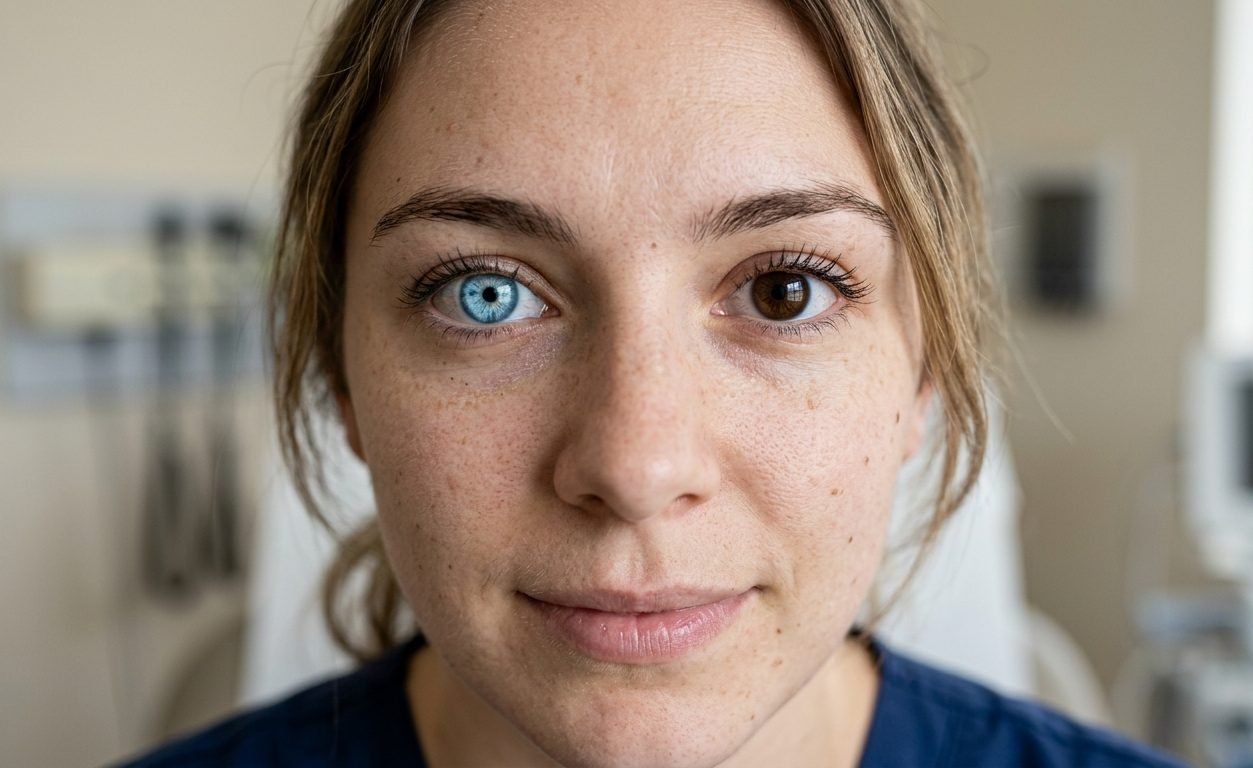
Having two different colored eyes is one of the most striking physical traits a person can have. The condition, called heterochromia iridis, affects roughly 1 percent of the population and is often inherited. For most people, two different colored eyes are simply a quirk of pigmentation with no health implications at all. However, when the color difference develops in adulthood or appears suddenly, it can signal a condition worth investigating. This guide explains what heterochromia is, its three distinct types, the medical conditions sometimes linked to it, and when to see an eye doctor.
What does it mean to have two different colored eyes?
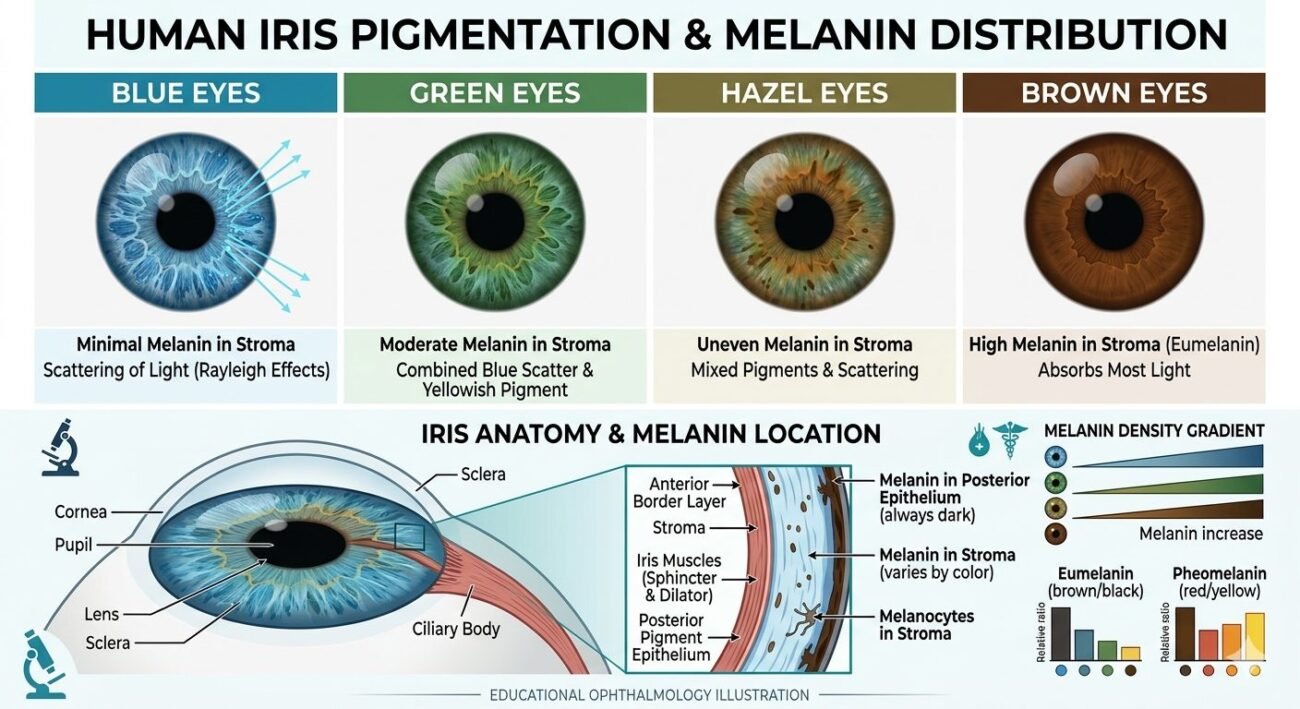
Eye color is determined by melanin in the iris. More melanin produces brown eyes, less produces blue or green. When melanin distribution is uneven between the two eyes or within one iris, the result is heterochromia iridis.
Congenital heterochromia is almost always harmless. Acquired heterochromia that develops later in life can reflect an underlying condition, which is why the timing of onset matters.
Types of heterochromia
Complete heterochromia
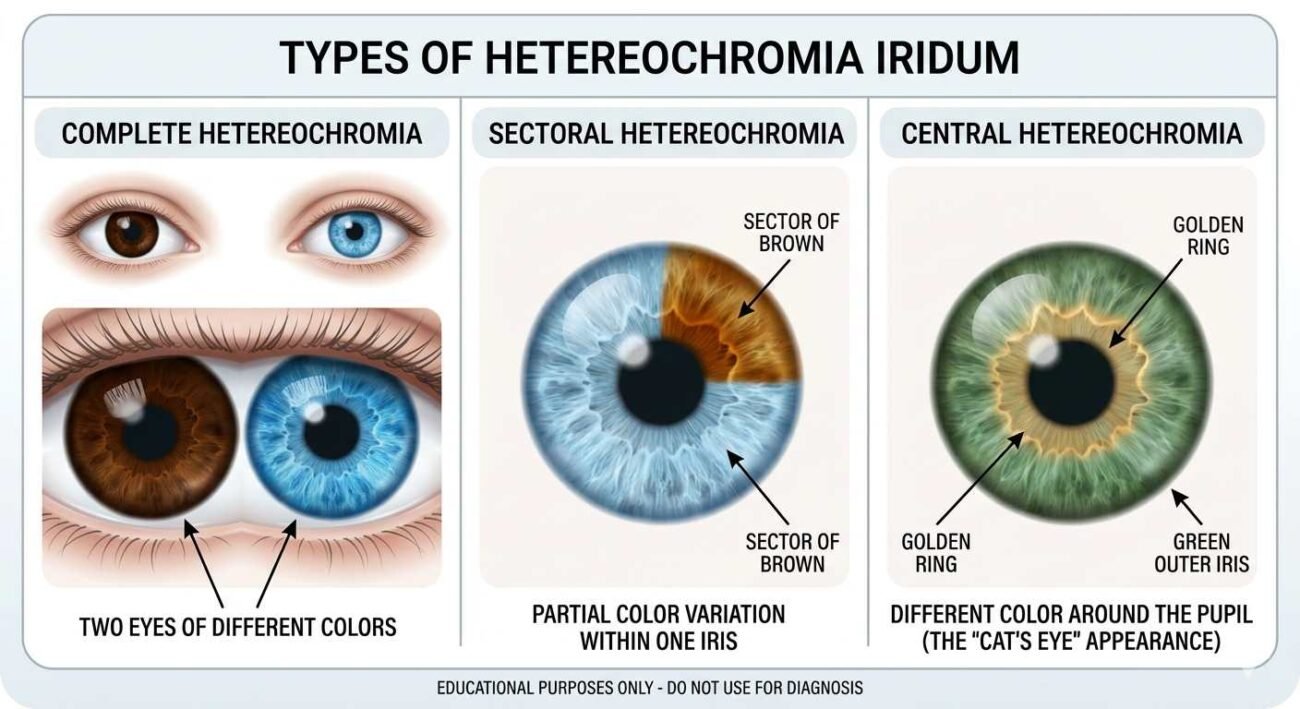
In complete heterochromia, each eye is an entirely different color. One eye may be brown while the other is blue or green. This is the most visually striking and widely recognized form of heterochromia. It is also the type most commonly depicted in photography and popular culture.
Complete heterochromia from birth is typically genetic and benign. It does not affect vision and requires no treatment.
Sectoral heterochromia (partial heterochromia)
Sectoral heterochromia, also called partial heterochromia, occurs when one section of an iris is a different color from the rest of the same eye. It appears as a clearly defined patch or wedge of a different shade within a single iris. The other eye may look completely normal.
When present from birth, it is generally benign. When it appears in adulthood, it should be evaluated by an ophthalmologist.
Central heterochromia
Central heterochromia is the most common form. The inner ring of the iris, close to the pupil, is a different color from the outer ring. Many people with hazel or amber eyes actually have a form of central heterochromia, where the inner zone appears brown or gold while the outer zone is green or blue.
Central heterochromia is almost always a normal color variation not associated with any health condition.
Heterochromia types at a glance
| Type | What it looks like | Concern level |
| Complete | Each eye a fully different color | Low if congenital |
| Sectoral (partial) | A patch of a different color in one iris | Low if congenital; evaluate if acquired |
| Central | The inner ring differs from the outer ring | Very low, usually normal variation |
What causes two different colored eyes?
Genetics
The most common cause is a genetic variation affecting melanin production. The trait can run in families, though it sometimes appears without family history. Two different colored eyes from birth without other symptoms is overwhelmingly likely to be harmless.
Medical conditions associated with heterochromia
Several medical conditions can cause congenital heterochromia as one of their features. These are uncommon but worth knowing:
- Waardenburg syndrome: a genetic condition that can cause hearing loss, a white forelock of hair, and heterochromia. It affects roughly 1 in 40,000 people.
- Horner syndrome: caused by the disruption of a nerve pathway from the brain to the eye and face. It produces a drooping eyelid, small pupil, and sometimes loss of iris color in the affected eye. See our article on
- Horner syndrome causes on Doctiplus for more details.
- Fuchs heterochromic iridocyclitis: a chronic, low-grade inflammation of the iris that gradually lightens the affected eye over the years. It may also cause cataracts and glaucoma.
- Sturge-Weber syndrome: a rare neurological condition associated with port-wine birthmarks, seizures, and sometimes glaucoma in the affected eye, which may appear lighter.
These conditions exist with other distinguishing features alongside heterochromia. Two different colored eyes without associated findings rarely warrant concern.
Injury or disease (acquired heterochromia)

When eye color changes in adulthood, it is classified as acquired heterochromia and deserves prompt evaluation. Causes include:
- Eye injury or trauma that damages iris pigment cells.
- Certain glaucoma eye drops, particularly prostaglandin analogs like latanoprost, darken the iris over time as a known side effect.
- Uveitis (iris inflammation), which can change iris color as pigment is released or absorbed.
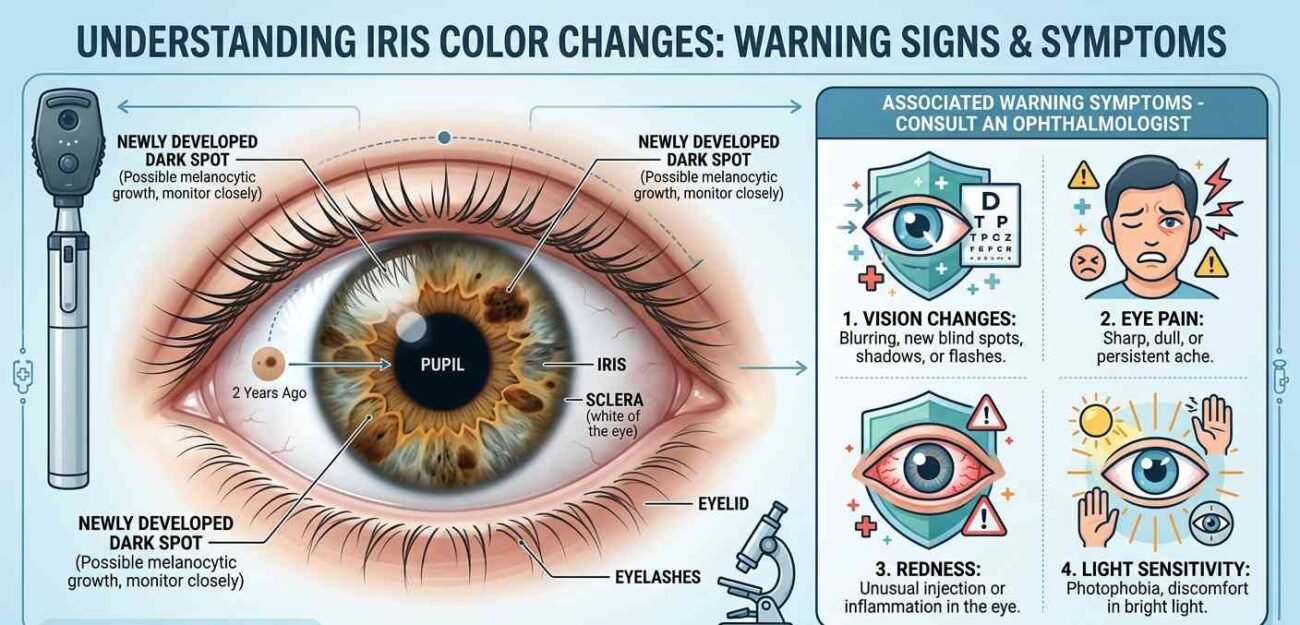
- Melanoma of the iris, which is rare but presents as a new dark spot or sector in the iris which enlarges gradually.
Any new color change in one eye that was not present previously should be evaluated by an ophthalmologist. The American Academy of Ophthalmology emphasizes that acquired heterochromia is the form that always warrants professional attention, regardless of age.
Is heterochromia dangerous?
Congenital heterochromia present from birth and unchanged over time is almost never dangerous. It does not affect vision nor require treatment. The vast majority of people with two different colored eyes from birth are entirely unaffected.
Acquired heterochromia reflects an active process in the eye or nervous system. Whether that process is benign or serious can only be determined by an eye specialist. For a wider overview of eye health monitoring, see our complete eye health guide on Doctiplus.
When to see an eye doctor
Schedule an appointment with an ophthalmologist or optometrist if you notice any of the following:
- A change in iris color that developed recently and was not present before.
- Color change in only one section of one iris that is new or growing.
- Eye pain, light sensitivity, or redness accompany the color change.
- Vision changes such as blurring, halos, or loss of peripheral vision.
- A drooping upper eyelid on the same side as the color change.
- Any new dark spot or discoloration within the iris that was not there before.
For guidance on when other vision changes become urgent, see our article on sudden vision changes and when to see a doctor on Doctiplus. The National Eye Institute recommends routine comprehensive eye exams every 1 to 2 years for adults, regardless of whether symptoms are present.
Frequently asked questions
Is it rare to have two different colored eyes?
Heterochromia affects roughly 1 percent of the global population, making it uncommon but not extremely rare. Complete heterochromia with two fully different eye colors is rarer than central or sectoral forms. Most people with the condition were born with it and have no associated health problems.
Can two different colored eyes develop later in life?
Yes, and this is the form that warrants medical evaluation. Acquired heterochromia in adulthood can result from eye injury, chronic iris inflammation, certain glaucoma medications, or in rare cases, iris melanoma. Any new change in iris color should be assessed by an ophthalmologist promptly.
Do two different colored eyes affect vision?
Congenital heterochromia does not affect vision. The color of the iris does not determine how well the eye functions. However, if the heterochromia is caused by an underlying condition like Fuchs iridocyclitis or glaucoma, those conditions can affect vision and require treatment.
Can animals have heterochromia too?
Yes. Heterochromia is well documented in dogs, cats, and horses. It follows the same melanin distribution principles as in humans and is commonly harmless in animals as well. Certain breeds, such as huskies and Australian shepherds, are particularly prone to it.
Should I tell my doctor about heterochromia even if I have had it since birth?
Mention it during routine health visits so it is documented in your records. This baseline documentation makes it easier for any future eye specialist to quickly confirm that the heterochromia is congenital and unchanged, rather than spending time investigating what may be a new finding.
Final thoughts
Two different colored eyes are a fascinating and usually harmless trait. For the vast majority of people, heterochromia is simply a genetic quirk of melanin distribution that has no effect on vision or health. The important distinction to keep in mind is between heterochromia present from birth and heterochromia that develops in adulthood. Congenital heterochromia is almost always benign. Acquired heterochromia always deserves an expert assessment. If your eye color has recently changed, or if you notice new color differences alongside pain or vision changes, see an eye doctor promptly.
This article is for informational purposes only and is not a substitute for professional medical advice, diagnosis, or treatment.
References
- American Academy of Ophthalmology, heterochromia overview and patient resources, accessed 2026.
- Mayo Clinic, eye color changes, causes, and when to seek care, accessed 2026.
- National Eye Institute, eye health conditions and routine care guidelines, accessed 2026.
- Cleveland Clinic, iris conditions and heterochromia patient information, accessed 2026.
- Journal of Ophthalmology, acquired heterochromia clinical evaluation guidelines, peer-reviewed.