


When to Be Concerned About Braxton Hicks: Comprehensive Guide for Expecting Mothers

That sudden tightening across your belly at 28 weeks can be startling. Is this normal, or is something wrong? Most of the time, these sensations are Braxton Hicks contractions, harmless practice contractions the uterus uses to prepare for labor. Understanding when to be concerned about Braxton Hicks can ease anxiety and help you recognize symptoms that truly require medical attention. This comprehensive guide explains what is normal, what is not, and when to contact your healthcare provider.
What are Braxton Hicks contractions?
Braxton Hicks contractions are intermittent tightening episodes of the uterine muscle, first described in 1872 by Dr. John Braxton Hicks. Think of them as practice contractions. Your uterus benefits from these practice sessions as it prepares for labor. Importantly, Braxton Hicks do not dilate the cervix and are not a sign that labor has begun.
When do Braxton Hicks usually start?
- Some pregnant women feel Braxton Hicks contractions as early as 16 weeks, though they are often too faint to notice.
- Most expecting mothers notice Braxton Hicks after 28 weeks, during the second half of pregnancy.
- Frequency and intensity tend to increase during the final four to six weeks before your due date.
What do normal Braxton Hicks contractions feel like?

Normal Braxton Hicks contractions cause a tightening sensation across the front of your abdomen, usually lasting 30 seconds to about 2 minutes. These practice contractions occur at irregular intervals without a predictable pattern. Most women describe Braxton Hicks as uncomfortable pressure, not true pain. Common triggers include dehydration, a full bladder, physical activity, and sexual activity. The key feature is that Braxton Hicks ease with rest, hydration, or a change in position. If the tightening fades within 20 to 30 minutes after drinking water and resting, it is most likely a Braxton Hicks contraction.
Braxton Hicks versus real labor: how to tell the difference
Use the comparison below to help determine if your symptoms are Braxton Hicks contractions or signs of true labor.
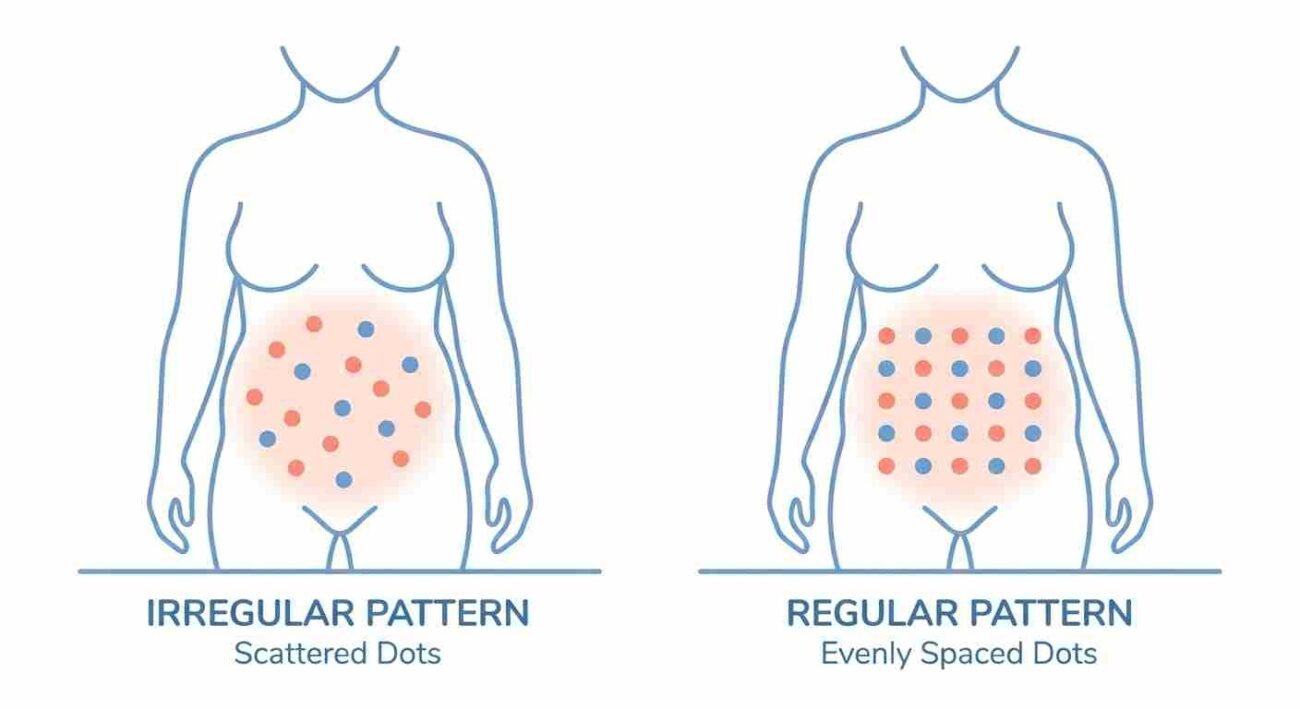
| Feature | Braxton Hicks | Real labor |
| Pattern | Irregular and unpredictable | Regular, getting closer together |
| Pain location | Front of abdomen | Lower back wrapping to front |
| Pain intensity | Stays mild or eases | Builds and intensifies over time |
| Effect of rest | Stops with rest or hydration | Continues regardless of activity |
| Duration | 30 seconds to 2 minutes | 30 to 90 seconds, lengthening |
| Cervical change | No dilation or effacement | Cervix dilates and thins |
| Discharge | No change | Possible bloody show or water breaking |
If your symptoms match true labor rather than Braxton Hicks, contact your healthcare provider for evaluation.
When to be concerned about Braxton Hicks contractions
This is the section to bookmark. While most Braxton Hicks are harmless, certain symptoms mean you should contact your provider right away. These are red flags that may signal true labor or a complication:
- Contractions becoming regular and rhythmic, arriving closer than 10 minutes apart.
- Pain that increases in intensity with each episode rather than easing with rest.
- Lower back pain that comes and goes in a wave-like pattern.
- Vaginal bleeding or spotting of any amount.
- Fluid leaking from the vagina may indicate your water has broken.
- A clear decrease in fetal movement compared to your usual baseline.
- Pelvic pressure that feels like the baby is pushing downward.
- More than four contractions per hour before 37 weeks.
Even one of these signs warrants a call to your doctor or midwife. You are never bothering your care team by reporting symptoms related to Braxton Hicks contractions during pregnancy.
Specific warning scenarios by trimester
Second trimester (13 to 27 weeks)
Any regular contraction pattern during this period needs urgent evaluation. Rhythmic tightening at consistent intervals before 28 weeks may indicate preterm labor rather than Braxton Hicks contractions. Early intervention is important. If you notice four or more contractions in an hour, contact your provider immediately.
Third trimester before 37 weeks
Between 28 and 36 weeks, Braxton Hicks contractions become more common, which can make it harder to distinguish them from true labor. Pay close attention to the pattern. More than four contractions per hour, especially with back pain, pelvic pressure, or a change in discharge, warrants same-day medical care. Your provider may perform a cervical check or fetal fibronectin test to assess preterm delivery risk.
After 37 weeks
After 37 weeks, your baby is considered early term, and the classic 5-1-1 rule applies: go to the hospital when contractions come every 5 minutes, last at least 1 minute each, and continue for 1 hour. Go in sooner if your water breaks, you have bright red bleeding, or you notice decreased fetal movement. If you have preeclampsia or gestational diabetes, follow your provider’s specific recommendations.
How to ease normal Braxton Hicks at home
When your contractions match the normal signs of Braxton Hicks, these strategies can usually help within 15 to 30 minutes:

- Drink a large glass of water and rest for at least 20 minutes. Dehydration is one of the most common triggers. Read our pregnancy hydration tips for daily intake guidelines.
- Empty your bladder. A full bladder can irritate the uterus and provoke tightening.
- Change your position. If standing, lie on your left side. If sitting, take a slow walk.
- Take a warm (not hot) bath or shower to relax the uterine muscle fibers.
- Practice slow, deep breathing. Inhale for four counts, hold for two, exhale for six.
- Eat a small snack if you have not eaten in the past two to three hours.
If Braxton Hicks contractions do not ease within 30 minutes or begin to intensify, contact your healthcare provider. For more comfort strategies, see our guide to managing third-trimester symptoms on Doctiplus.

When to call your doctor immediately
Some situations require an immediate call to your doctor or a trip to labor and delivery:
- Bright red vaginal bleeding that soaks a pad.
- A sudden gush of fluid from the vagina.
- Severe abdominal pain that does not let up between contractions.
- Fever above 100.4 degrees Fahrenheit (38 degrees Celsius) accompanied by contractions.
- Fewer than 10 fetal movements in two hours during a kick count session.
- Regular, painful contractions that are progressively closer together before 37 weeks.
The American College of Obstetricians and Gynecologists emphasizes that timely evaluation of preterm labor symptoms can greatly improve outcomes. Trust your instincts. If anything feels wrong with your Braxton Hicks contractions or pregnancy, calling your provider is always the right choice.
Frequently asked questions
How do I know if Braxton Hicks are too frequent?
Track your Braxton Hicks contractions with a timer or app for one hour. If you count four or more tightening episodes in that time, especially before 37 weeks, contact your healthcare provider. Frequency alone does not always indicate a problem, but your care team can assess if further monitoring is needed.
Can dehydration trigger Braxton Hicks?
Yes. Dehydration is one of the most reliable triggers of Braxton Hicks contractions. When fluid levels drop, the uterine muscle is more likely to tighten. Pregnant women generally need 8 to 12 cups of water daily, and more in hot weather or after exercise. If contractions start, try drinking two full glasses of water and resting for 20 minutes.
Is it normal to have Braxton Hicks every day in the third trimester?
Daily Braxton Hicks contractions are common after 34 weeks. As long as they remain irregular, mild, and respond to rest or hydration, daily episodes are not a cause for concern. The pattern to watch for is regularity, increasing intensity, and pain that does not resolve with a change in activity.
Do Braxton Hicks contractions mean labor is starting soon?
Not necessarily. Some women experience frequent Braxton Hicks contractions for weeks before true labor begins. An increase in frequency during the last weeks can suggest your body is preparing, but Braxton Hicks alone are not a reliable predictor. For more on early signs, see our article on recognizing labor signs on Doctiplus.
Can Braxton Hicks contractions hurt the baby?
No. Braxton Hicks contractions do not reduce blood flow to the placenta or put your baby at risk. They are a normal function of the uterus. Your baby may become slightly more or less active during an episode, but this is not harmful.
Final thoughts on when to be concerned about Braxton Hicks
Understanding when to be concerned about Braxton Hicks contractions empowers you to distinguish practice contractions from symptoms that require medical care. Most of the time, water, rest, and a position change are enough. If contractions become regular, painful, or come with bleeding, leaking fluid, or decreased fetal movement, contact your healthcare provider immediately. Your care team would always rather hear from you sooner rather than later.
The information in this article is for educational purposes only and does not replace professional medical advice, diagnosis, or treatment. Always consult a qualified healthcare provider for any concerns about your health or before starting any new treatment. Doctiplus does not endorse specific products, brands, or providers mentioned for illustrative purposes.
References
- American College of Obstetricians and Gynecologists. How to tell when labor begins. Patient education resource, accessed 2025.
- Mayo Clinic, Braxton Hicks contractions overview, patient information, accessed 2025.
- Cleveland Clinic. False labor versus true labor: patient education. Accessed 2025.
- March of Dimes, signs of preterm labor, maternal health resource, accessed 2025.
- NHS, signs that labor has begun, pregnancy guide, accessed 2025.
- American Pregnancy Association, Braxton Hicks contractions information, accessed 2025.