


How to Get Rid of Tonsil Stones: Safe Methods That Actually Work

You cough up a small, foul-smelling pellet and wonder what just came out of your throat. You are not alone. Tonsil stones, also called tonsilloliths, affect roughly 10 percent of people according to the Cleveland Clinic. Most are harmless and manageable at home. This guide explains how to get rid of tonsil stones safely, what to avoid, and when to see a specialist.
What are tonsil stones?
Tonsil stones are calcified deposits that form in the small pockets of the tonsils, known as tonsillar crypts. They consist of trapped food particles, dead cells, mucus, and bacteria that harden over time. Most are whitish or yellowish and range from a grain of rice to a small pea in size. While rarely dangerous, tonsil stones are a common cause of persistent bad breath that does not improve with brushing alone.
Why tonsil stones form
A number of factors increase the likelihood of tonsil stone formation:
- Cryptic tonsils with deep crevices that trap debris easily.
- Chronic post-nasal drip that pushes mucus into tonsil pockets.
- Inconsistent oral hygiene allows bacteria to accumulate.
- Recurrent tonsillitis or sinusitis that keeps the tonsil tissue inflamed.
- A diet high in dairy, which some people find increases thick mucus generation.
Common symptoms of tonsil stones
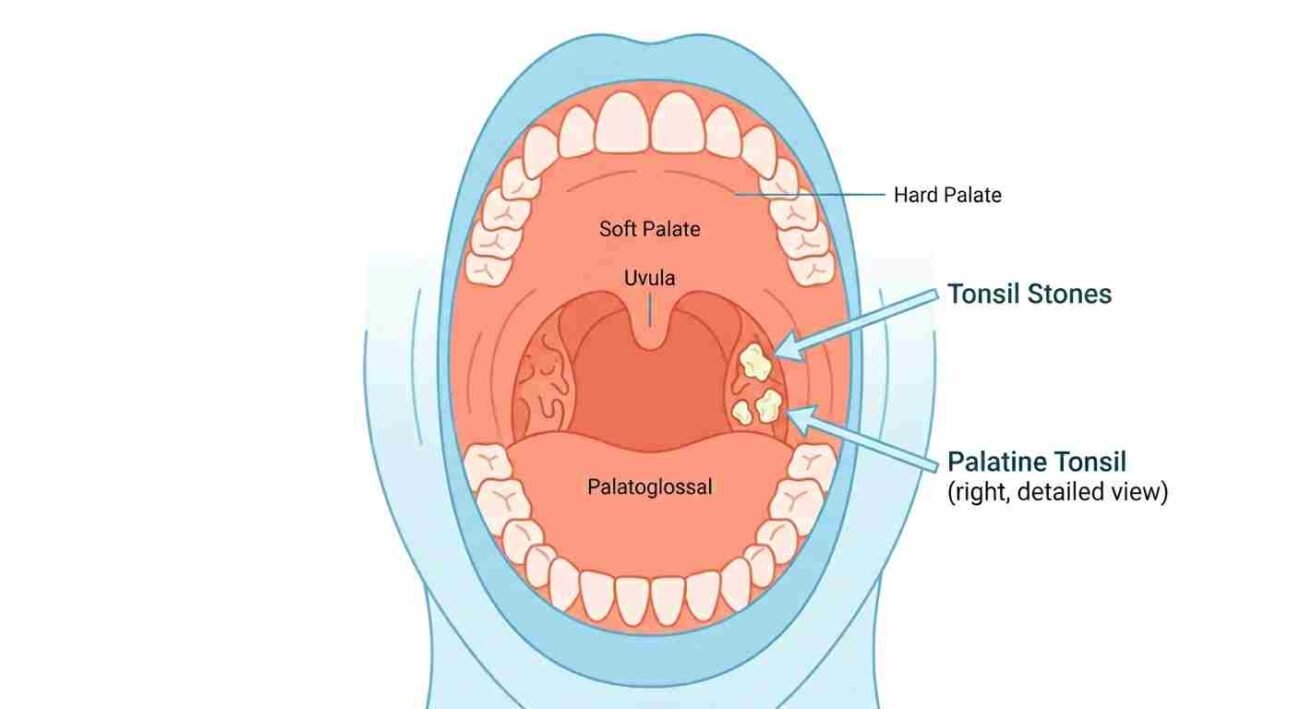
Not all tonsil stones produce noticeable symptoms. As they grow, these signs tend to appear:
- Persistent bad breath that does not respond to brushing or mouthwash.
- Visible white or yellow lumps on one or both tonsils.
- A sore or scratchy feeling in the throat, often on one side.
- A sensation of something stuck at the back of the throat.
- Mild ear pain referred from the tonsil area.
- An occasional metallic or sour taste.
Tonsil stones versus other throat conditions
It can be easy to confuse tonsil stones with tonsillitis or strep throat. The table below shows the key differences.
| Feature | Tonsil stones | Tonsillitis | Strep throat |
| Appearance | White or yellow lumps in tonsil crypts | Red, swollen tonsils | Red throat with white patches |
| Pain level | Mild or none | Moderate to severe | Severe, especially when swallowing |
| Fever | Rare | Common | Common, often high |
| Bad breath | Very common | Possible | Possible |
| Cause | Debris buildup in crypts | Viral or bacterial infection | Group A Streptococcus bacteria |
| Treatment | Home removal or minor procedure | Rest, fluids, sometimes antibiotics | Antibiotics required |
| Contagious | No | Yes, if viral or bacterial | Yes, highly |
How to get rid of tonsil stones at home: 5 safe methods
These methods are listed from gentlest to most direct. Start with Method 1 and move up only if needed. Never use sharp objects, and stop if you feel pain or see bleeding.

Method 1: Salt water gargling
Dissolve half a teaspoon of salt in a cup of warm water. Gargle for 30 seconds, then spit. Repeat two to three times daily. Salt water reduces bacteria, loosens debris, and can dislodge small stones over a few days.
Method 2: Forceful coughing
A strong, controlled cough is sometimes enough to pop a loose stone free. This works best for stones near the surface. If a few attempts do not work, do not strain your throat repeatedly.
Method 3: Low-pressure water flosser
Set your water flosser to the lowest setting and aim the stream at the visible stone. Never use medium or high pressure, as tonsil tissue is delicate and can bleed easily.
Method 4: Soft cotton swab technique
Wet a clean cotton swab and gently press below the stone to nudge it out. Use a mirror and good lighting. Stop if you gag, feel pain, or notice bleeding. For tips on maintaining throat health between removals, see our guide to oral hygiene best practices on Doctiplus.
Method 5: Diluted apple cider vinegar gargle
Mix one tablespoon of apple cider vinegar into a cup of warm water. Gargle for 15 to 20 seconds. The mild acidity may help break down small stones, though evidence is mostly anecdotal. Limit to once daily and never use undiluted.
What not to do when removing tonsil stones
These mistakes can lead to bleeding, infection, or worsening symptoms:
- Never use sharp objects like toothpicks, pins, or tweezers. Tonsil tissue tears easily.
- Do not use your fingernails. The risk of bringing in bacteria is high.
- Avoid medium or high water flosser pressure. Too much force can rupture tissue.
- Do not ignore stones larger than a pea or ones that cause difficulty swallowing.
- Skip alcohol-based mouthwashes. They dry the throat and can worsen the cycle.
How to prevent tonsil stones from coming back
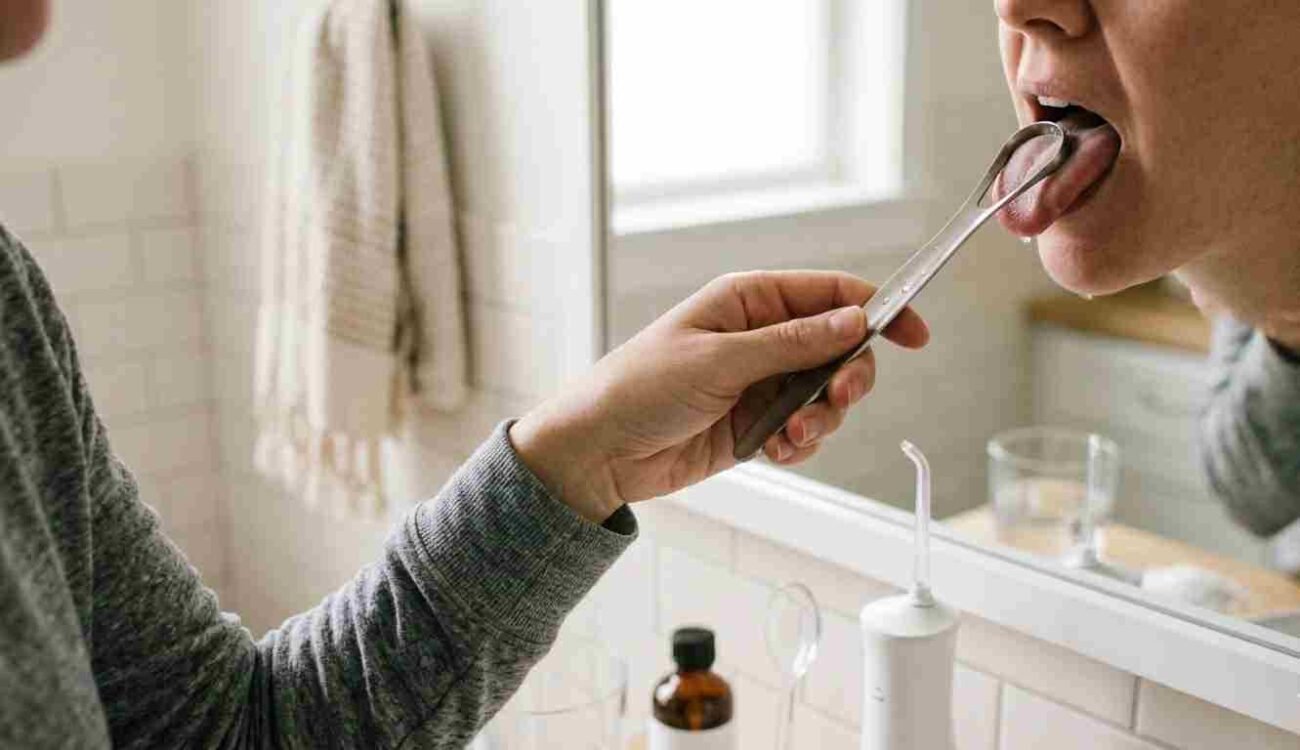
Prevention keeps tonsil stones from returning. These daily habits make a real difference:
- Brush twice daily and clean your tongue with a scraper.
- Floss every night to reduce oral bacteria.
- Drink plenty of water all day long to keep saliva flowing.
- Gargle with salt water two to three times a week, even without active stones.
- Limit dairy and sugary foods if you notice a pattern with stone formation.
- Treat post-nasal drip and sinus difficulties promptly. If you also have a persistent sore throat, discuss both with your doctor.
Medical and surgical options
When home methods prove ineffective, an ENT specialist can help.
ENT in-office removal
An ENT can remove deep stones using suction, a curette, or irrigation. It is a quick procedure that provides immediate relief.
Laser tonsil cryptolysis
This outpatient procedure uses a laser to smooth the tonsil surface, reducing the crypts where debris collects. Recovery is faster than a full tonsillectomy.
Coblation cryptolysis
Coblation uses low-temperature radiofrequency energy to achieve a similar result with less heat damage to surrounding tissue.
Tonsillectomy
Full tonsil removal eliminates stones permanently but is reserved for severe, recurring cases. Recovery takes 10 to 14 days. For a deeper look at when surgery becomes the right call, see our article on when tonsillectomy is needed on Doctiplus.
When to see a doctor
Most tonsil stones can be handled at home, but certain situations call for professional care. The NHS recommends seeing a doctor if you experience any of the following:
- Tonsil stones larger than a pea that do not respond to home methods.
- Difficulty swallowing or a feeling that your airway is blocked.
- Persistent fever alongside the stones.
- Bleeding from the tonsils during or after removal attempts.
- Severe ear or throat pain that interferes with daily activities.
- Bad breath that continues despite consistent oral care.
Frequently asked questions
Can tonsil stones go away on their own?
Yes. Many small tonsil stones dislodge naturally when you eat, drink, or cough. If a stone is not causing symptoms, it may fall out within days to weeks. Gargling with salt water can speed up the process.
Do tonsil stones smell?
They often do. The combination of bacteria, dead cells, and food debris creates a sulfur-like odor. This is one of the main reasons tonsil stones cause bad breath, even when oral hygiene is otherwise good.
Are tonsil stones contagious?
No. Tonsil stones are not an infection and cannot pass from one person to another. They form because of the structure of your own tonsils and the debris that collects inside them.
Can I prevent tonsil stones permanently without surgery?
You can greatly reduce how often they form with strong oral hygiene, regular gargling, hydration, and managing post-nasal drip. However, if your tonsils have deep crypts, small stones may still form occasionally. Surgery is the only permanent solution.
Is it safe to remove tonsil stones at home with my finger?
A clean finger with light pressure is safer than a sharp tool, but fingernails can scratch tissue and introduce bacteria. A wet cotton swab provides softer, more controlled contact and is the better option.
Why do my tonsil stones keep coming back?
Recurring stones usually point to deep tonsillar crypts, chronic post-nasal drip, or inconsistent oral care. The crypts trap new debris even after you remove existing stones. Tackling root causes and maintaining a daily prevention routine is the most effective approach.
Final thoughts
Knowing how to get rid of tonsil stones safely can save you real discomfort. Start with salt water gargling and work through the list only as needed. Keep up with daily oral hygiene, stay hydrated, and address sinus matters early. If home methods prove ineffective or stones keep returning, an ENT specialist can offer treatments from in-office removal to crypt reduction procedures. The right approach for your situation is well within reach.
The information in this article is for educational purposes only and does not replace professional medical advice, diagnosis, or treatment. Always consult a qualified healthcare provider for any concerns about your health or before starting any new treatment. Doctiplus does not endorse specific products, brands, or providers mentioned for illustrative purposes.
References
- Cleveland Clinic, tonsil stones overview and treatment options, accessed 2025.
- Mayo Clinic, tonsillitis and tonsil stones, patient information, accessed 2025.
- NHS, tonsil stones information and when to see a GP, accessed 2025.
- American Academy of Otolaryngology, Head and Neck Surgery, tonsils and adenoids patient resources, accessed 2025.
- Journal of Laryngology and Otology, prevalence and management of tonsilloliths, peer-reviewed study.
- Harvard Health Publishing, oral hygiene and overall health, accessed 2025.