


Jelly-Like Blood Clots During Period: Is It Normal, and When to Worry?

You notice a thick, jelly-like clump, and your first instinct is to worry. Seeing jelly-like blood clots during period flow is more common than most women realize, and in many cases, these menstrual blood clots are completely normal. Small clots on the heaviest days of your cycle are simply your body’s natural response to heavy flow. That said, large period clots causes range of symptoms from hormonal imbalances to fibroids, and some warning signs do warrant a doctor visit. This guide explains what these clots are, why they form, when to relax, and when to seek medical attention.
What are jelly-like blood clots during a period?
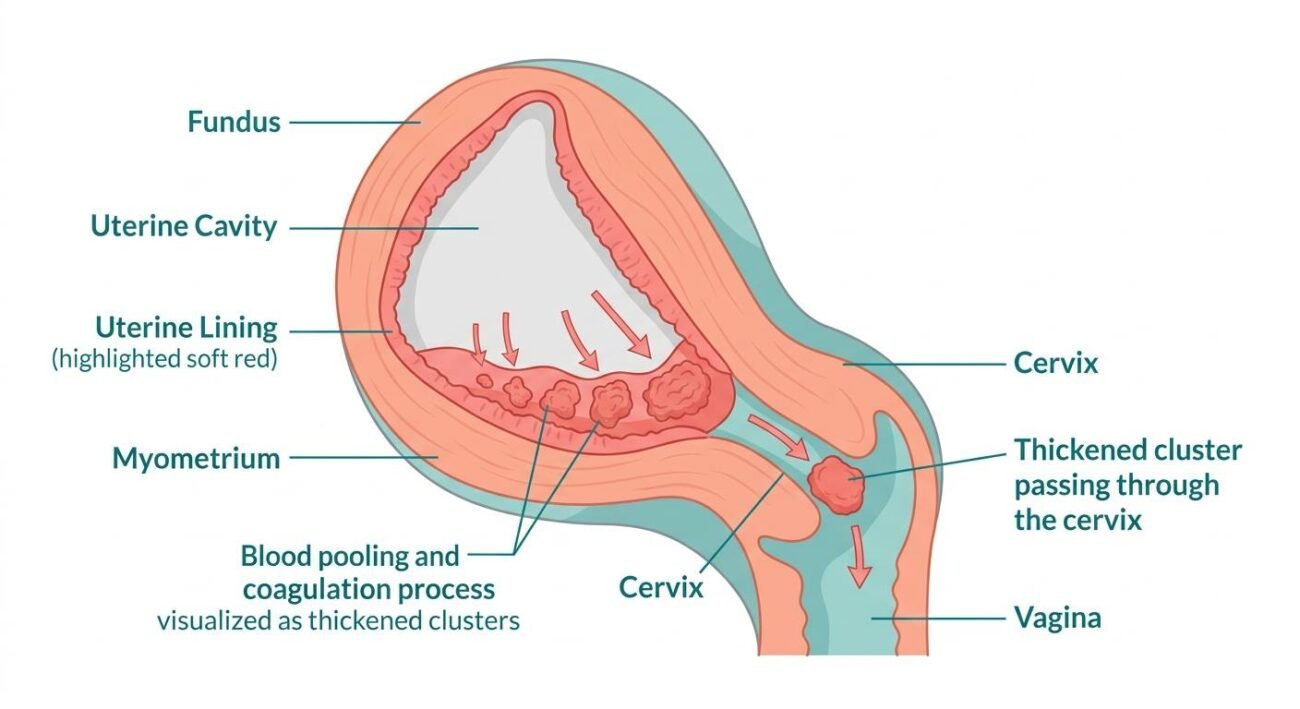
Menstrual blood clots are a mix of blood, uterine lining tissue, and mucus that has thickened inside the uterus or vaginal canal. Their gel-like, jelly texture comes from coagulation proteins, the same proteins that form scabs when you cut your skin. The color of thick period blood clots ranges from bright red on heavy days to dark red or brownish toward the end of your cycle. Most menstrual blood clots are small, roughly the size of a pea or a grape, and pass without any pain.
Why menstrual clots form
Your body releases anticoagulants that keep period blood liquid. When the flow is heavy, these anticoagulants cannot keep pace. Blood pools briefly, begins to coagulate, and passes as a jelly-like blood clot. This is why menstrual blood clots are most common on the first two to three days of your period, when flow is at its peak.
When jelly-like clots are normal
- Clots smaller than a coin or quarter (under 2.5 centimeters).
- Clots appear only on the heaviest days, usually days 1 to 3.
- Bright red or dark red color with no foul odor.
- Occasional clots, not present in every single cycle.
- No severe pain or excessively heavy period clots soaking through pads rapidly.
Clot size reference guide
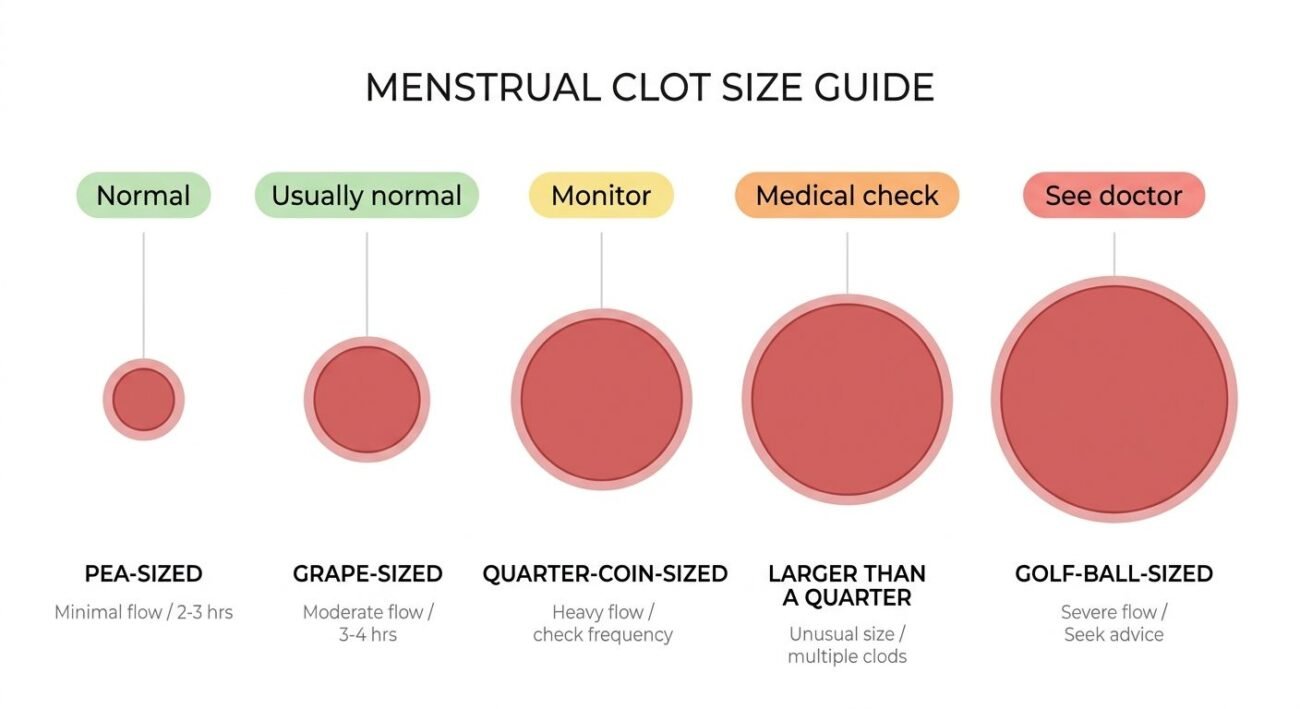
Use the table below to assess your jelly-like blood clots during period flow. This is a general guide, not a diagnosis.
| Clot size | Comparison | Generally |
| Smaller than 1 cm | Pea or smaller | Normal |
| 1 to 2 cm | Grape sized | Usually normal on heavy days |
| 2.5 cm (1 inch) | Quarter coin sized | Borderline, monitor pattern |
| Larger than 2.5 cm | Bigger than a quarter | Worth a medical check |
| Golf ball or larger | Very large | See a doctor promptly |
When jelly-like blood clots during a period may be a concern
The following menorrhagia symptoms, alongside jelly-like blood clots during period flow, suggest something beyond normal variation:
- Clots larger than a quarter appear regularly.
- Soaking through a pad or tampon every 1 to 2 hours for more than 2 consecutive hours.
- Period lasting longer than 7 days with persistent heavy period clots.
- Severe cramping that disrupts daily activities.
- Fatigue, dizziness, or shortness of breath, which may signal anemia from blood loss.

Common causes of large or frequent menstrual clots
Hormonal imbalance
Estrogen dominance causes the uterine lining to grow thicker than usual, producing heavier flow and bigger jelly-like blood clots during the period. Conditions like polycystic ovary syndrome and thyroid disorders can drive this imbalance. For a deeper look at flow patterns, see our guide to heavy periods, causes and treatment on Doctiplus.
Uterine fibroids
Fibroids are non-cancerous growths in the uterus that are a leading cause of large period clots in women aged 30 to 50. They increase the surface area of the uterine lining, leading to heavier, clottier periods. Our uterine fibroids guide covers symptoms, diagnosis, and treatment options.
Endometriosis
Tissue similar to the uterine lining grows outside the uterus, causing painful menstrual blood clots and heavy bleeding. It affects roughly 10 percent of reproductive-age women, according to the American College of Obstetricians and Gynecologists.
Adenomyosis
Endometrial tissue grows into the uterine muscle wall, causing an enlarged uterus with heavy, clotty periods. Adenomyosis is most common in women over 35.
Miscarriage
Early pregnancy loss can present as heavy bleeding with large, jelly-like blood clots, sometimes mistaken for a heavy period. If there is any chance you could be pregnant and you are passing large clots, contact your healthcare provider promptly for evaluation.
Uterine polyps
Small uterine lining growths that cause irregular bleeding and menstrual blood clot formation between or during periods.
Bleeding disorders
Von Willebrand disease and similar conditions impair clotting, leading to heavier menstrual bleeding and larger, thicker period blood clots. These disorders often run in families.
Medications and IUDs
Blood thinners reduce the body’s clotting ability, increasing menstrual blood clots. Copper IUDs can also cause heavier periods and more frequent thick period blood clots.
How doctors diagnose the cause
Your provider may use a pelvic exam, transvaginal ultrasound, blood tests (CBC, iron, thyroid, hormonal panels), hysteroscopy, or endometrial biopsy to identify the causes of large period clots. Tracking flow with a period app before your appointment helps your doctor assess severity.
Treatment options for heavy period clots
Lifestyle and home care
- Track flow volume and clot size with a period app to share with your doctor.
- Eat iron-rich foods (spinach, lentils, red meat) to prevent anemia from heavy period clots.
- Apply heat to your lower abdomen during cramps. See our tips on period pain management.
- Stay hydrated and rest during your heaviest days.
Medications
- Tranexamic acid reduces heavy flow and large menstrual blood clots by stabilizing clotting factors.
- Hormonal birth control (pill, patch, hormonal IUD) regulates cycles and thins the uterine lining.
- NSAIDs like ibuprofen reduce both pain and blood loss during your period.
- Iron supplements if blood tests confirm iron deficiency. Your provider will recommend the right dose.
Procedures and surgery
- Endometrial ablation destroys the uterine lining to reduce heavy bleeding.
- Myomectomy removes fibroids while preserving the uterus.
- Hysterectomy (uterus removal) is a last resort for severe, treatment-resistant cases.

When to see a doctor immediately
Certain menorrhagia symptoms alongside jelly-like blood clots during the period warrant urgent evaluation:
- Soaking more than one pad per hour for two or more consecutive hours.
- Passing clots larger than a golf ball.
- Severe pain not relieved by over-the-counter medication.
- Signs of possible pregnancy with heavy clotting (contact your provider immediately).
- Symptoms of anemia: extreme fatigue, pale skin, rapid heartbeat, or lightheadedness.
Frequently asked questions
Are jelly-like clots during my period a sign of pregnancy?
Jelly-like blood clots during period flow are not typically a pregnancy sign. However, heavy bleeding with large clots after a missed period could indicate early pregnancy loss. If there is any possibility you are pregnant, take a test and contact your provider.
Why do I get clots only on the first day of my period?
Flow is heaviest on the first one to two days, and your body’s natural anticoagulants may not keep up with the volume. This makes menstrual blood clots most common at the start of your cycle. If clots remain small and occur only on these peak days, they are generally normal.
Can stress cause larger period clots?
Chronic stress is able to disrupt the hormonal balance between estrogen and progesterone, possibly causing a thicker uterine lining and larger jelly-like blood clots during the period. Controlling stress through sleep, exercise, and relaxation techniques can help regulate your cycle over time.
Should I be worried about black jelly-like clots?
Very dark or black thick period blood clots are usually old blood that took longer to leave the uterus. This color alone is not a cause for concern. However, if dark clots are consistently large, frequent, or accompanied by a foul odor, see your provider.
Does drinking more water reduce period clots?
Hydration supports circulation but does not directly prevent menstrual blood clots. However, dehydration can thicken blood, so adequate water during your period is a healthy habit that supports your body on heavy days.
Do period clots mean I am losing too much blood?
Small clots on heavy days do not necessarily mean excessive blood loss. However, if you regularly pass heavy period clots larger than a quarter, soak through pads rapidly, or feel dizzy and fatigued, you may be losing enough blood to affect your iron levels. A simple blood test can check.
Final thoughts
Seeing jelly-like blood clots during period flow is understandably alarming, but in most cases, small menstrual blood clots on your heaviest days are a normal part of menstruation. Pay attention to clot size, frequency, and accompanying symptoms. If your clots are consistently larger than a quarter, your period lasts beyond seven days, or you notice menorrhagia symptoms like fatigue and dizziness, schedule a visit with your healthcare provider. The right diagnosis leads to effective treatment, and you do not have to accept heavy period clots as just part of life.
The information in this article is for educational purposes only and does not replace professional medical advice, diagnosis, or treatment. Always consult a qualified healthcare provider for any concerns about your health or before starting any new treatment. Doctiplus does not endorse specific products, brands, or providers mentioned for illustrative purposes.
References
- American College of Obstetricians and Gynecologists, heavy menstrual bleeding patient FAQ, accessed 2026.
- Mayo Clinic, menorrhagia symptoms, causes, and treatment, accessed 2026.
- Cleveland Clinic, blood clots during your period patient information, accessed 2026.
- NHS, heavy periods information and when to see a GP, accessed 2026.
- Office on Women’s Health, heavy menstrual bleeding overview, accessed 2026.
- Journal of Obstetrics and Gynecology, menorrhagia evaluation and management, peer-reviewed.