


Arthritis Symptoms, Causes, and Treatments You Should Know
Arthritis affects more than 350 million people worldwide, making it one of the most common causes of chronic pain and disability on the planet. Yet despite how widespread it is, many people misunderstand what arthritis actually means – or assume it is simply an inevitable part of getting older.
The truth is more complicated and more hopeful. Arthritis is not a single disease. It is an umbrella term that covers more than 100 different conditions, each with its own triggers, patterns of joint damage, and treatment options. Some types primarily affect older adults. Others strike people in their 20s and 30s. Some are driven by immune dysfunction. Others result from mechanical wear or uric acid buildup.
Understanding which type you are dealing with, and recognizing the arthritis early signs, can make a significant difference in how well you manage the condition and protect your long-term joint health. This guide covers arthritis symptoms, causes, and treatments in full, so you have everything you need to take informed action and protect your joints for the long term. Whether you are seeking information about types of arthritis, arthritis pain relief, or the best arthritis treatment options, you’ll find practical advice and clear explanations throughout.
What Is Arthritis?
Arthritis refers to any condition that causes inflammation, pain, stiffness, or structural damage in one or more joints. A joint is the point where two bones meet, cushioned by cartilage and lubricated by synovial fluid. When that system is disrupted – whether by immune attack, cartilage breakdown, or crystal deposits – the result is pain, reduced range of motion, and sometimes visible swelling.
The word “arthritis” comes from the Greek words for joint (arthron) and inflammation (itis), though not every form of arthritis involves active inflammation in the traditional sense. Osteoarthritis, for example, is primarily a degenerative condition rather than an inflammatory one, whereas rheumatoid arthritis is driven almost entirely by the immune system.
Because the types differ so fundamentally, treatments that help one form may have little impact on another. Getting the right diagnosis is always the critical first step.
Types of Arthritis: A Comparison (Rheumatoid Arthritis vs Osteoarthritis and More)
The four most common types of arthritis account for the vast majority of diagnoses. Understanding how they differ helps explain why symptoms and treatment paths vary so widely.
| Osteoarthritis (OA) | Cartilage breakdown and bone remodeling | Knees, hips, hands, spine | Adults over 50 | Low to moderate |
| Rheumatoid Arthritis (RA) | Autoimmune attack on synovial tissue | Hands, wrists, feet (symmetrical) | Women aged 30-60 | High |
| Psoriatic Arthritis (PsA) | Autoimmune, linked to psoriasis | Fingers, toes, lower back | Adults with psoriasis | Moderate to high |
| Gout | Uric acid crystal deposits in joints | Big toe, ankle, knee | Men over 40, postmenopausal women | High (during flares) |
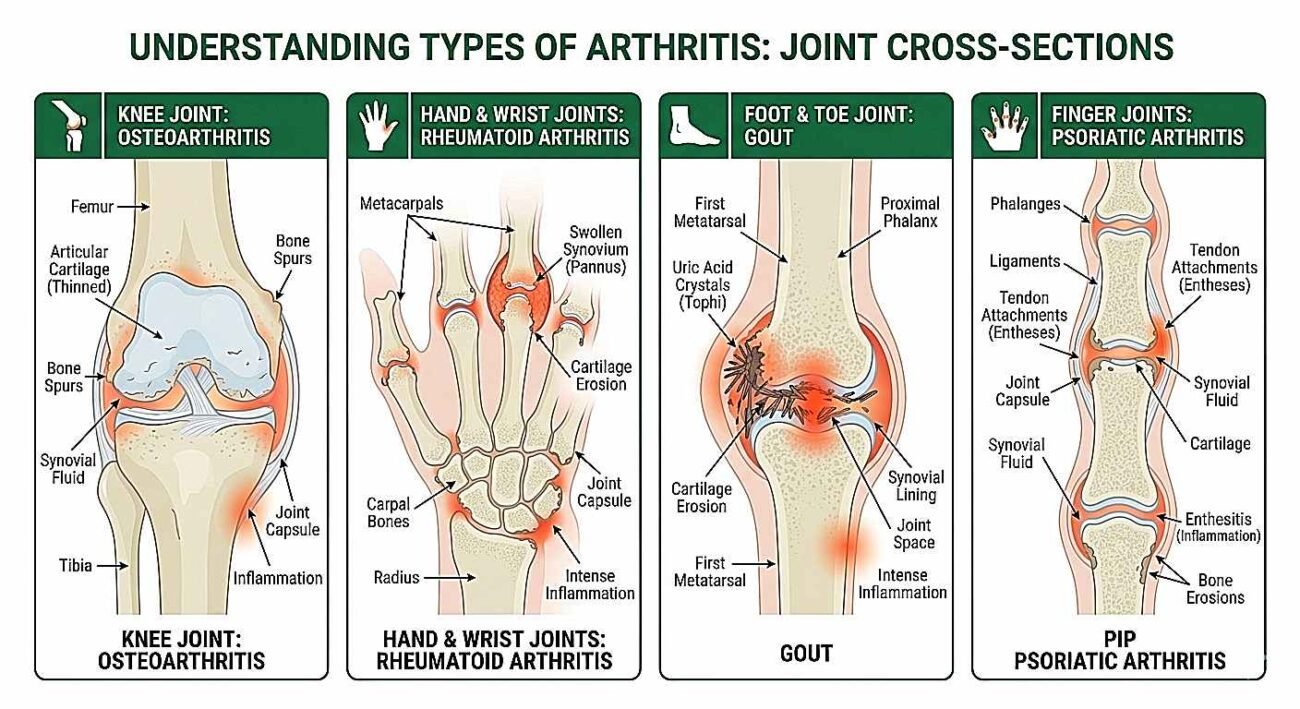
Each type has a distinct progression and requires a tailored management strategy, which is why accurate diagnosis by a rheumatologist or specialist matters so much.
Common Arthritis Symptoms to Watch For
Recognizing arthritis’s early signs before significant joint damage occurs is one of the most important things you can do for your long-term health. Symptoms can be subtle at first, building slowly over months or years before they become impossible to ignore. In other cases, particularly with gout or reactive arthritis, symptoms can flare suddenly and severely.
Joint Pain
Pain is the most universal arthritis symptom. It may be constant or intermittent, localized to one joint or spread across multiple areas. In osteoarthritis, pain often worsens with activity and eases with rest. In rheumatoid arthritis, pain tends to be worse in the morning and may actually improve as you move throughout the day.
Stiffness
Morning stiffness lasting more than 30 minutes is a classic early warning sign of inflammatory arthritis, particularly rheumatoid arthritis. In osteoarthritis, stiffness is usually briefer, typically resolving within 15 to 20 minutes of gentle movement. If stiffness persists well into the day or returns after periods of inactivity, that is worth discussing with a doctor.
Swelling and Warmth
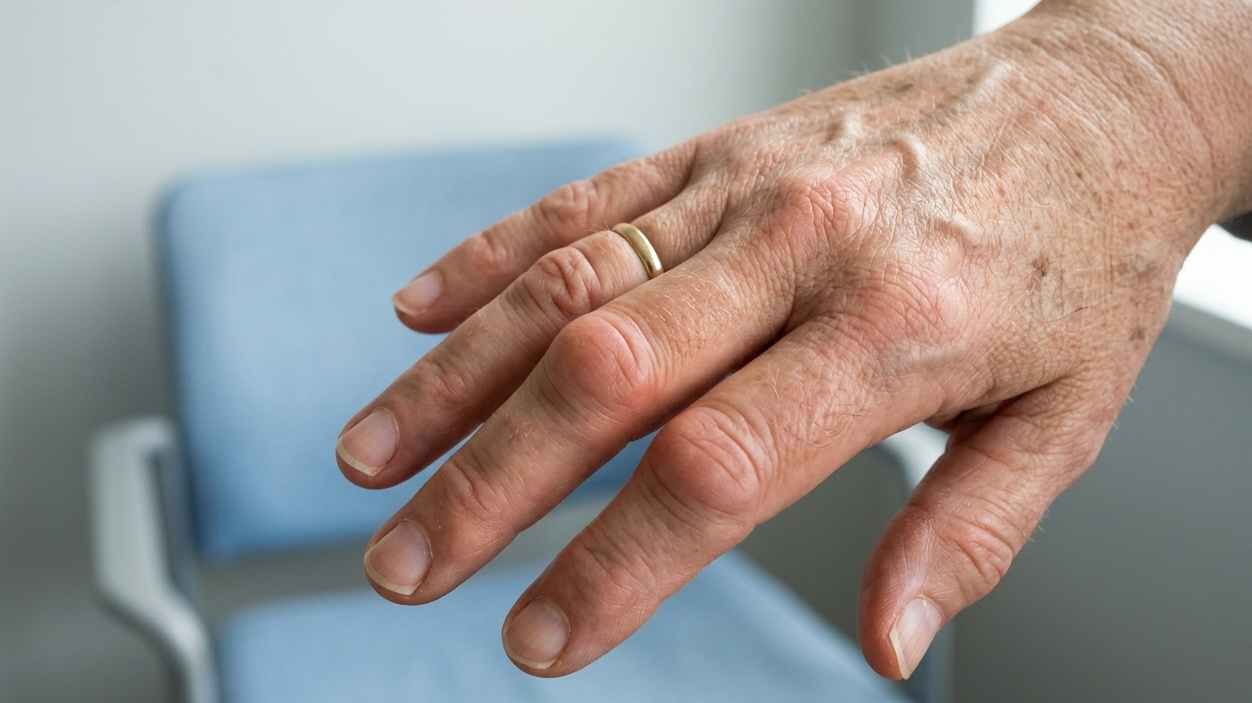
Inflamed joints often appear swollen, and the skin over the joint may feel warm to the touch. Visible swelling in the small joints of the fingers or toes (sometimes called “sausage digits” in psoriatic arthritis) can be an early diagnostic clue. Persistent swelling that does not respond to rest and ice should be evaluated promptly.
Reduced Range of Motion
As joint damage progresses, the ability to fully bend, extend, or rotate a joint typically decreases. You may notice difficulty gripping objects, climbing stairs, or turning your head. Early intervention, including physical therapy and appropriate medications, can slow this progression significantly.
Systemic Symptoms
Inflammatory types of arthritis, particularly rheumatoid arthritis and psoriatic arthritis, can cause symptoms beyond the joints. Fatigue, low-grade fever, unintended weight loss, and a general feeling of being unwell may accompany joint symptoms. These systemic features reflect the fact that autoimmune arthritis affects the whole body, not just the joints.
Arthritis Causes and Risk Factors
No single cause explains all arthritis. Instead, most forms arise from a combination of genetic predisposition, environmental triggers, and lifestyle factors.
Genetics
Family history plays a meaningful role in both osteoarthritis and rheumatoid arthritis. Certain genetic variants increase the likelihood that the immune system will malfunction or that cartilage will break down prematurely. Having a parent or sibling with rheumatoid arthritis roughly triples your risk, according to research published by the NIH.
Age and Gender
Osteoarthritis risk rises sharply after the age of 50, and the overall prevalence of most arthritis types increases with age. Gender also matters: rheumatoid arthritis is about three times more common in women than men, while gout is significantly more common in men until after menopause, when women’s rates begin to approach men’s.
Previous Joint Injuries
A history of joint injuries, including sports-related ligament tears, fractures near joint surfaces, or cartilage damage, substantially increases the risk of developing osteoarthritis in that joint later in life. People who have experienced ACL injuries, for example, face a notably higher lifetime risk of knee osteoarthritis.
Obesity
Excess body weight places additional mechanical stress on weight-bearing joints, accelerating cartilage breakdown in the knees and hips. Beyond the mechanical load, adipose tissue also produces inflammatory cytokines that may promote systemic inflammation, contributing to arthritis risk even in non-weight-bearing joints.
Autoimmune Dysfunction
For rheumatoid arthritis, psoriatic arthritis, and related conditions, the underlying cause is the immune system mistakenly attacking joint tissue. The precise triggers that cause this malfunction are not fully understood, but infections, hormonal changes, smoking, and stress are all thought to play a role in activating genetic susceptibility.
Diet and Uric Acid Levels
Gout develops when uric acid accumulates in the blood and forms sharp, needle-like crystals inside joints. Diets high in purines – found in red meat, organ meats, shellfish, and alcohol, particularly beer – raise uric acid levels and trigger gout attacks. The Mayo Clinic identifies diet as one of the most directly modifiable risk factors for gout.
How Arthritis Is Diagnosed
Diagnosis typically involves a combination of clinical evaluation, laboratory tests, and imaging. A rheumatologist will usually begin with a detailed history of symptoms, examining which joints are affected, how the pain behaves, and whether there are any systemic features.
Blood tests commonly used in arthritis diagnosis include:
- Rheumatoid factor (RF) and anti-CCP antibodies for rheumatoid arthritis
- ESR and CRP (inflammatory markers) for active inflammation
- Uric acid levels for suspected gout
- ANA panel for autoimmune conditions
Imaging tools, including X-rays, MRI, and ultrasound, help assess the degree of joint damage, detect erosions, and guide treatment decisions. Understanding how these workups fit into broader health screening, including why regular health check-ups matter for early detection, is an important part of staying ahead of progressive joint disease.
Arthritis Treatments: From Lifestyle to Surgery
Treatment for arthritis is rarely one-size-fits-all. The arthritis treatment options available today span lifestyle changes, medications, physical therapy, injections, and surgery, and the right combination depends on the type, severity, and the patient’s overall health. Here is a breakdown of the main treatment categories.
Lifestyle Modifications
Lifestyle changes form the foundation of every arthritis management plan, regardless of type.
Physical activity is consistently rated as one of the most effective interventions for arthritis pain relief. Low-impact exercises such as swimming, cycling, and walking strengthen the muscles around joints, reduce stiffness, and improve mood. The connection between movement and mental well-being is particularly relevant here, since chronic pain conditions carry a significant psychological burden.
Weight management reduces mechanical load on the hips and knees. Research published in Arthritis and Rheumatology has shown that even a modest reduction of 10% body weight can lead to meaningful improvements in knee osteoarthritis pain and function.
Diet plays a supporting role. Anti-inflammatory eating patterns, including the Mediterranean diet, have shown benefits for both pain levels and inflammatory markers in multiple studies. The table below outlines key food choices.

Anti-Inflammatory Food Guide for Arthritis
| Fatty fish (salmon, sardines, mackerel) | Red and processed meats |
| Olive oil | Refined sugar and white flour |
| Leafy greens (spinach, kale, arugula) | Alcohol (especially beer for gout) |
| Berries (blueberries, cherries, strawberries) | High-purine organ meats (for gout) |
| Nuts and seeds (walnuts, flaxseed) | Ultra-processed packaged foods |
| Turmeric and ginger | Saturated and trans fats |
| Whole grains | Excess salt |
Because nutrient deficiencies are common in people with chronic inflammatory conditions, it is worth reviewing why modern lifestyles leave us nutrient-deficient and ensuring micronutrient needs are met.
Medications
Pharmacological treatment depends heavily on the type and severity of arthritis.
NSAIDs (nonsteroidal anti-inflammatory drugs) such as ibuprofen and naproxen reduce both pain and inflammation and are a first-line option for many types of arthritis. Long-term use carries risks for the stomach, kidneys, and cardiovascular system, so regular monitoring is important.
DMARDs (disease-modifying antirheumatic drugs) are the cornerstone of rheumatoid and psoriatic arthritis treatment. Methotrexate remains one of the most widely used, often combined with other agents.
Biologics are a more targeted class of DMARDs that block specific inflammatory pathways. Drugs such as TNF inhibitors and IL-6 blockers have transformed the outlook for many patients with severe RA and PsA. The NHS provides detailed guidance on how biologic therapy is prescribed and monitored.
Corticosteroids such as prednisone can rapidly control flares but are generally not suitable for long-term use due to side effects, including bone loss and increased infection risk.
Urate-lowering therapy (allopurinol, febuxostat) is the standard long-term treatment for gout, reducing uric acid production and preventing crystal formation.
Physical Therapy and Occupational Therapy
Physical therapists design exercise programs tailored to a patient’s specific joints and limitations. Strengthening the quadriceps, for example, significantly reduces knee joint loading in osteoarthritis. Occupational therapists help patients adapt daily activities and use assistive devices to protect joints during routine tasks.
Supplements
Evidence for supplements in arthritis is mixed, but some have shown modest benefits in well-designed trials. Glucosamine and chondroitin have been studied extensively for osteoarthritis, with results suggesting benefit for some patients. Omega-3 fatty acids have anti-inflammatory properties supported by clinical data. For guidance on making informed supplement choices, see the Doctiplus overview of common supplement mistakes and how to avoid them.
The best joint supplements in 2026 are also explored in a dedicated guide for those researching evidence-based options.
Vitamin B12 deficiency, which can cause nerve-related pain and fatigue, sometimes mimics or exacerbates arthritis symptoms. Ensuring adequate B12 status is worth addressing alongside joint-specific care.
Injections
Corticosteroid injections into specific joints provide targeted, fast-acting relief and are useful for managing localized flares. Hyaluronic acid injections (viscosupplementation) are approved for knee osteoarthritis and aim to improve joint lubrication. Platelet-rich plasma (PRP) injections are an emerging option, though evidence is still evolving.
Surgery
For severe arthritis that no longer responds to conservative treatment, surgical options may be considered.
Joint replacement (arthroplasty), most commonly of the hip or knee, removes damaged joint surfaces and replaces them with prosthetic components. Outcomes are generally excellent, with most patients experiencing dramatic pain relief and improved mobility. Non-surgical treatments for knee pain are always exhausted first, but replacement surgery has become one of the most reliably successful procedures in orthopedic medicine.
Arthroscopy involves minimally invasive joint cleaning or repair, though its role in osteoarthritis is more limited than once thought. Joint fusion (arthrodesis) sacrifices mobility in exchange for pain relief and is reserved for joints where replacement is not suitable.
“Early, aggressive treatment of inflammatory arthritis, particularly RA, is the single most effective way to prevent irreversible joint damage,” says Dr. Anjali Mehta, MD, FACR, Board-Certified Rheumatologist. “The window of opportunity in the first year is critical.”
Daily Joint-Care Routine Checklist
Small daily habits compound into meaningful protection for arthritic joints over time.
- Start the day with 5 to 10 minutes of gentle range-of-motion exercises to ease morning stiffness.
- Apply heat to stiff joints before activity, and cold packs to swollen joints after
- Take medication at the same time each day to maintain consistent drug levels.
- Pace activities throughout the day rather than completing all tasks at once
- Use assistive devices (jar openers, ergonomic handles, joint braces) to reduce strain on vulnerable joints.
- Take rest breaks before fatigue sets in, not after
- Log symptoms, flares, and activity patterns to share with your healthcare team.
- Prioritize 7 to 9 hours of sleep, as poor sleep amplifies pain perception.
Treatment Decision Guide by Severity
| Mild | Occasional joint pain or stiffness, no swelling, full function | Lifestyle changes, weight management, low-impact exercise, OTC pain relief as needed |
| Moderate | Frequent pain, intermittent swelling, some activity limitation | Add prescription NSAIDs or DMARDs (for RA or PsA), physiotherapy, supplements review |
| Severe | Daily pain, significant swelling, notable loss of function | Biologics, specialist-supervised medication, injection therapy, surgical evaluation |
| End-stage | Joint destruction, severe functional impairment | Joint replacement surgery, intensive rehabilitation, chronic pain management program |
Frequently Asked Questions About Arthritis
What are the earliest signs of arthritis?
The earliest signs are often mild joint stiffness in the morning, subtle aching after activity, and occasional swelling in small joints like the fingers. Many people dismiss these as normal signs of aging, which is why early diagnosis is frequently delayed.
There is currently no cure for most forms of arthritis, but the condition is very manageable. Many people with rheumatoid arthritis achieve remission (meaning little or no disease activity) with modern medications. The goal of treatment is to minimize damage, preserve function, and maintain quality of life.
Is arthritis only a disease of older adults?
No. Rheumatoid arthritis commonly develops between the ages of 30 and 60, and juvenile idiopathic arthritis affects children. Even osteoarthritis can develop in younger people following joint injuries or due to genetic factors.
Does diet really affect arthritis?
Diet plays a meaningful supporting role. Anti-inflammatory diets rich in omega-3 fatty acids, antioxidants, and whole foods are associated with lower inflammatory markers and reduced pain in several studies. For gout specifically, dietary changes can directly prevent flares by reducing uric acid levels.
How do I know if I have rheumatoid arthritis or osteoarthritis?
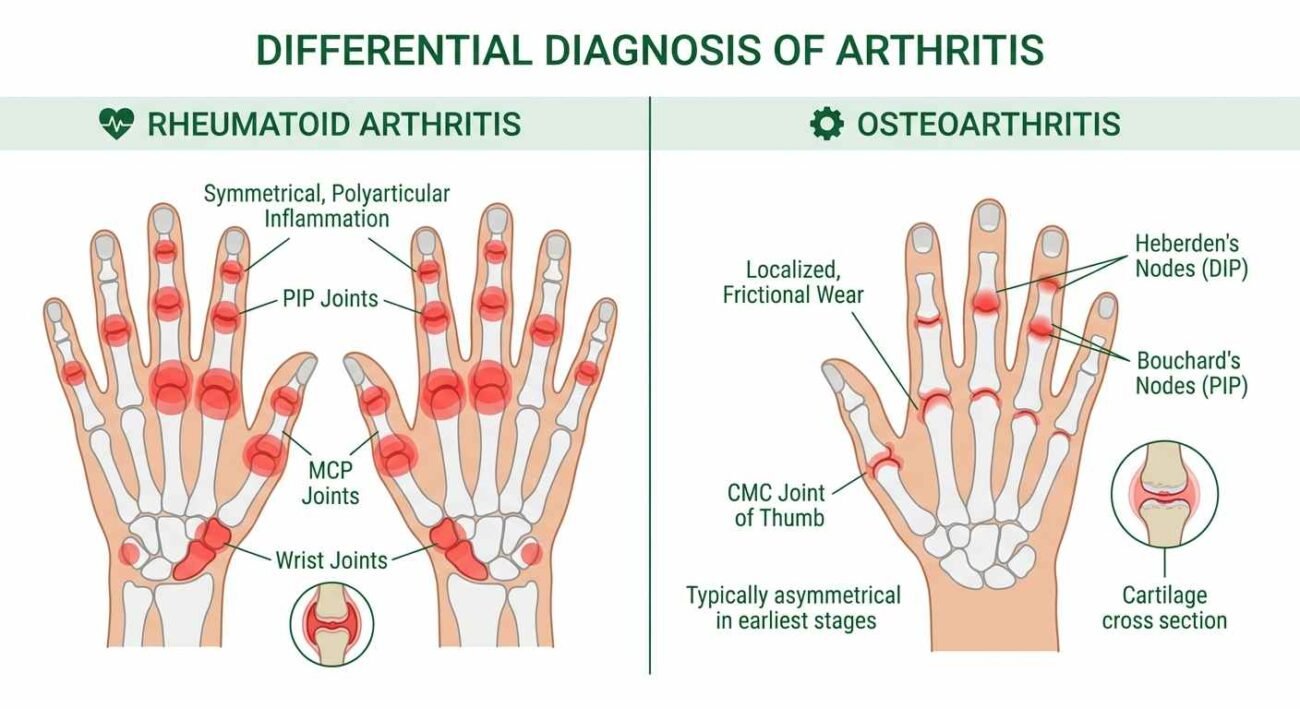
When comparing rheumatoid arthritis vs osteoarthritis, the key differences are:
– Rheumatoid arthritis (RA) typically affects joints symmetrically (both hands, both wrists), causes prolonged morning stiffness, and often comes with systemic symptoms like fatigue.
– Osteoarthritis (OA) tends to affect one side more than the other, worsens with activity, and is usually diagnosed in people over 50 with a history of joint use or injury.
Comparison Table: Rheumatoid Arthritis vs Osteoarthritis
– RA: Symmetrical joint involvement, prolonged morning stiffness, systemic symptoms (fatigue, weight loss), often begins between ages 30 and 60
– OA: Asymmetric joint involvement, pain worsens with activity, usually localized symptoms, most common after age 50
A rheumatologist can confirm the diagnosis with blood tests and imaging.
Is exercise safe if I have arthritis?
Yes, and it is strongly recommended. Appropriate low-impact exercise reduces stiffness, builds joint-supporting muscle, and improves mood. The key is choosing activities that do not place excessive stress on damaged joints. Swimming, cycling, yoga, and walking are generally well tolerated.
Can arthritis affect organs other than joints?
Yes. Rheumatoid arthritis, in particular, can cause inflammation in the lungs, heart, eyes, and blood vessels. Monitoring for extra-articular manifestations is a standard part of care for patients with systemic inflammatory arthritis.
Conclusion
Arthritis is a diverse group of conditions, not a single disease, and managing it well depends on identifying the right type and understanding how it behaves in your body. Whether you are dealing with the gradual wear of osteoarthritis, the immune-driven flares of rheumatoid arthritis, or the sharp attacks of gout, effective treatments exist at every stage. The sooner joint disease is recognized and addressed, the better the long-term outlook for pain, function, and quality of life. Understanding arthritis symptoms, causes, and treatments together gives you the clearest path forward. Work closely with a rheumatologist or specialist, build sustainable daily habits, and treat lifestyle factors as a core part of your treatment plan.
Medical Disclaimer: The information provided in this article is for educational purposes only and is not intended as medical advice. Always consult a qualified healthcare professional before making any decisions about your health, diagnosis, or treatment. Doctiplus does not endorse any specific treatments, procedures, or products mentioned in this article.
References
- Symmons, D. et al. (2006). The global burden of rheumatoid arthritis. Clinical and Experimental Rheumatology. https://www.ncbi.nlm.nih.gov/pmc/articles/PMC5572740/
- Mayo Clinic Staff. (2024). Gout: Symptoms and causes. Mayo Clinic. https://www.mayoclinic.org/diseases-conditions/gout/symptoms-causes/syc-20372897
- NHS. (2023). Rheumatoid arthritis: Treatment. National Health Service. https://www.nhs.uk/conditions/rheumatoid-arthritis/treatment/
- Messier, S.P. et al. (2018). Effects of intensive diet and exercise on knee joint loads in obese adults with knee osteoarthritis. Arthritis and Rheumatology. https://onlinelibrary.wiley.com/journal/23265205
- Firestein, G.S. & McInnes, I.B. (2017). Immunopathogenesis of rheumatoid arthritis. Immunity, 46(2), 183-196. https://www.ncbi.nlm.nih.gov/pmc/articles/PMC5349195/
- Cleveland Clinic. (2023). Arthritis: Types, symptoms, causes, and treatment. Cleveland Clinic. https://my.clevelandclinic.org/health/diseases/12061-arthritis
- Arthritis Foundation. (2024). About arthritis. Arthritis Foundation. https://www.arthritis.org/about-arthritis