

Pilgrim Face Serum: An Honest Look at the Brand and What to Expect

Walk through the skincare aisle on Nykaa or Amazon India, and you will find dozens of serums competing for your attention. One name that keeps appearing is Pilgrim face serum, a range that promises ingredient-forward formulas inspired by global beauty traditions. But does the Pilgrim skincare review hold up when you compare their formulations to what dermatologists actually recommend? This article is an ingredient-led breakdown of the Pilgrim face serum lineup, not a paid endorsement. Doctiplus is not affiliated with, sponsored by, or paid by Pilgrim in any way. Our goal is to help you understand what is inside each bottle so you can decide whether a Pilgrim face serum fits your skin.
What is Pilgrim?
Pilgrim is an Indian direct-to-consumer skincare brand launched in 2019, built around ingredient stories from Spain, Korea, France, and the Amazon. Products are available on Nykaa, Amazon India, Flipkart, and the brand’s own website, sitting in the affordable to mid-range segment. This Pilgrim skincare review focuses on their serum range and how the ingredients compare to dermatological guidelines.
What is a face serum, and how does it work?
A face serum is a lightweight, concentrated product that delivers active ingredients deeper into the skin than a moisturizer. Serums have smaller molecules and higher concentrations, which is why they go on before heavier creams. The American Academy of Dermatology notes that serums work best when paired with a consistent routine that includes cleansing, moisturizing, and daily sunscreen. No serum replaces medical treatment for conditions like acne, melasma, eczema, or rosacea. For a full routine framework, see our guide to how to build a skincare routine on Doctiplus.
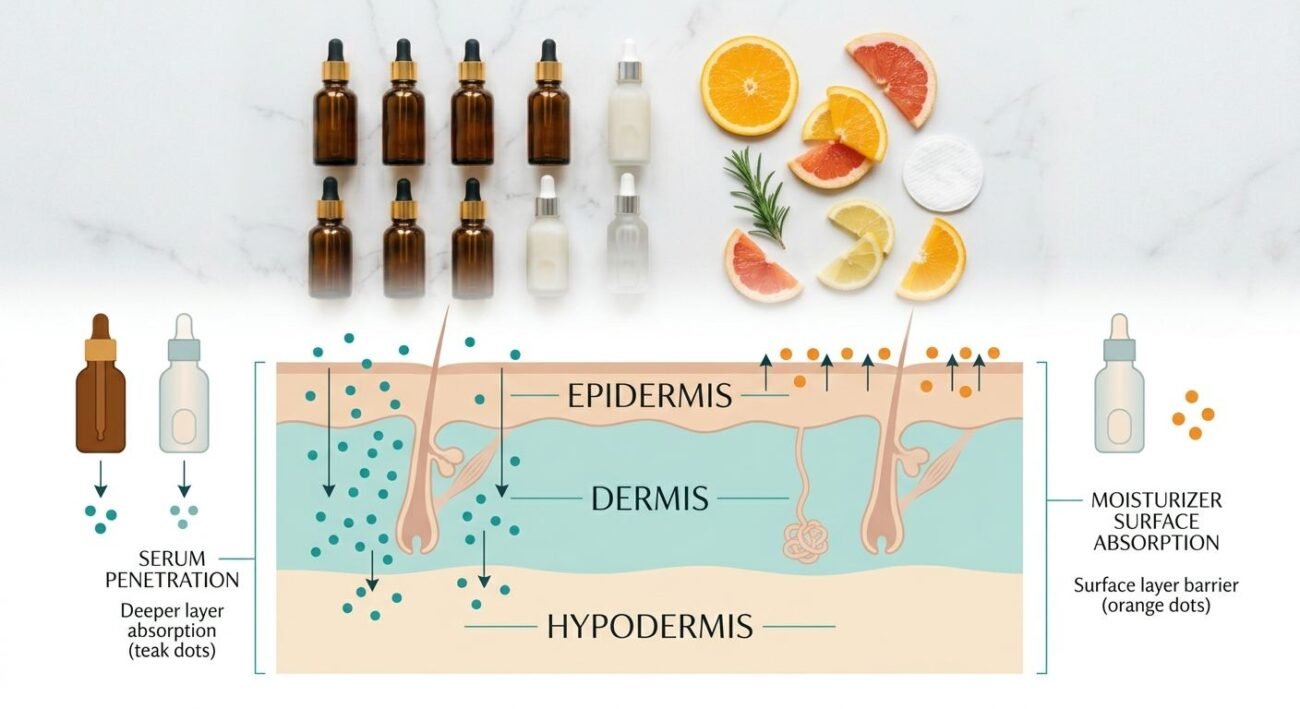
Popular Pilgrim face serum ranges.
Vitamin C serums
Pilgrim’s vitamin C serum options use forms of ascorbic acid with supporting antioxidants, targeting dullness, dark spots, and uneven tone. It is one of the best face serum India shoppers search for. Dermatologists recommend 10 to 20 percent L-ascorbic acid for visible results. Check whether the formula includes a stabilizer like vitamin E or ferulic acid.
Retinol serums
Pilgrim offers retinol serum formulations, including bakuchiol-paired versions for sensitive skin. Retinol serum benefits include improved cell turnover, reduced fine lines, and smoother texture. The Mayo Clinic advises starting with a low concentration (0.25 to 0.5 percent) and applying only at night, since retinol increases sun sensitivity. Always pair retinol use with daily sunscreen. See our sunscreen guide for the Indian climate for recommendations.
Hyaluronic acid serums
Pilgrim’s hyaluronic acid serum formulas use multi-molecular hyaluronic acid to hydrate at different skin depths. It suits all skin types and works by pulling moisture into the skin, most effective when applied damp and sealed with moisturizer. A strong choice for anyone seeking the best face serum in India in the hydration category.
Niacinamide serums
Pilgrim’s niacinamide serums are paired with zinc, targeting large pores, excess oil, and breakouts. Research supports 5 to 10 percent niacinamide for oil control and pore appearance. If acne is a persistent concern, see our article on acne treatment options for a broader perspective beyond serums.
Specialty serums
Pilgrim also offers cica, peptide, and Korean-inspired formulations for redness, sensitivity, and barrier repair. Peptides signal collagen production while cica (Centella asiatica) calms reactive skin. These are newer additions to the Pilgrim face serum lineup.
Ingredients to look for in any face serum
- Vitamin C: brightens skin, evens tone, and provides antioxidant protection against environmental damage.
- Hyaluronic acid: hydrates and plumps without adding oil. Works for all skin types.
- Niacinamide: minimizes pore appearance, balances oil production, and strengthens the skin barrier.
- Retinol or bakuchiol: supports cell turnover and reduces fine lines. Bakuchiol is the gentler plant-based alternative.
- Peptides: signal skin to produce more collagen for firmer texture over time.
- Ceramides: strengthen the skin barrier and lock in moisture.
Ingredients to use cautiously
- Essential oils and added fragrance can irritate sensitive or reactive skin types.
- Alcohol denat in high concentrations can strip moisture and damage the barrier.
- Combining too many active acids (AHA, BHA, vitamin C, retinol) in one routine can cause redness and peeling.
- Sunscreen is non-negotiable when using vitamin C or retinol during the day. Read our best ingredients for Indian skin guide for pairing advice.
How to choose a Pilgrim face serum by skin type
Use the table below to match your primary skin concern to the right Pilgrim face serum range.
| Skin concern | Key ingredient | Best for |
| Dull complexion | Vitamin C | Most skin types, morning use |
| Dehydration | Hyaluronic acid | All skin types |
| Large pores, oily skin | Niacinamide | Oily and combination skin |
| Fine lines, aging | Retinol or bakuchiol | Mature skin, evening use only |
| Acne and breakouts | Niacinamide with zinc | Acne-prone skin |
| Sensitivity, redness | Cica or peptides | Sensitive and reactive skin |

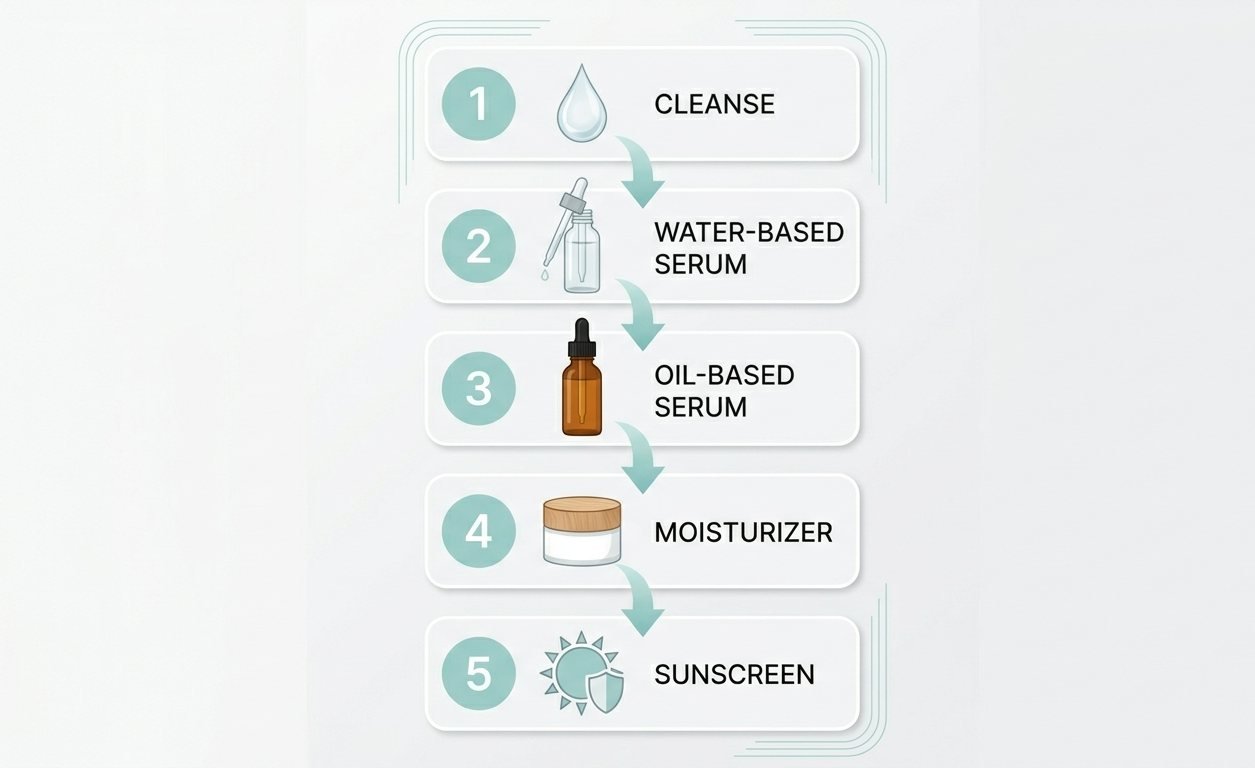
How to layer serums correctly
- Start with a clean, slightly damp face.
- Apply water-based serums first: hyaluronic acid serum, then niacinamide.
- Follow with oil-based or denser serums: vitamin C serum or retinol.
- Lock everything in with a moisturizer.
- Apply sunscreen as the final step during the day when using actives.
Realistic expectations and timelines
- Hyaluronic acid serum: visible plumping in days.
- Niacinamide: oil and pore improvement in 4 to 8 weeks.
- Vitamin C serum: brightness and dark spot fading in 8 to 12 weeks.
- Retinol: texture and fine line improvement in 12 to 24 weeks.
Consistency matters more than any single product. A Pilgrim face serum or any other brand will only deliver results if used regularly as part of a complete routine.
Side effects and patch testing
Always patch test a new Pilgrim face serum on the inside of your elbow or behind your ear for 24 to 48 hours. Common reactions include mild redness, tingling, and dryness, especially with retinol or vitamin C. If burning, swelling, or a rash persists beyond 48 hours, stop the product and consult a dermatologist.

When to see a dermatologist instead of buying a serum
No Pilgrim face serum, or any over-the-counter serum, replaces professional care for the following:
- Persistent acne or cystic breakouts that do not respond to consistent skincare.
- Sudden skin changes, including new moles, lesions, or unusual patches.
- Skin reactions lasting more than one week after stopping a product.
- Hyperpigmentation that does not improve after 12 weeks of consistent vitamin C serum use.
- Eczema, rosacea, or psoriasis flares. These are medical conditions, not skincare concerns.
Frequently asked questions
Is Pilgrim face serum good for sensitive skin?
Pilgrim offers formulations like cica and bakuchiol-retinol blends that are designed for sensitive skin. However, individual reactions vary. Always patch test and avoid serums with added fragrance or essential oils if your skin is reactive. Consulting a dermatologist before starting actives is the safest approach for sensitive skin types.
Can I use Pilgrim vitamin C serum every day?
Yes, most people can use a vitamin C serum daily in the morning. Start with every other day if you are new to vitamin C, then increase frequency as your skin adjusts. Always follow with sunscreen, since vitamin C can increase photosensitivity.
Which Pilgrim face serum is best for beginners?
A hyaluronic acid serum is the safest starting point for beginners. It hydrates without irritation risk and pairs well with almost any other product. Once your skin is comfortable, you can add niacinamide or a low-concentration vitamin C serum.
Are Pilgrim products dermatologist-tested?
Pilgrim states that their products are dermatologist-tested and cruelty-free. However, dermatologist-tested means a dermatologist reviewed the product, not that it underwent clinical trials. Evaluate ingredient lists alongside these claims. The Cleveland Clinic recommends checking active concentrations rather than relying on label claims alone.
Can I mix Pilgrim retinol with niacinamide?
Yes. Despite older advice to keep them separate, current dermatology research supports using niacinamide and retinol together. Niacinamide can actually help buffer the irritation retinol sometimes causes. Apply niacinamide first, then retinol.
How long does one bottle of Pilgrim face serum last?
A standard 30 ml bottle of face serum typically lasts 6 to 8 weeks when used once daily with the recommended 3 to 4 drops per application. Usage varies by the number of drops per session and whether you apply once or twice daily.
Final thoughts
Choosing the right Pilgrim face serum comes down to matching active ingredients to your skin concern, not marketing claims. This Pilgrim skincare review shows the brand offers a solid range built around proven ingredients like vitamin C, hyaluronic acid, retinol, and niacinamide. Whether Pilgrim is the best face serum in India for you depends on your skin type and patience with timelines. Compare ingredients, patch test everything, and consult a dermatologist for anything beyond routine skincare.
The information in this article is for educational purposes only and does not replace professional medical advice, diagnosis, or treatment. Always consult a qualified healthcare provider for any concerns about your health or before starting any new treatment. Doctiplus does not endorse specific products, brands, or providers mentioned for illustrative purposes.
References
- American Academy of Dermatology, face serums and active ingredients guide, accessed 2026.
- Cleveland Clinic, face serum ingredients and skincare layering, accessed 2026.
- Mayo Clinic, retinol use and sun protection advice, accessed 2026.
- Indian Journal of Dermatology, niacinamide and vitamin C efficacy in Indian skin types, peer-reviewed.
- Journal of Clinical and Aesthetic Dermatology, topical retinoids review, peer-reviewed.
- Bureau of Indian Standards, cosmetic product safety guidelines, accessed 2026.